When readers type romance books set in Italy, they are not asking for a nationality sticker. They are naming a geography filter: love stories whose map has to be Italian, whose streets and stairs and heat have to cost something, and whose soft blurbs often promise more postcard than pressure. Autocomplete does not know the difference. It piles shelf language, authorship language, and place language into one result page. This essay owns the exact phrase—romance books set in Italy—and shows how to read those results without ranking other people’s novels.
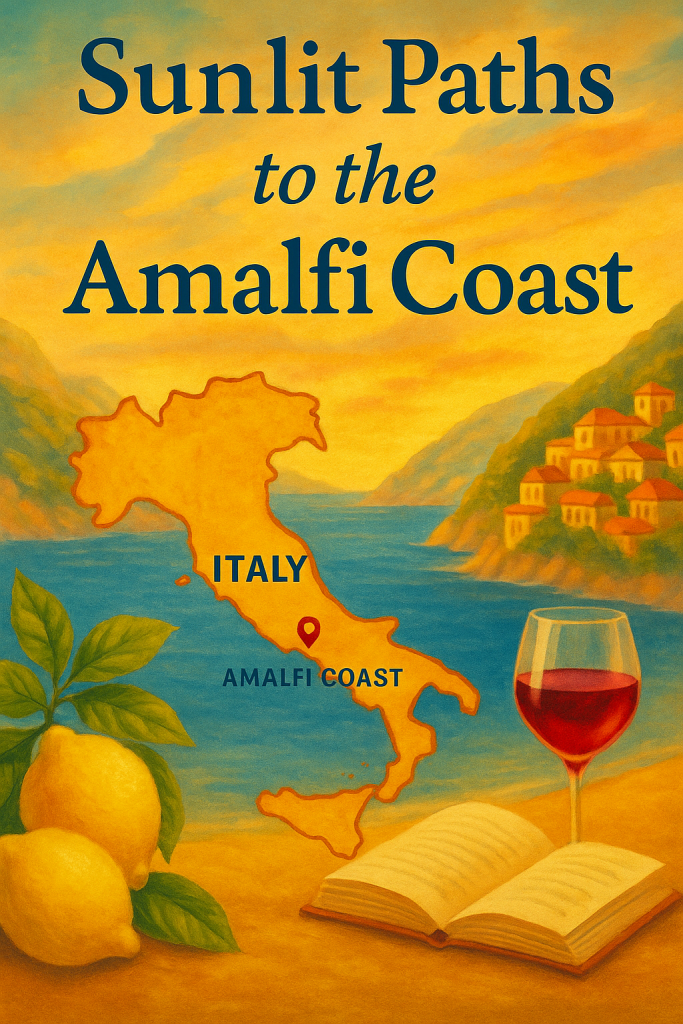
We write as Marina and Miles Ashford. Our novel, Sunlit Paths to the Amalfi Coast: A Love Story Lived, then Written, is adult second-chance / grief-and-healing travel romance. Roughly eighty percent of it grew from years we lived and walked in Italy together. The cover is a painting, not a photograph of us. Sofia Moretti and Tom Bennett are characters; the book is fiction, not a memoir. Marina Miles Books is the imprint. Adult heat exists later in the novel’s arc; daily essays here stay on place, attention, and dignity.
Yesterday we wrote about what Italian romance books leave out as soft shelf language. Earlier we asked what romance novels set in Italy actually need from setting itself. Those doors stay open. This page answers a different hunger: the exact search string readers type when they want geography first—romance books set in Italy—and how to tell postcard Italy from civic lived Italy before you buy.
What “Set in Italy” Filters That Shelf Phrases Do Not
“Italian romance books” often means mood, brand, or authorship: Italianate feeling, Italian authors, Italian-sounding titles. “Romantic novels set in Italy” leans closer to place but still drifts toward soft adjectives. Romance books set in Italy is colder and more useful. It is a filter. Readers who type it are saying: the map matters. The country is not wallpaper. Something about being there—language, stairs, markets, heat, ferry schedules, the way a town refuses to empty for private weather—should change how two adults learn each other.
That filter still gets flooded. Search results mix destination fluff, villa weekends that never leave the terrace, dark romantasy with a boarding-pass sticker, listicles that rank other people’s books, and honest civic stories that keep the quay working. Naming the filter does not clean the aisle. Learning to read samples does.
We refuse a ranked list here. Lists flatten doors into one aisle and turn other writers into furniture. The useful work is naming what the exact phrase asks, and how to hear whether a free sample answers it.
Postcard Italy Versus Civic Lived Italy
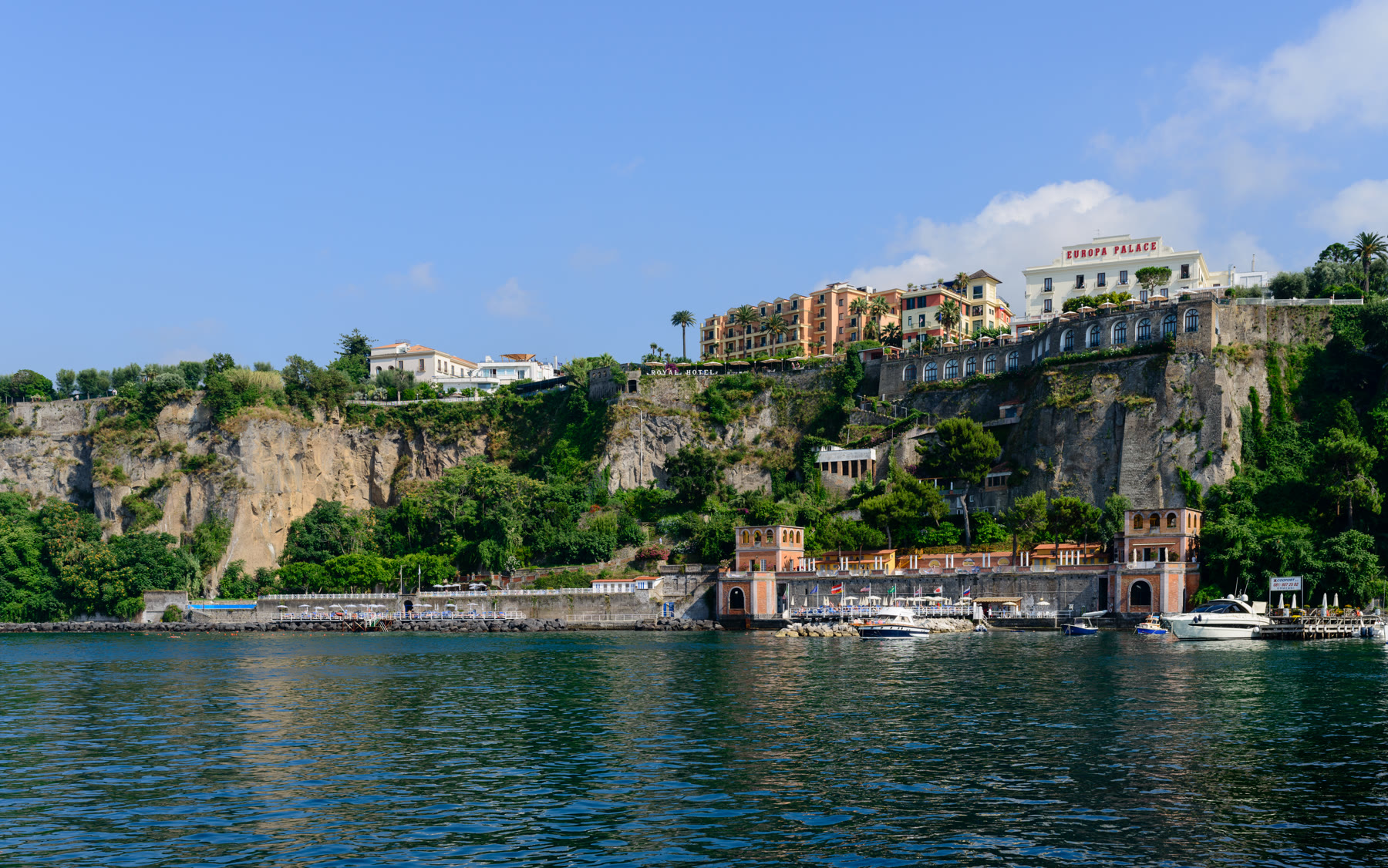
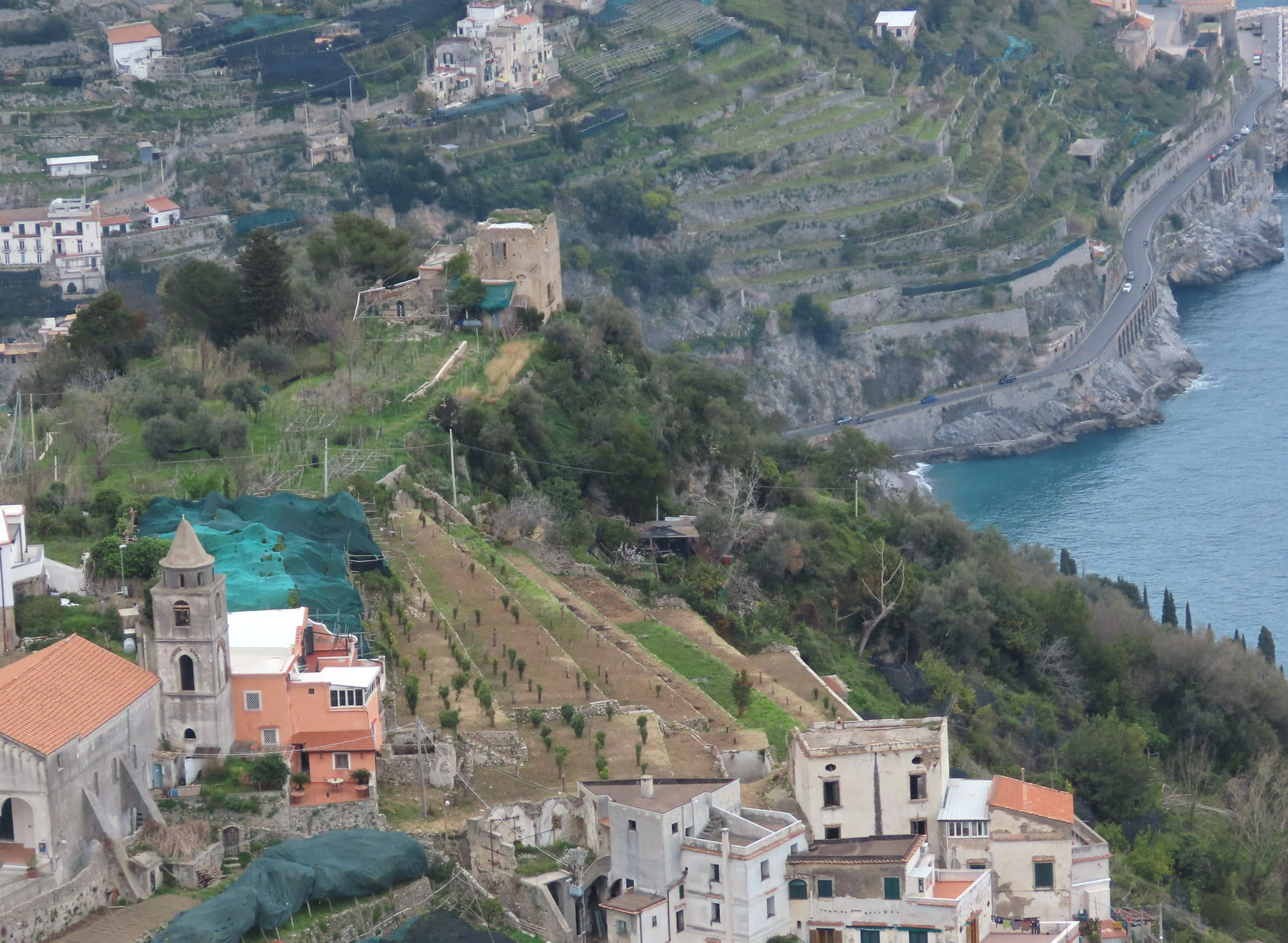
Postcard Italy is the image you already know: lemon, empty cliff, prosecco picnic, shuttered town that somehow opens only for the couple. Beautiful sometimes. Easy to sell. Soft on behavior. Civic lived Italy is the opposite contract. The street keeps working. Scooters cut the argument. Market hours end a plan. Heat thickens conversation until someone has to choose a quieter room or a harder honesty. Stairs punish impatience. A ferry runs on its own clock. The town has a job that is not your romance.
When you open a sample of romance books set in Italy, ask which Italy you are standing in. Does the square empty for private weather, or does public life keep interrupting? Do lemons require a ladder and labor, or do they float as décor? Is grief allowed to stay in the room without becoming a spa montage because the view was pretty? Second-chance dignity needs civic Italy more than postcard Italy. Healing that erases what hurt because the cliff looked good is not the same door as two adults sharing attention while the town refuses to rearrange itself.
We have already written about southern Italy romance as a heat-and-civics contract, and about Italy travel for romance readers as attention rather than itinerary. Those pages stay adjacent. Here the question is narrower: does this particular sample treat “set in Italy” as geography with pressure, or as a sticker that could have been anywhere sunny?
Place-as-Pressure: How to Read a Sample Without Ranking Books
Open the free sample. Ignore the cover blurb for thirty seconds. Watch the first inconvenience.
Does heat end a terrace conversation, or does every weather problem dissolve into charm? Do stairs, trains, language, or closed shops force a choice, or does the plot float above logistics? Is food regional labor—someone grew it, carried it, timed it—or interchangeable “Italian” wallpaper? Are two adults negotiating attention in public, or is one person a tour for the other’s soft reset?
Place-as-pressure is the quiet test for romance books set in Italy. The country should change behavior. If Italy could be swapped for a generic Mediterranean resort without rewriting a scene, the geography filter failed even if the blurb shouted Amalfi. If a late ferry, a crowded stair, or a shuttered midday street actually moves the argument, the filter held.
Also watch soft lies that pile into search results: endless empty cliffs, grief that resolves because the light was golden, towns that never smell like diesel or fish, villas with no neighbors. Italy can hold private weather. It does not owe anyone a private country. Readers hunting romance books set in Italy with teeth are often asking—without the words—for dignity around what hurt, and for a map that still has a civic job.
Second-Chance Dignity Inside the Geography Filter
Second-chance and grief-and-healing romance can share a table with Italian public life without becoming vacation therapy. That is part of what romance books set in Italy can mean when the filter is honest. The town does not have to heal anyone. The town has to stay real while two people decide whether attention is still possible after loss.
Dignity here means grief is allowed to stay without becoming a plot obstacle that scenery dissolves. It means adult heat, when it arrives, is not the product being sold in a morning essay. It means the couple does not empty the quay for a private picnic every time they need a scene. Related searches—romantic novels set in Italy, Italian love stories, Amalfi Coast romance—overlap this hunger. They are not identical doors. Romance books set in Italy stays the coldest and most map-first of them.
If you want postcard destination fluff, buy that door cleanly and enjoy it. If you want dark romantasy with a passport sticker, demand labels. If you want the geography filter with civic pressure and second-chance dignity, watch whether the sample keeps Italy working while the characters speak.
Where Our Book Sits—Softly
We point once, then step aside. Sunlit Paths to the Amalfi Coast is one adult second-chance / grief-and-healing travel romance among romance books set in Italy that keep civic days and place-pressure in the frame. Sofia and Tom learn each other while southern Italy keeps working. Heat begins in Sardinia in the novel’s arc; this post is not a scene list or a steam pitch. If you prefer to begin with the story itself, the Kindle edition waits on Amazon. The Marina Miles author page holds the imprint voice without turning this essay into a bio.
Keep the geography filter honest. Skip the ranked list. Read the sample for postcard versus civic life, place-as-pressure, and second-chance dignity. That is what readers mean—often—when they type romance books set in Italy and hope the map still has a job.