Praiano vs Positano for romance readers is quieter stair logic against vertical crush: two Amalfi Coast contracts, ferry scale and civic hours still named honestly, and no interchangeable lemon wallpaper sold as if both towns were one.
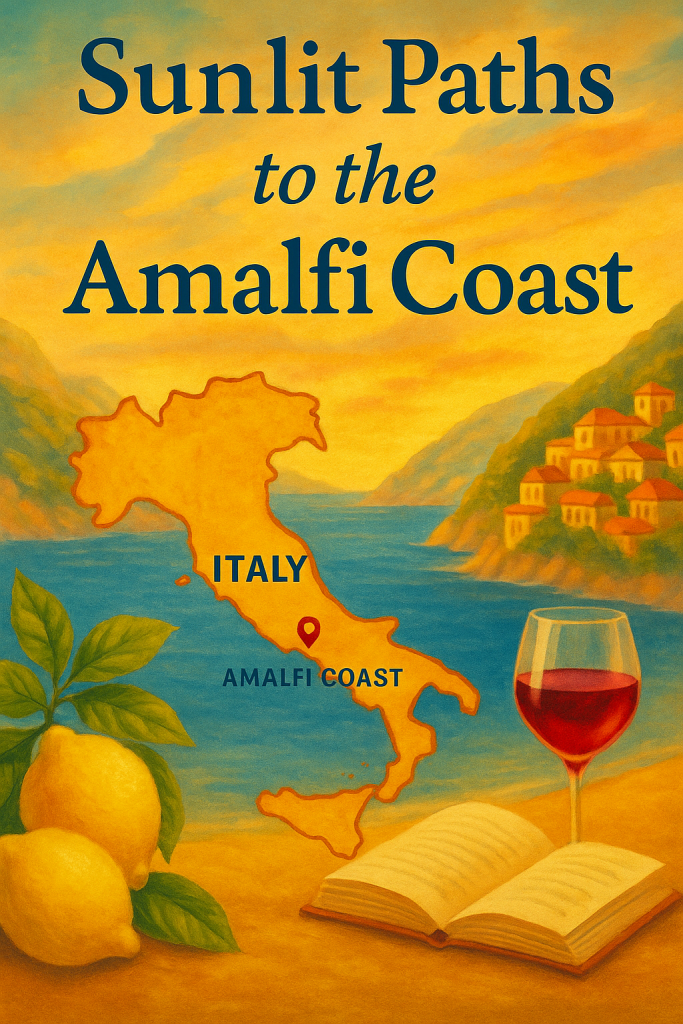
We write as Marina and Miles Ashford. Our novel, Sunlit Paths to the Amalfi Coast: A Love Story Lived, then Written, is adult second-chance / grief-and-healing travel romance. Roughly eighty percent of it grew from years we lived and walked in Italy together. The cover is a painting, not a photograph of us. Sofia Moretti and Tom Bennett are characters; the book is fiction, not a memoir. Marina Miles Books is the imprint. Adult heat exists later in the novel’s arc; daily essays here stay on place, attention, and dignity.
Earlier we published Praiano for romance readers as the quieter-stack head, and Positano for romance readers as vertical crush and ferry approach. Those doors stay. This essay owns Praiano vs Positano as a comparison contract: adjacency without sameness, distinct from the Praiano-only head, with hard links into Walk the Sunlit Paths and the book.
Two Towns, Two Jobs
Soft travel copy treats Praiano vs Positano as a prettier twin question: which pastel stack should you photograph first. Lived Costiera grammar is colder. Positano is vertical crush, ferry-taught scale, Spiaggia Grande density at noon, stairs that punish impatience in public. Praiano is quieter stair logic between famous neighbors, Marina di Praia cove pressure, a road that still carries deliveries while visitors hunt empty overlooks. Writers flatten them because English-language search over-serves Positano’s postcard. Flattening is a lost opportunity. Two contracts are useful to adult romance precisely because they refuse to be the same stage.
This head is not a rewrite of Praiano for romance readers. That page stays on Praiano itself: quieter stack, cove pressure, path views. Praiano vs Positano requires the comparison: what changes when second-chance attention moves from Positano’s ferry crush to Praiano’s quieter stairs, and what honesty fails when blurbs treat every Amalfi stop as interchangeable lemon wallpaper.
Readers who type Praiano vs Positano may want any of several hungers: quieter lodging grammar, ferry versus road logistics, romance-reader place pressure, Path of the Gods adjacency, or simply a way to choose without pretending the coast has one mood. Naming both towns does not clean the aisle. Learning to hear whether a sample keeps distinct civic jobs in the same sentence does. We refuse ranked listicles. Lists flatten both towns into branding and turn stairs into furniture.
Positano Crush Versus Praiano Quiet
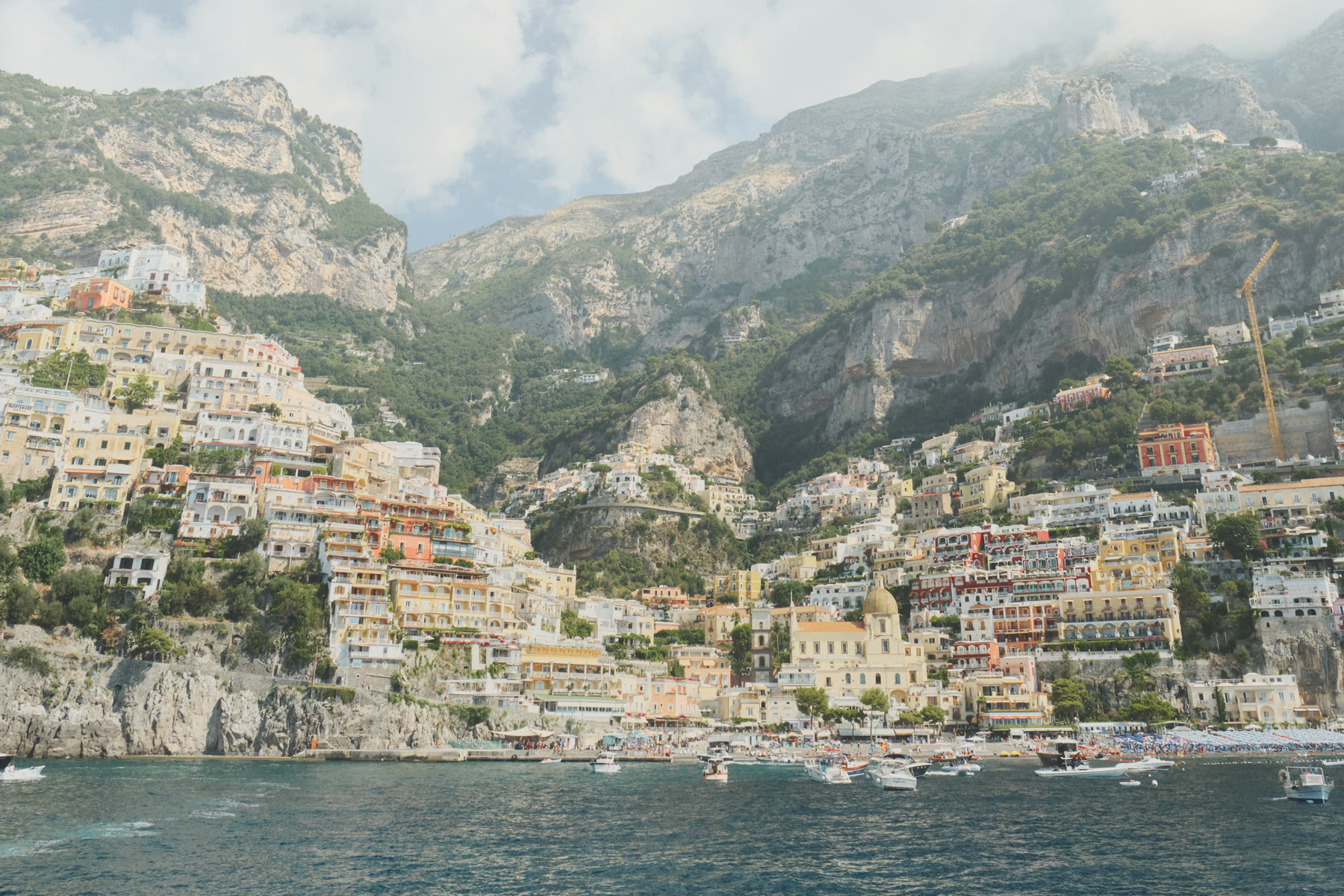
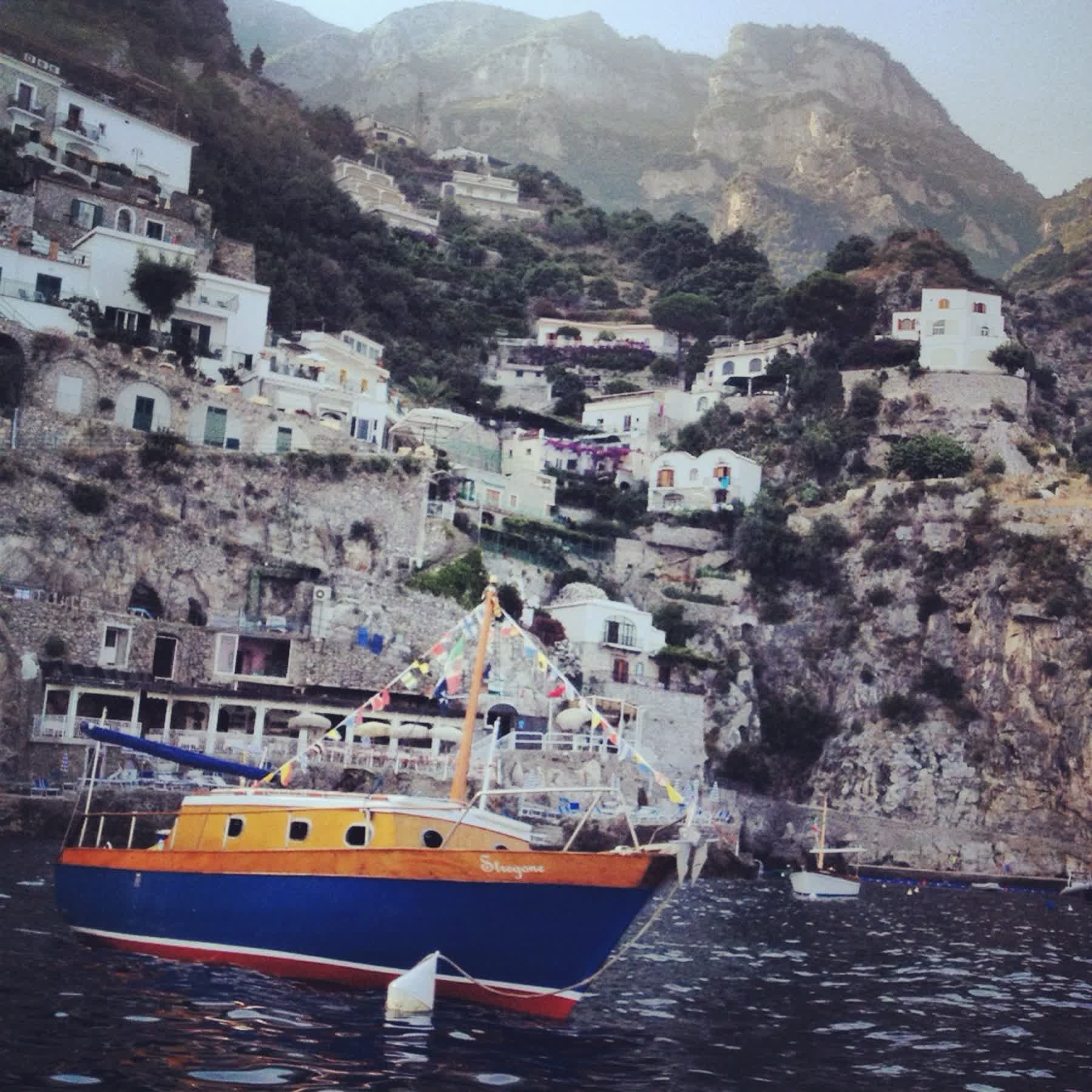
Arrive by water in the imagination of a novel at least once for each town. From the sea, Positano looks poured down a cliff into a famous theater: houses, beach commas, mountains behind like a held breath. Then distance closes and the postcard becomes logistics: dock pressure, bags, heat, salt and exhaust, a corridor of bodies at high season. That transition is gold for travel romance that refuses wallpaper.
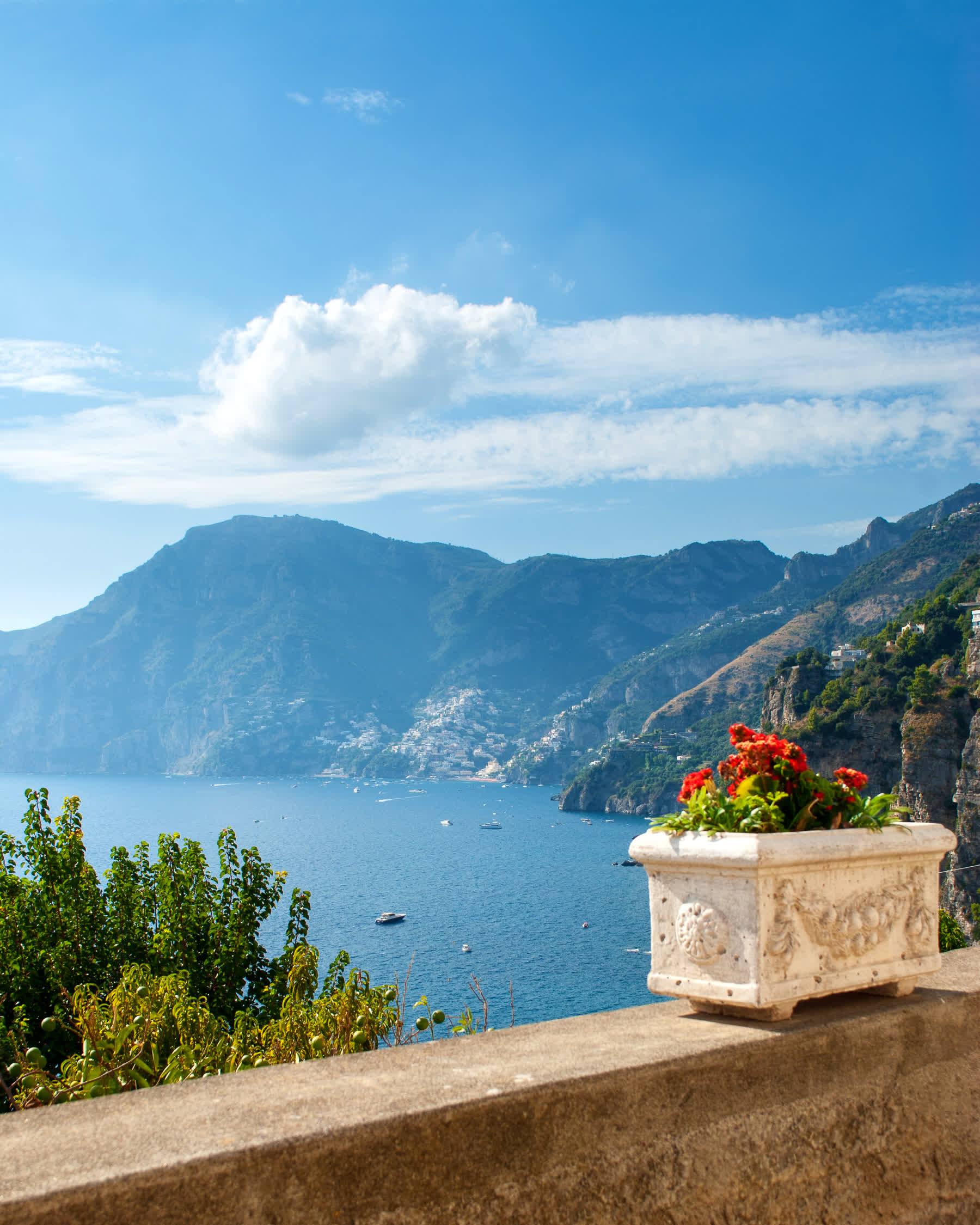
Praiano’s approach teaches a different scale. The stack is still vertical. The fame is quieter. Marina di Praia’s cove is a different acoustic from Spiaggia Grande’s crush: tight stone, swimming logistics, a sense that the coast still works for people who live here. Soft fluff skips both transitions and drops the couple on a terrace already holding drinks. Keep the first stair after arrival. Keep the moment when beauty becomes work. That is the comparison that matters more than which town wins a beauty contest.
Noise and timing differ too. Positano’s noon can swallow a quiet sentence. Dawn and late evening return something the postcard never promised. Praiano still shares the Amalfitana’s buses and heat, but the quieter stack can return room to hear a sentence without requiring authorial privilege to empty the cliff. Soft blurbs prefer emptied overlooks because they photograph cleanly. Civic Praiano vs Positano prefers shared rooms because they behave like Italy.
Height and path adjacency also split. Paths and ridge views that look toward Capri or along the Costiera change conversation the way legs change pride. Soft blurbs dissolve every climb into charm for either town. Civic comparison keeps the water bottle and the timetable. A practical door for readers who want coast walking grammar without pretending a blog post is a guidebook is Gillian Price’s Walking on the Amalfi Coast (Cicerone; ASIN B07KSHGGYG): route notes for the Sorrento and Amalfi sides, not a ranked romance shelf. As an Amazon Associate, Marina Miles Books earns from qualifying purchases. That link is a working-map door, not a #1 badge. Hotels and tours stay off Amazon for us; when you are ready to plan nights and guided days, use Walk the Sunlit Paths.
How to Read the Comparison in a Sample
Open the free sample. Ignore the cover toast for thirty seconds. Watch whether Praiano and Positano, if both named or implied, still have distinct jobs.
Does someone’s body tire on stairs, or does every climb dissolve into charm? Do civic hours, ferry crush, or road timing force a choice, or does the plot float above logistics? Is Positano allowed to keep noon density while Praiano keeps quieter adjacency, or do both empty so intimacy can monologue? Could either town be swapped for a generic Mediterranean ridge without rewriting the scene?
Those questions separate Praiano vs Positano honesty from postcard Italy with two names pasted on. Our Praiano for romance readers page remains the quieter-stack head. Positano for romance readers remains the vertical-crush head. This page requires the comparison contract: adjacency without sameness, ferry versus quieter cove, public density named without spa erase.
Related searches overlap this hunger: Praiano romance readers, Positano romance readers, Amalfi Coast romance, Path of the Gods, best time to walk Path of the Gods, Ravello for romance readers, Walk the Sunlit Paths. They are not identical doors. Praiano vs Positano stays the comparison: two working towns, two pressures, one coast that will not flatten for autocomplete.
Lived adjacency is part of the novel’s family of coastal pressure. Our lived-Italy tour hub gathers places we actually walked; Praiano and Positano sit in that family alongside Sorrento, Ravello, and the high paths. Linking the hub is not a checklist. It is a reminder that Amalfi Coast romance worth trusting grew from feet on stone, not only from mood boards.
Lived detail stays ordinary on purpose. A narrow passage smelling of laundry and diesel in either town. A shutter closed against midday. The sea visible between buildings like a bright interruption, not a private infinity pool. Church hours and trattoria hours that do not care that you are ready to be brave. Soft blurbs cut them. Samples with civic teeth keep them, and keep them different when the map moves from Positano’s theater to Praiano’s quieter stack.
Also notice what the phrase does not require. It does not require crowning a winner. It does not require Praiano to be Positano-lite. It does not require either town to become a private chapel. Adult second-chance attention can use both contracts without turning comparison into a shopping list of emptier cliffs. Daily essays here stay on place and dignity; the novel carries its own heat in its proper rooms. What Praiano vs Positano needs from us is honesty: two jobs named, quieter stack distinct from vertical crush, planning hub linked, book linked, no lemon wallpaper erase.
If you came from Praiano for romance readers earlier, keep that page. It owns the quieter-stack climate. This page locks the versus search. Positano for romance readers remains the crush door. Best time to walk Path of the Gods remains the timing door above both. Praiano vs Positano is not a softer synonym for any of them. It is a promise that two towns can share a coast without sharing a single mood.
One more civic fact belongs beside this phrase. Tourist density is not the enemy of dignity; emptied density is. Positano full of strangers can still hold a quiet sentence at dawn if two adults are honest. Praiano emptied by authorial privilege can still feel false if history and neighbors have been deleted so the candle can perform. Soft blurbs prefer the emptied overlook because it photographs cleanly. Civic comparison prefers the shared room because it behaves like Italy.
When you compare this page with generic Amalfi listicles, keep the difference sharp. Listicles want interchangeable stops. Romance readers who type Praiano vs Positano are often asking, without those exact words, which civic pressure they can actually use. If a blurb uses both names only as perfume on the same emptied terrace plot, it is not answering the search you typed. If a sample keeps ferry crush, quieter stairs, and working hours while desire learns whether it can stay, you are closer to the door.
Where Our Book Sits Softly
We point once, then step aside. For trip planning that keeps hotels and tours off the Amazon lane, start at Walk the Sunlit Paths. Sunlit Paths to the Amalfi Coast is one adult second-chance / grief-and-healing travel romance that keeps southern Italy working: stairs, civic hours, and place-pressure rather than emptying quieter towns for private weather. Sofia and Tom learn each other inside that contract. Heat as desire begins in Sardinia in the novel’s arc; this post is not a scene list or a steam pitch. If you prefer to begin with the story itself, the Kindle edition waits on Amazon. The Marina Miles author page holds the imprint voice.
Keep both towns’ jobs. Skip interchangeable lemon wallpaper. Read the sample for crush that interrupts and quieter stairs that still force choices. That is what readers mean, often, when they type Praiano vs Positano and hope the coast still has distinct work to do.