Praiano sits between louder Amalfi Coast neighbors as quieter stair logic: stacked houses, civic hours, ferry scale without Positano’s noon crush. Romance readers who want place as pressure, not postcard wallpaper, can use this town’s grammar honestly.
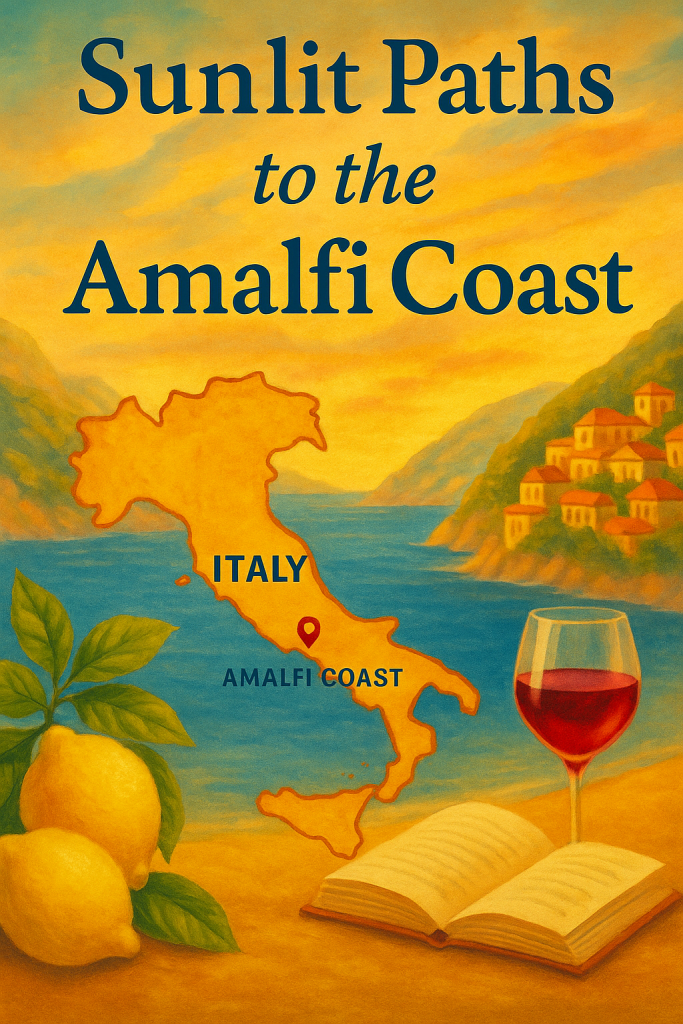
We write as Marina and Miles Ashford. Our novel, Sunlit Paths to the Amalfi Coast: A Love Story Lived, then Written, is adult second-chance / grief-and-healing travel romance. Roughly eighty percent of it grew from years we lived and walked in Italy together. The cover is a painting, not a photograph of us. Sofia Moretti and Tom Bennett are characters; the book is fiction, not a memoir. Marina Miles Books is the imprint. Adult heat exists later in the novel’s arc; daily essays here stay on place, attention, and dignity.
We have already written Positano for romance readers as vertical crush and ferry approach, and Ravello as quieter height with gardens. Those doors stay. This page stays on Praiano itself: what the quieter stack still gives a second-chance story when you refuse to treat every Amalfi stop as interchangeable lemon wallpaper.
Quieter Stair Logic Between Famous Neighbors
Praiano is not Positano’s famous pastel theater and not Amalfi’s civic square with the Duomo’s stairs. It is a working cliff town with its own contracts: houses stacked above the road, paths that punish impatience, a sea that arrives as logistics before it arrives as mood. Writers flatten Praiano because English-language search over-serves Positano’s postcard. Flattening is a lost opportunity. Quieter stair logic is useful to adult romance precisely because it refuses to be a stage on demand.
Two adults negotiating second chance on Praiano’s paths do not get the same scene they would get on a emptied overlook sold as private weather. Heat rises off stone. Deliveries still climb. Midday shutters still end a plan. The town shares itself with neighbors and visitors without rearranging for a breakthrough. That sharing is the point. Soft destination fluff wants empty cliffs. Empty cliffs are a fantasy of ownership. Praiano keeps its job.
Lived detail stays ordinary on purpose. A narrow passage smelling of laundry and diesel. A shutter closed against midday. The sea visible between buildings like a bright interruption, not a private infinity pool. Church hours and trattoria hours that do not care that you are ready to be brave. That is the Praiano a grief-and-healing story can use: civic and inconvenient, without turning the town into a spa.
What Praiano Holds That Soft Blurbs Skip
Soft blurbs skip inconvenience because inconvenience does not fit in a thumbnail. They skip the road’s hairpins, the climb from Marina di Praia’s tight cove, the way tourist buses thicken the air without turning the whole town into Positano’s noon corridor. They skip public life that will not leave: scooters, cousins at the next table, laundry lines, the impersonal generosity of the same blue sea.
Praiano still holds four useful contracts for romance readers.
First, inconvenience as character. Stairs, heat, closed midday shops, crowded stretches of the Amalfitana: these force choices. Second chance romance needs forced choices more than it needs empty cliffs.
Second, adjacency without sameness. Positano is vertical crush and ferry-taught scale. Ravello is garden height and bus patience. The Path of the Gods asks for legs above Nocelle. Praiano’s contract is quieter stair logic between those famous doors. Romance books set in Italy that treat every Amalfi stop as interchangeable miss those contracts.
Third, beauty that cannot be owned. The cliff and stacked houses remain generous and impersonal at once. A couple can be changed by them without being healed by scenery alone. That distinction keeps Amalfi Coast romance honest.
Fourth, room to hear a sentence. Dawn and late evening return something quieter than high-season noon. Waiting for a quieter hour is often the more honest plot choice than shouting over a performance the town did not stage for you.
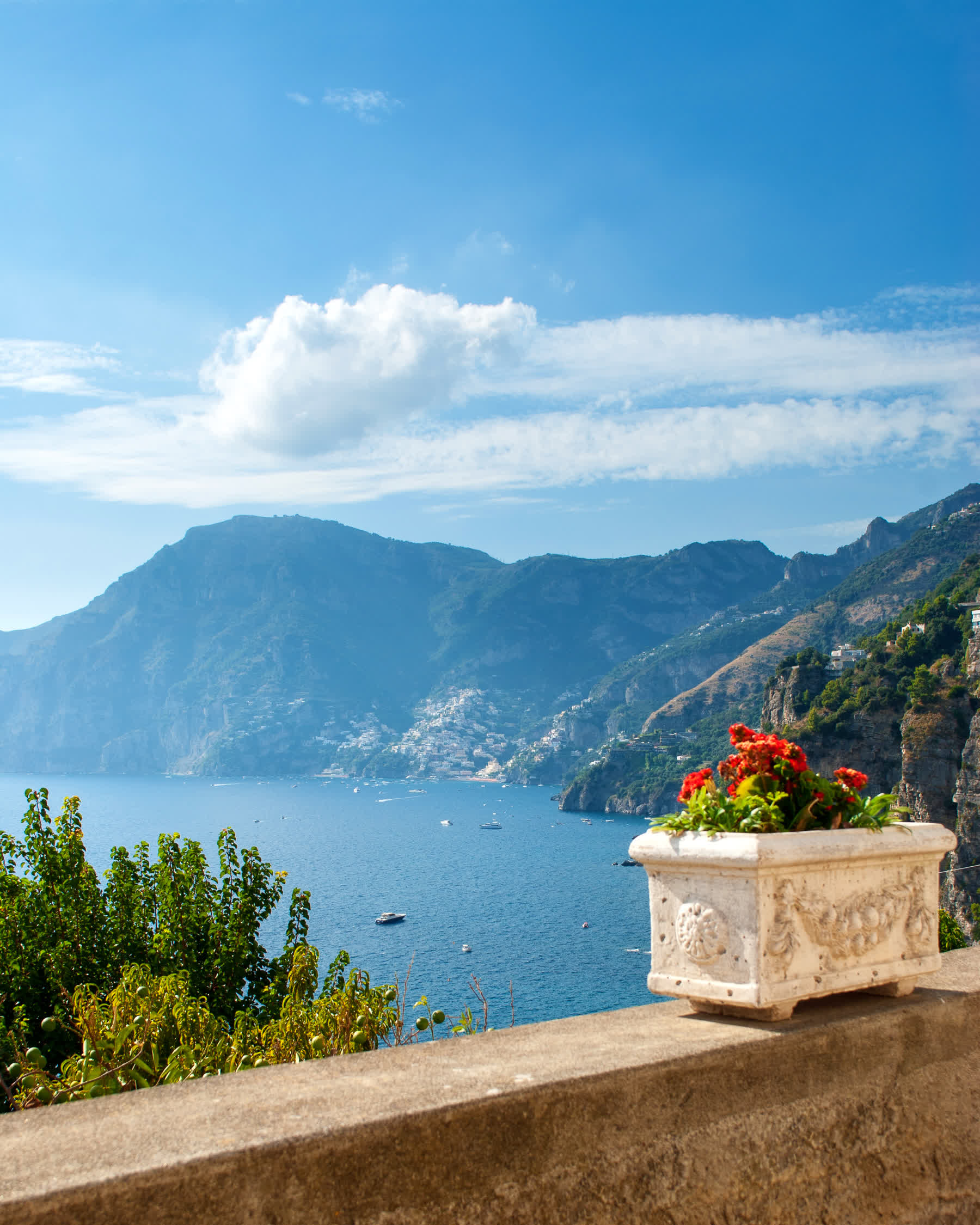
Ferry Scale, Cove Pressure, and Path Views
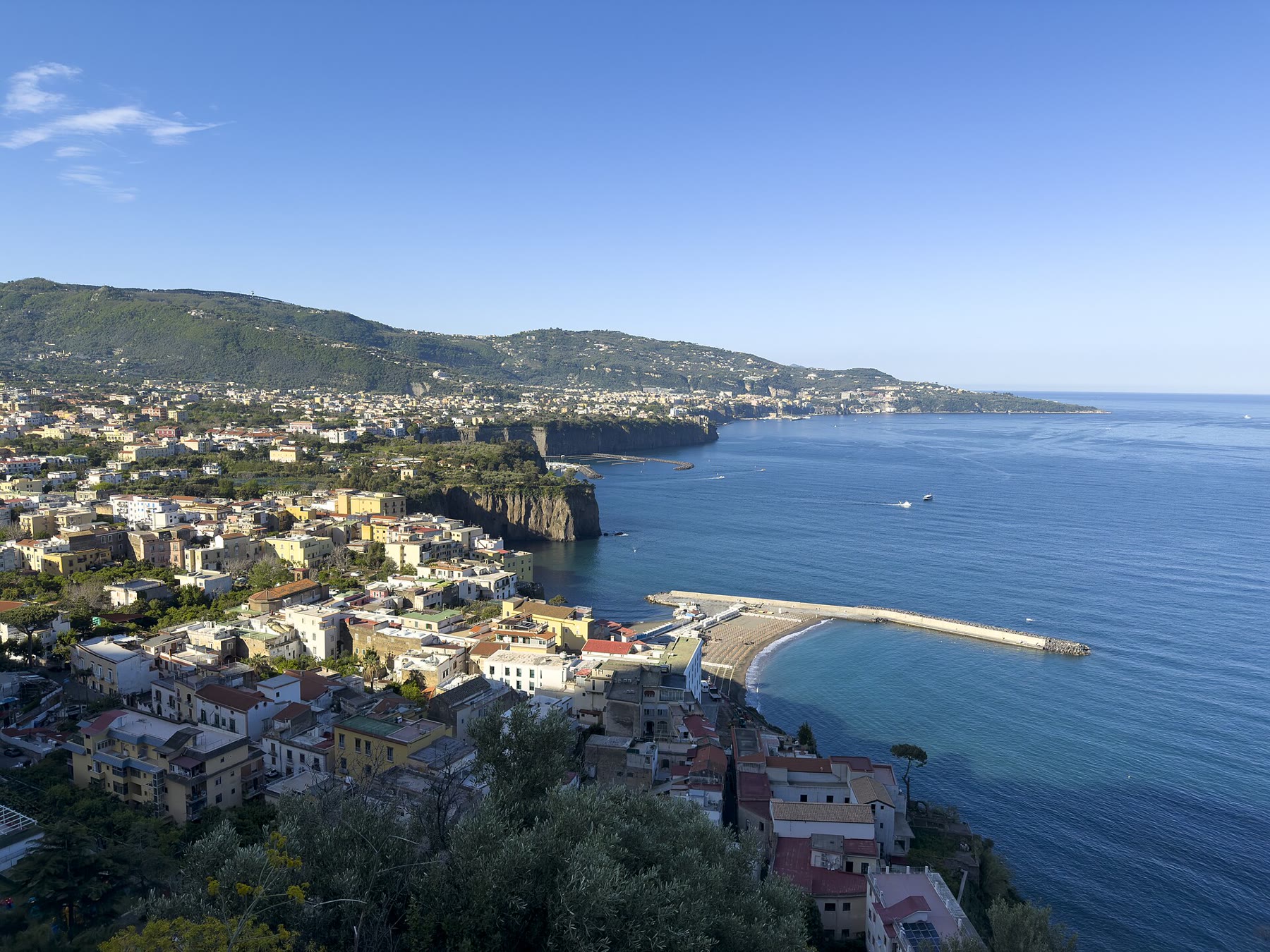
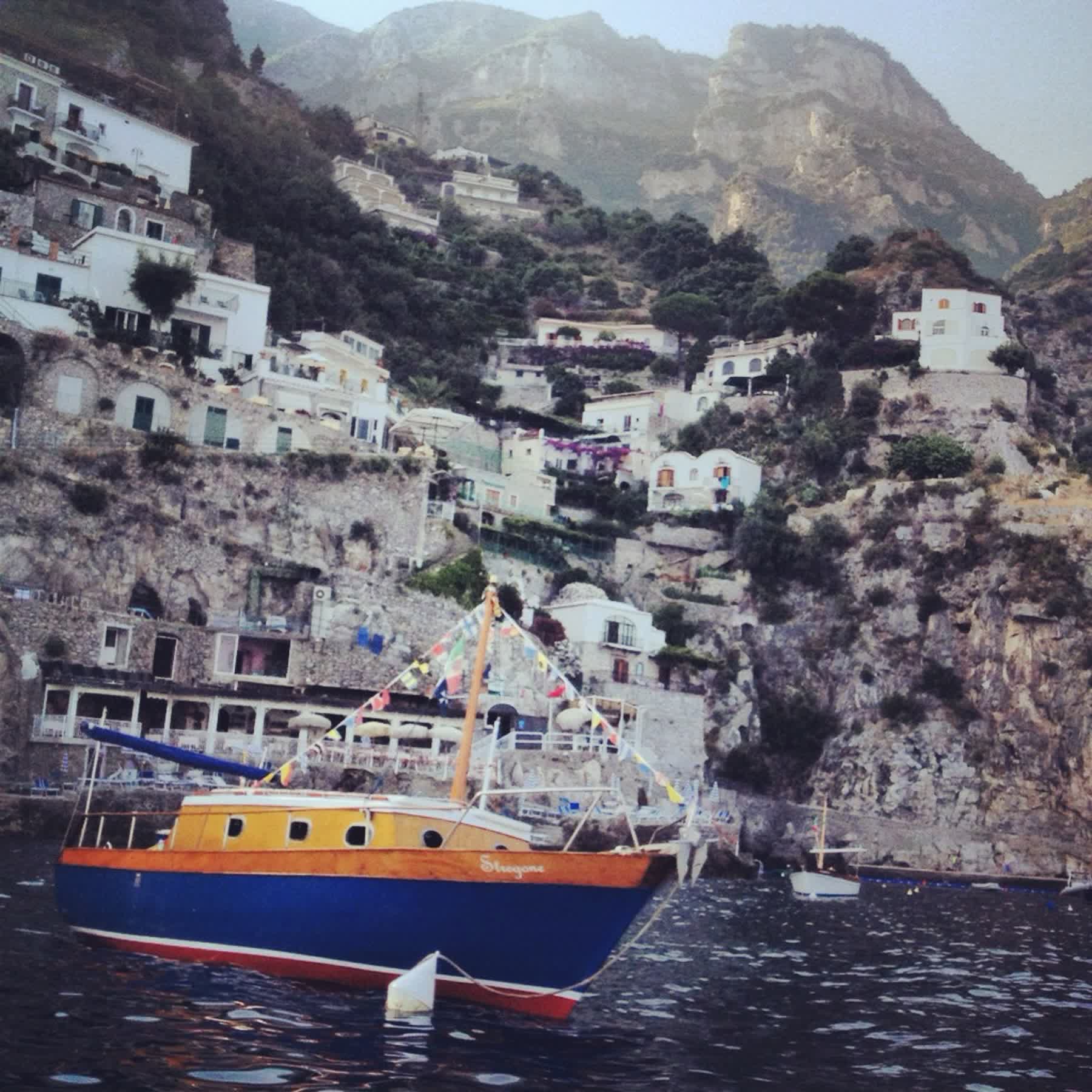
Arrive by water in the imagination of a novel at least once. The approach teaches scale. From the sea, Praiano looks poured down a cliff: houses, road, bright commas of terrace, mountains behind like a held breath. Then distance closes and the postcard becomes logistics: dock or cove access, steps, bags, heat, salt and exhaust. That transition is gold for travel romance that refuses wallpaper.
Marina di Praia’s cove is a different acoustic from Spiaggia Grande’s crush. Tight stone, swimming logistics, a sense that the coast still works for people who live here. Soft fluff skips the cove’s pressure and drops the couple on a terrace already holding drinks. Keep the first stair after arrival. Keep the moment when beauty becomes work.
Height above town also matters. Paths and ridge views that look toward Capri or along the Costiera change conversation the way legs change pride. Soft blurbs dissolve every climb into charm. Civic Praiano keeps the water bottle. A practical door for readers who want coast walking grammar without pretending a blog post is a guidebook is Gillian Price’s Walking on the Amalfi Coast (Cicerone; ASIN B07KSHGGYG): route notes for the Sorrento and Amalfi sides, not a ranked romance shelf. As an Amazon Associate, Marina Miles Books earns from qualifying purchases. That link is a working-map door, not a #1 badge. Hotels and tours stay off Amazon for us; when you are ready to plan nights and guided days, use Walk the Sunlit Paths.
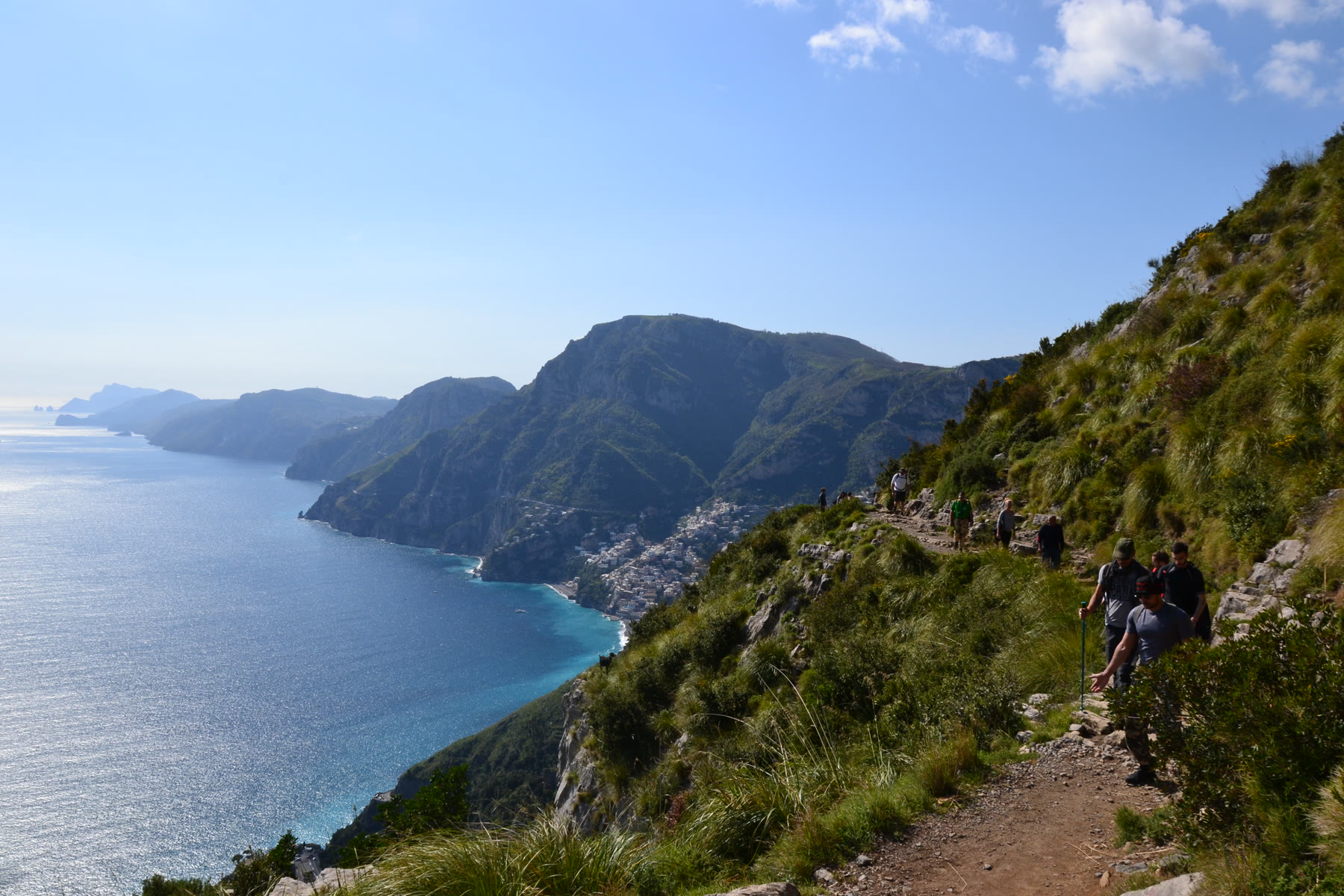
Ordinary hours matter more than soft blurbs admit. A pharmacist explaining that half the coast is closed between one and four. Children still awake at ten because the light will not quit. A terrace argument that has to move indoors when the stone becomes too hot to lean on. These are not exotic props. They are the grammar that keeps Praiano from floating into spa fantasy when romance readers ask the town to hold second-chance dignity.
How to Read Praiano in a Sample
Open the free sample. Ignore the cover toast for thirty seconds. Watch whether Praiano, if named, still has a job.
Does someone’s body tire on stairs, or does every climb dissolve into charm? Do civic hours, heat, or road timing force a choice, or does the plot float above logistics? Is the town allowed to keep neighbors and noise, or does it empty so intimacy can monologue? Could Praiano be swapped for a generic Mediterranean ridge without rewriting the scene?
Those questions are the quiet test. Grief-and-healing travel romance needs a map that will not rearrange itself. Second-chance attention needs forced choices more than empty cliffs. If the blurb shouted Praiano while the sample delivered only postcard Italy, the geography failed.
Also watch soft lies that pile into autocomplete: endless empty ledges, grief cured by panorama, towns with no diesel below, couples who never share a path with a stranger. Italy can hold private weather. It does not owe anyone a private country. Readers hunting Praiano with dignity are often asking, without those exact words, for a quieter Amalfi Coast door that still respects what the cliff demands of legs, timing, and attention.
Related searches overlap this hunger: Amalfi Coast romance, Positano for romance readers, Italy travel for romance readers, Path of the Gods, second chance romance Italy, travel romance books. They are not identical doors. Praiano stays the place-first quieter neighbor: stair logic, cove pressure, adjacency without sameness.
Lived adjacency is part of the novel’s family of coastal pressure. Our lived-Italy tour hub gathers places we actually walked; Praiano sits in that family alongside Positano, Sorrento, and the high paths. Linking the hub is not a checklist. It is a reminder that Amalfi Coast romance worth trusting grew from feet on stone, not only from mood boards.
Where Our Book Sits Softly
We point once, then step aside. Sunlit Paths to the Amalfi Coast is one adult second-chance / grief-and-healing travel romance that keeps southern Italy working: stairs, civic hours, and place-pressure rather than emptying quieter towns for private weather. Sofia and Tom learn each other inside that contract. Heat begins in Sardinia in the novel’s arc; this post is not a scene list or a steam pitch. If you prefer to begin with the story itself, the Kindle edition waits on Amazon. The Marina Miles author page holds the imprint voice. For trip planning that keeps hotels and tours off the Amazon lane, return to Walk the Sunlit Paths.
Keep the quieter stairs. Keep the cove and the path views. Keep Praiano’s job. Romance readers willing to let the stack stay civic will find more here than a postcard squeezed between famous neighbors.