People searching for books similar to Under the Tuscan Sun are rarely asking for a sequel to Frances Mayes. They want the feeling her 1996 memoir made famous: a second act of life, a house that needs patience, food that is work before it is romance, and an Italy that does not hurry you.
That feeling is honest. It is also more specific than the search bar admits. Mayes restored a villa called Bramasole near Cortona, in inland Tuscany—olive hills, cypress, a long relationship with a house. If what you loved was the weather of starting over, southern Italy holds a different second act. The Amalfi Coast does not offer a farmhouse to renovate so much as a coastline that keeps its height while you learn appetite again.
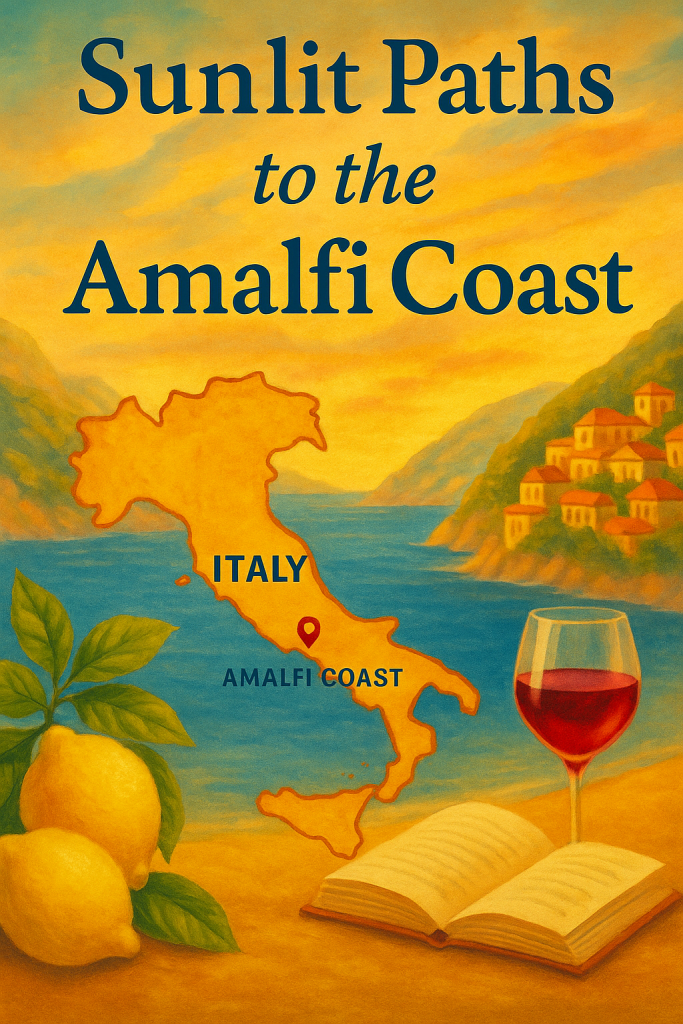
We write as Marina and Miles Ashford. Roughly eighty percent of Sunlit Paths to the Amalfi Coast grew from years we lived and walked in Italy together. The novel is fiction, not a memoir. The cover is a painting, not a photograph of us. The author photo in the back is the two of us when we were younger, in those same places. We keep the pen names. We keep the lived detail. We do not pretend Tuscany and Campania are interchangeable postcards.
What Readers Actually Mean by Books Similar to Under the Tuscan Sun
The query mixes genres on purpose. Some readers want more memoir: restoring a house, learning a market, making friends in a hill town. Some want Italian travel romance that keeps the same unhurried clock. Some want Italian love stories in which a second chance is permitted without requiring amnesia.
Mayes’s book is not a romance novel. That is part of its power. Desire arrives through stone, olive oil, and the stubbornness of a roof. Readers hunting books similar to Under the Tuscan Sun often want that ethic transferred into fiction: place as plot, meals as character, a landscape that refuses to be backdrop.
If you want steam, this is the wrong aisle. If you want attention—the courage to sit at a table after a winter of not wanting much—you are in the right climate.
Tuscany’s Gift, and Where It Stops
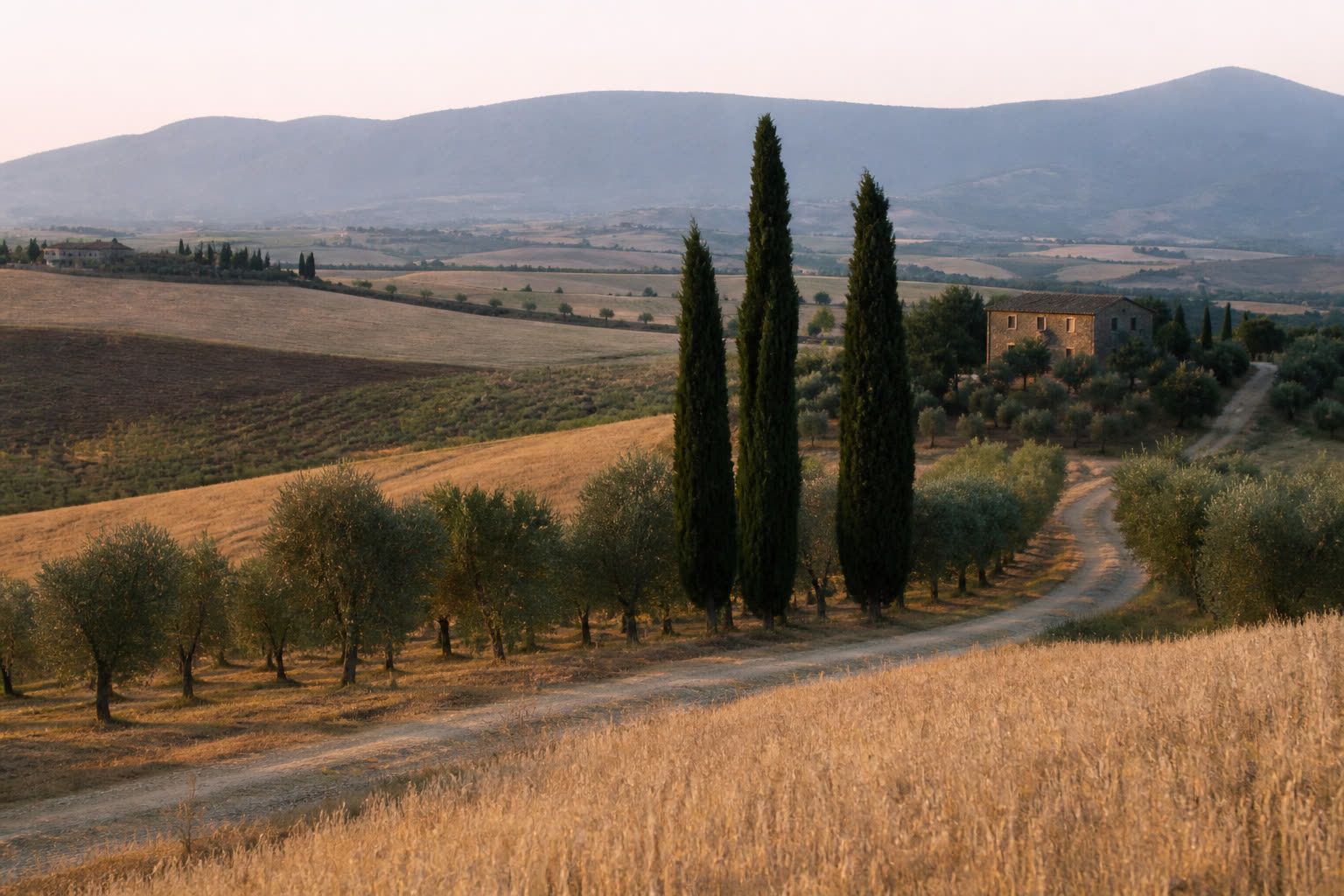
Inland Tuscany gives scale through hills. Light is honeyed. Cypress trees mark property and time. A villa can become a project and a metaphor at once: you repair walls, you repair a life. Cortona sits above the Val di Chiana; the work is agricultural, seasonal, inward. That is a true Italy. It is not the only one.
What Tuscany does less naturally is hold salt air, ferry schedules, and the frank glare of a south-facing cliff. Those are Campania’s tools. Readers who loved Mayes for starting over sometimes discover they wanted the sea in the frame—the sense that private weather is real and still not the largest thing in the view.
Southern Italy’s Second Act: Coastal, Not Villa
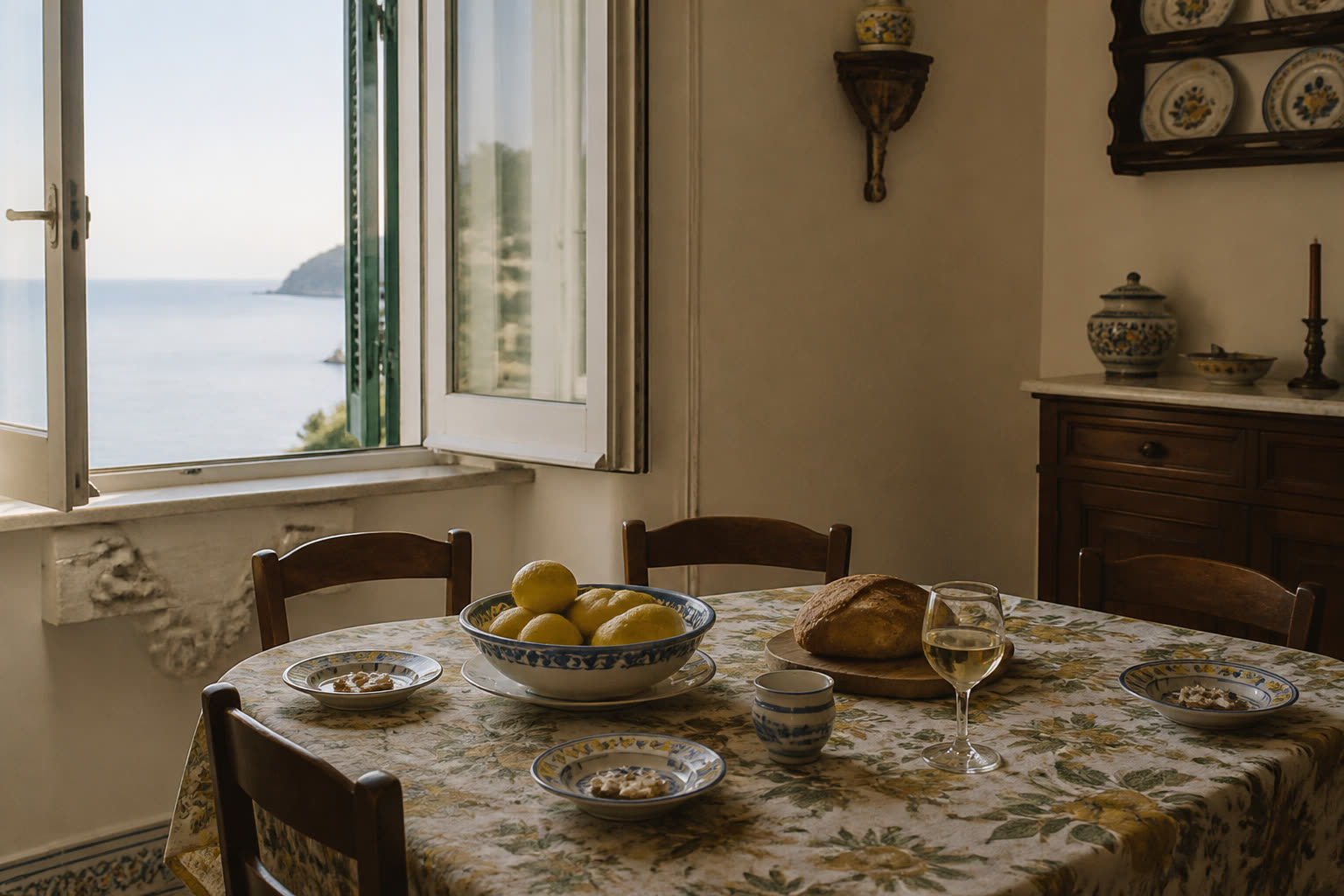
On the Costiera Amalfitana, starting over looks like learning a staircase. Towns stack themselves against limestone. Heat insists you rest at midday. Dinner begins when the light has changed its mind. There is no empty pastoral to hide in. The water is already working. You open a shutter because the room has warmed, and you are suddenly talking, a little, to the day.
That is why second chance romance feels honest here. A second chance on this coast is not a rebrand. It is hope permitted without requiring anyone to be forgotten. Friendship can be the ethical door. Shared coffee. Matching pace on a mule track. The courage to say you slept better after a walk.
If Mayes taught a generation that Italy can hold a later chapter, Amalfi Coast romance teaches that the chapter does not have to be rural, and it does not have to pretend grief is a weekend workshop. The cliffs are beautiful and also steep. Both facts belong in the same sentence.
Sorrento as the hinge
Readers traveling the feeling, not only the bookshelf, often land first in Sorrento. The town faces the Bay of Naples. It is a hinge between the peninsula’s citrus groves and the Amalfi road that threads toward Positano and Amalfi. Ferries, lemon gardens, and the long wait for a boat in summer heat do narrative work that a restored sitting room cannot. Two people share inconvenience. They learn each other’s patience. For Italian travel romance, shared inconvenience is often more intimate than shared scenery.
What to Look For (Without a Ranked List)
We will not invent a “best of” list or borrow other writers’ reputations. A short reader’s checklist, offered without awards:
- Place as climate, not decoration. You should feel heat, stairs, market hours, and the particular fatigue of a long afternoon.
- Food as work. Olive oil in Tuscany; sfusato lemons, seafood, and mineral whites on the coast. No generic “Italian feast.”
- A second act that keeps loyalty intact. Starting over is not erasing the first love, the first house, or the first country.
- Tempo that respects feeling. Memoir hours and healing-romance hours share this: do not montage recovery.
- Lived detail without fake glamour. Diesel from a harbor next to lemon peel. Laundry on a line. A roof that needs doing.
Those bones also belong to the best romantic novels set in Italy. Beauty is a witness, not a sedative. If a book could swap Cortona for a desert skyline without rewriting the plot, it was never similar to Mayes in the way that matters.
Italian Love Stories That Keep the House Ethic
Mayes’s house is a character. In coastal fiction, the equivalent is often a kitchen, a terrace, a path. The ethic is the same: you show up for maintenance. You do not demand that Italy perform. Readers of books similar to Under the Tuscan Sun recognize that immediately. They can smell the difference between a setting rented by the weekend and a setting that has to be lived in on a Tuesday.
Our novel keeps kitchen notes because taste is how Sofia Moretti and Tom Bennett learn to stay. We will not retell their ending. We will only say that southern Italian days—ferries, heat, a plate of clams, the long look from a terrace—do more narrative work than a speech about moving on. That is the cousin of Mayes’s roof beams, translated into salt air.
For how years of living in Italy became fiction under pen names, visit our author page. The meals were not research. They were a life. The book came after.
If You Want to Walk the Climate, Not Only Read It
Some readers finish a memoir and book a ticket. Fair. If the Amalfi side of this comparison is the one that caught you, our lived-Italy hub, Walk the Sunlit Paths, gathers the coast as we still recommend meeting it: towns, paths, and the meals that make the map make sense. It is not a merch page. It is the walking cousin of the novel.
Italy travel for romance readers fails when it treats the country as a weekend costume. It succeeds when the day has joints: coffee standing at the bar, a pause when heat thickens, a return to the street when late light turns copper. Tuscany has those joints. So does the south. They simply keep different hours, and different salt.
A Soft Path to the Story We Wrote
If this coastal second act is what you come to fiction for, you may already know our book. We point, then step aside.
Sunlit Paths to the Amalfi Coast follows Sofia and Tom as grief loosens—not all at once—through southern Italian days. It is emotional second-chance and grief-and-healing travel romance, not steam, and not a memoir with the names filed off. If you prefer to begin with the story itself, the Kindle edition waits quietly on Amazon.
Frances Mayes, Named Honestly
Credit where it belongs. Frances Mayes published Under the Tuscan Sun: At Home in Italy in 1996. The later film, with Diane Lane, carried the title into a wider American imagination. Neither is a romance novel. Naming that fact is not a slight. It is why the search for books similar to Under the Tuscan Sun keeps spilling into fiction: readers want the second-act climate in a story with a door they can walk through more than once.
We will not rank “read-alikes,” invent blurbs, or borrow other writers’ sentences. Similarity, for our purposes, is climatic. If a book lets Italy remain difficult and generous in the same hour, it is closer to Mayes than a novel that only rents a villa for a weekend of plot.
The Similar Book Is a Climate
Books similar to Under the Tuscan Sun are not copies of Cortona. They are books that let Italy be difficult and generous in the same hour: a house or a coast that needs tending, food that costs someone a climb, a later chapter that does not insult the earlier ones.
If Tuscany gave you the villa, let southern Italy give you the terrace. The light is clearer. The stairs are steeper. Wanting, when it returns, has to share the frame with the sea—and that is why it feels earned.