Readers looking for romance books set in Rome are often looking for Italy itself: civic beauty, evening streets, a city that has outlived every private weather. Rome can hold a love story. It holds it in public. That is the gift and the limit.
A Roman romance that tells the truth does not treat the Colosseum as a backdrop rental. It notices cobbles, heat, the particular fatigue of a long afternoon, a neighborhood fountain that still works, and the fact that two people must share a city that does not pause for them. Italian romance novels fail here when they use monuments as mood boards. They succeed when Rome remains a working capital—layered, loud, ordinary, and older than anyone’s plot.
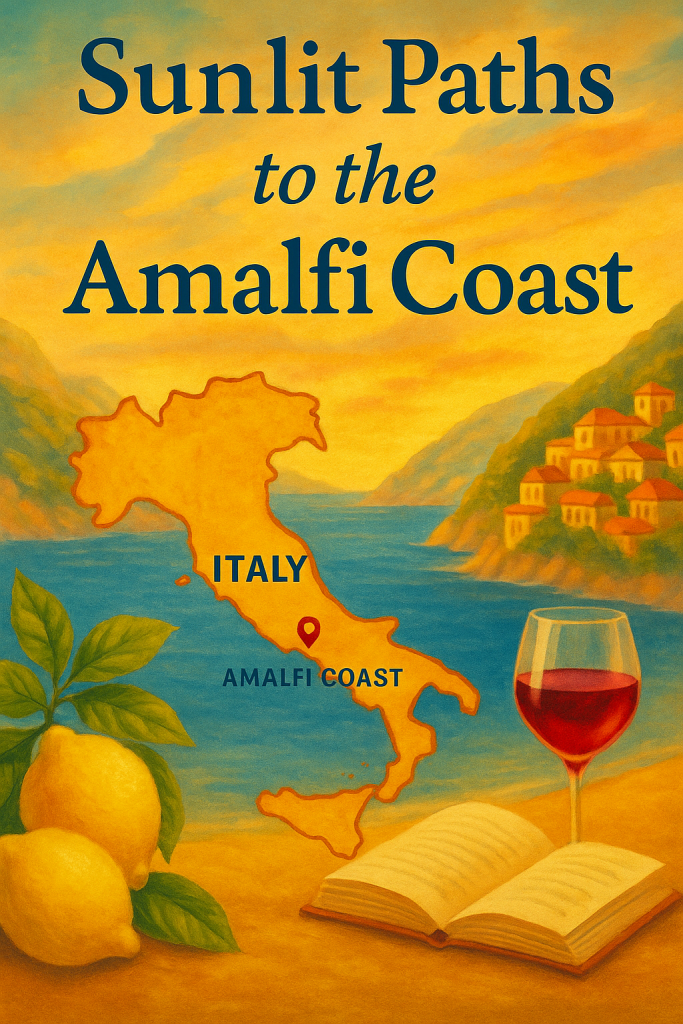
We write as Marina and Miles Ashford. Our novel, Sunlit Paths to the Amalfi Coast, lives farther south. Roughly eighty percent of it grew from years we lived and walked in Italy together. The cover is a painting. The author photo in the back is us when we were younger, in those places. We keep the pen names. We keep the lived detail. We will not pretend Rome and the Amalfi Coast do the same narrative work.
What Rome Actually Gives a Love Story
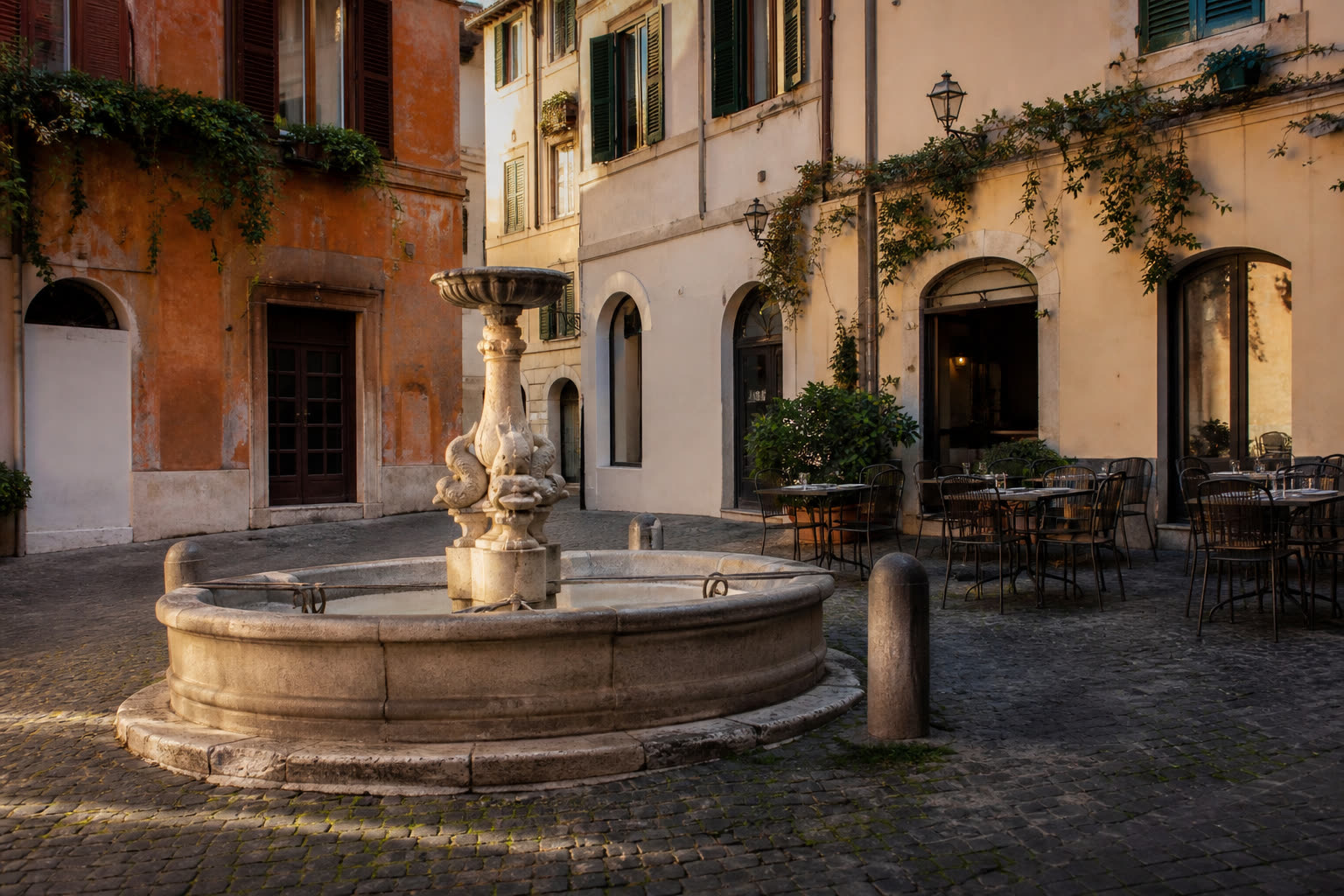
Rome’s romance grammar is civic. Piazzas are rooms without ceilings. The passeggiata is a rehearsal for being seen. Fountains are not ornaments; they are civic furniture, still offering water in the heat. Neighborhoods keep their own clocks: Testaccio’s market hours, Monti’s tight streets, Trastevere’s evening tables, a quiet courtyard that feels like a held breath.
That public-ness is useful. Two people cannot hide as easily as they might on a coastal terrace. A conversation started beside a fountain has witnesses: other diners, a scooter, a church bell. For emotional contemporary romance, witnesses are not enemies. They keep the story honest. You cannot rewrite the city to fit your mood. You have to walk through it.
Food is equally specific. Carbonara, cacio e pepe, amatriciana, and gricia are Roman pastas with Roman arguments attached—guanciale, pecorino, the right pepper. A romance book set in Rome that serves a generic “Italian feast” has not been to lunch. The city tastes like sharpness and salt, not cream poured for atmosphere.
What Rome Does Not Owe You
Rome does not owe you privacy, empty streets, or a skyline that behaves. Summer crowds at famous fountains are not a failure of the setting; they are the setting. Heat thickens. Buses do not apologize. A love story that needs the city to go quiet on command is asking Rome to become a different country.
That is why some readers who search romance books set in Rome discover they wanted a smaller Italy—southern Italy romance, a coast where private weather can sit beside something larger than a monument. Both hungers are legitimate. They are not the same book.
We have written about what romance novels set in Italy actually need from place. Rome supplies history, public rooms, and the pressure of being seen. The Amalfi Coast supplies proportion: cliffs, ferries, kitchens, and a sea that keeps working whether or not you are ready to want anything.
The ordinary hour is still the plot
The best Italian romance novels, Rome included, treat ordinary hours as the nervous system. Coffee standing at the bar. A pause when heat thickens. A return to the street when late light turns copper. Those hours are not filler between kisses. Steam is not the engine. Attention is.
In a city this dense, attention has to compete. That competition can be the point. Two people learn each other in the gaps: a quieter side street, a neighborhood square, the walk home when the famous sites have been surrendered to the evening.
Rome, Then South: Two Italies, One Reader Intent
Many searches for romance books set in Rome are really searches for Italian romance novels with a named city. Fair. Rome is the city English-language readers can picture. The train south exists for a reason. Roma Termini to Napoli, then the peninsula toward Sorrento and the Costiera, is a real geography, not a sequel hook.
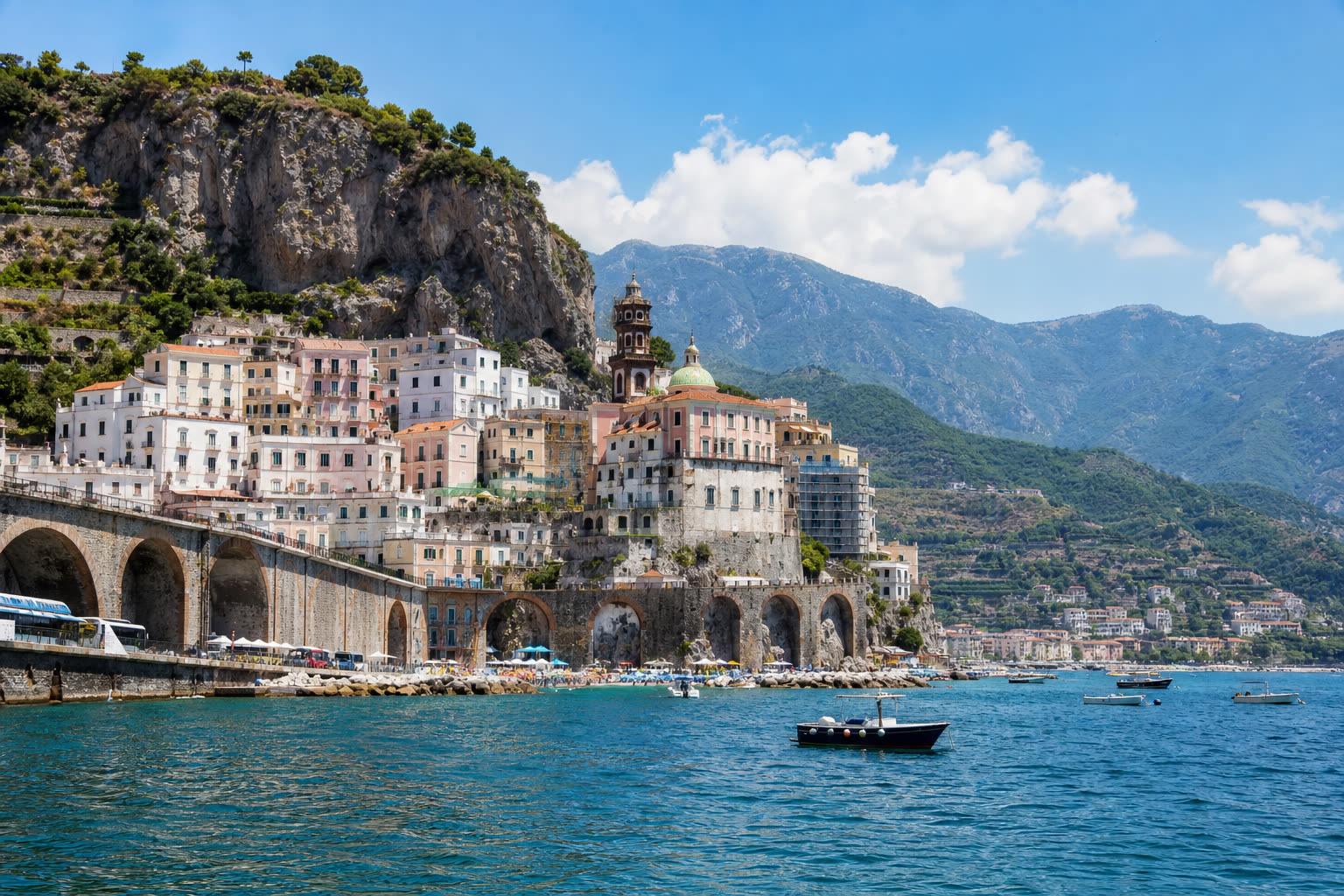
What changes on that ride is scale. Rome is a forum. The Amalfi Coast is a staircase. In Rome you share the civic. On the coast you share inconvenience: heat, boat waits, a path that will not be rushed. For second-chance and grief-and-healing stories, that smaller scale can be kinder. Your private winter is real. It is not the largest thing in the view.
If you want the walking version of that southern climate, our hub at Walk the Sunlit Paths gathers the coast as we still recommend meeting it. It is the lived-Italy tour page, not merch.
A Reader’s Checklist for Romance Books Set in Rome
No rankings. No invented awards. What to ask of the page:
- Neighborhood, not only monument. If the plot could be moved to any capital by swapping the postcard, it was never Roman.
- Food with a local argument. Pecorino and guanciale are not interchangeable with Amalfi lemons. Specificity is respect.
- Heat, crowds, and buses as plot. Inconvenience is intimacy when two people share it without theater.
- Public feeling. Rome watches. A good Roman love story knows it is being watched and still tells the truth quietly.
- Hope without amnesia. Especially in second chance romance: the city is old; so are the lives that meet there.
Those tests also sort Amalfi Coast romance from postcard fiction. Different tools. Same refusal to lie.
Lived Italy Without Turning Fiction into Memoir
We are careful. Pen names exist for a reason. The novel is fiction. It is also, in large part, weather we have stood inside: southern kitchens, cliff paths, Roman streets on the way to somewhere else, the particular fatigue of heat, the relief of shade. Using that truth in marketing does not require calling the cover “us,” and it does not require spoiling how Sofia and Tom find their way.
What it does require is refusing fake reviews and borrowed glamour. If a scene smells like espresso and warm stone, or lemon peel and harbor diesel, it is because those smells share Italian air. Romance books set in Rome deserve that honesty. Soft focus is a different genre.
For how those years became a book, visit our author page. The meals were not research. They were a life.
A Soft Path to the Story We Wrote
If you came for Rome and find yourself hungry for a quieter south, that is a legitimate reader path, not a bait and switch. We point, then step aside.
Sunlit Paths to the Amalfi Coast follows Sofia Moretti and Tom Bennett as grief loosens through southern Italian days. The novel is emotional second-chance / grief-and-healing travel romance, not steam. If you prefer to begin with the story itself, the Kindle edition waits on Amazon.
Why the Query Earns Clicks
English-language readers can picture Rome when they cannot yet picture Praiano. That is not a failure of taste. It is how a capital works in the imagination. Romance books set in Rome become a doorway query: show me Italy that feels inhabited. If the pages then offer only a gelato montage and a night view of ruins, the reader leaves hungry, which is why a frank essay about what the city actually gives can help—and why a southern chapter is an honest next sentence, not a hijack.
Rome’s gift is pressure and witness. Southern Italy’s gift is proportion and kitchen hours. A reader may want both in a year of reading. They should not be sold as the same climate. Italian love stories set in the capital keep civic furniture in the shot. Italian love stories set on the Costiera keep the sea’s indifference, which is a kinder teacher than a monument when grief is in the room.
Trastevere at dusk can look like a promise. It is also a neighborhood with laundry, scooters, and a trattoria that will not hold a table because your plot requires intimacy. Write that, and Rome becomes trustworthy. Skip it, and you have written a costume.
The same test applies south. Lemon groves are labor. Stairs are conversation architecture. If you would not climb them in the heat, do not ask characters to fall in love on them as if the climb were a metaphor only.
Rome Holds You in Public
Romance books set in Rome work when the city remains itself: civic, layered, unembarrassed about being old, unwilling to empty a piazza so two people can have a private montage. That public holding is a gift. It is also why some love stories need to continue south, where the sea can keep proportion.
Look for the ordinary hour. Look for the neighborhood fountain. Look for food that could only be Roman. Then, if you still want a terrace and a frank coastal light, Italy has that too—just not on the same street.