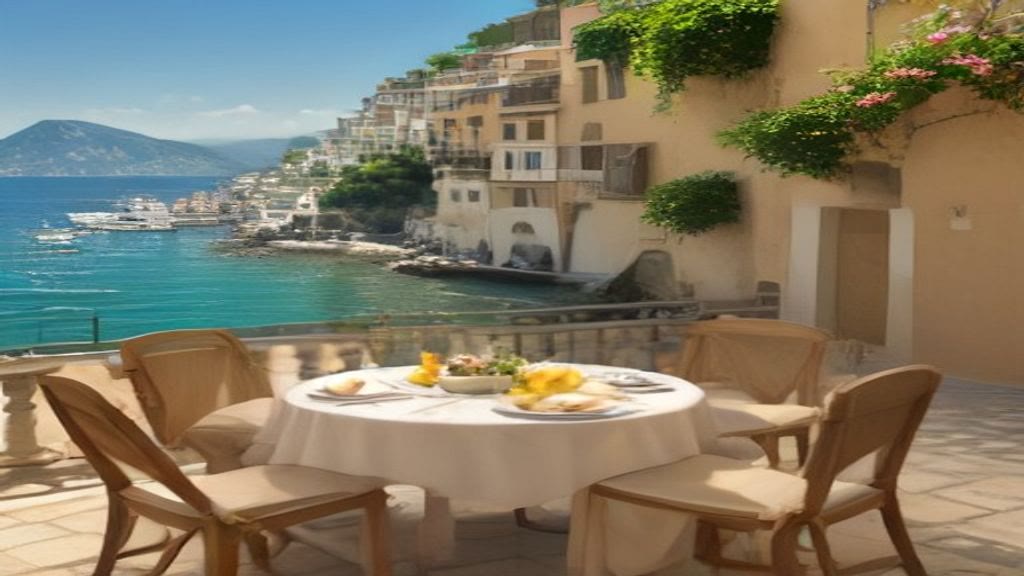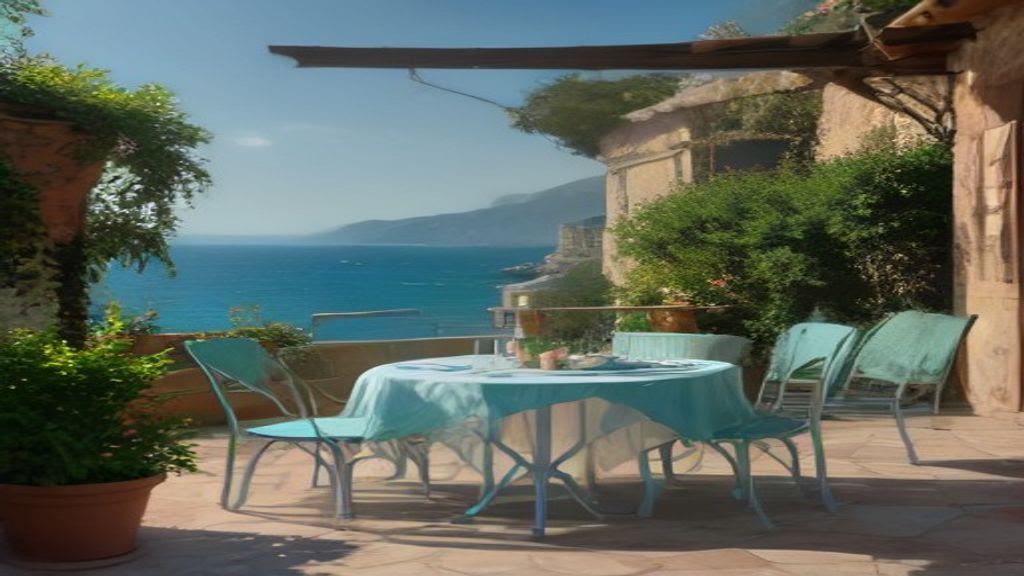
Ravello romance is not the same feeling as a love story set on a beach. It happens higher up, where the sea is a plane of light rather than a crowd, and where two people can hear themselves think.
That is why Ravello keeps appearing in Amalfi Coast love stories. Not because it is prettier than Positano in some official ranking, but because it is a different climate of attention. Gardens, terraces, and a hill town that still behaves like a town: those are the conditions a certain kind of romance needs.
If you have ever wanted a story that lingers instead of performing, Ravello Italy romance is the name for that want.
Why a Hill Town Holds a Love Story Differently
Ravello sits on a ridge more than three hundred and sixty meters above the Tyrrhenian. The water is there, always, but you look down at it. The famous road does not pour day-trippers through the piazza the way it pours them along the shore. You arrive by a climb, a bus that folds back on itself, or a walk that makes you notice your own breath.
Height changes a conversation. On the beach towns, the spectacle is immediate: stacked houses, ferries, the theater of arrival. In Ravello, the spectacle is delayed. You pass the Duomo, a café, a lane that looks like an ordinary Italian morning. Then a garden opens, and the coast is suddenly an argument for staying.
Ravello romance depends on that delay. Two people are not thrown into a postcard. They are given rooms, shade, and enough quiet that a glance has to mean something.
Quieter than Positano, and not by accident
Positano is a marvel, and it is also a funnel. The beach, the boutiques, the boats: the town is built to be seen from the water and walked as a descent. Ravello was built as a medieval hill settlement, a place of merchants and gardens, turned slightly inward. The UNESCO listing of the Costiera Amalfitana treats the whole coast as a cultural landscape; Ravello is one of the inland comuni that make that landscape more than a shoreline.
The difference is not snobbery. It is tempo. A Ravello afternoon can still be busy in July. It is rarely frantic in the way a beach platform is frantic. You can sit on a wall with a view and not be in anyone’s photograph. For a love story, that privacy is architecture.
We have written about what second-chance romance feels like on this same coast. The hill town is where that feeling often goes to think. Hope is easier to admit when you are not being jostled.
Villa Cimbrone and the Terrace of Infinity
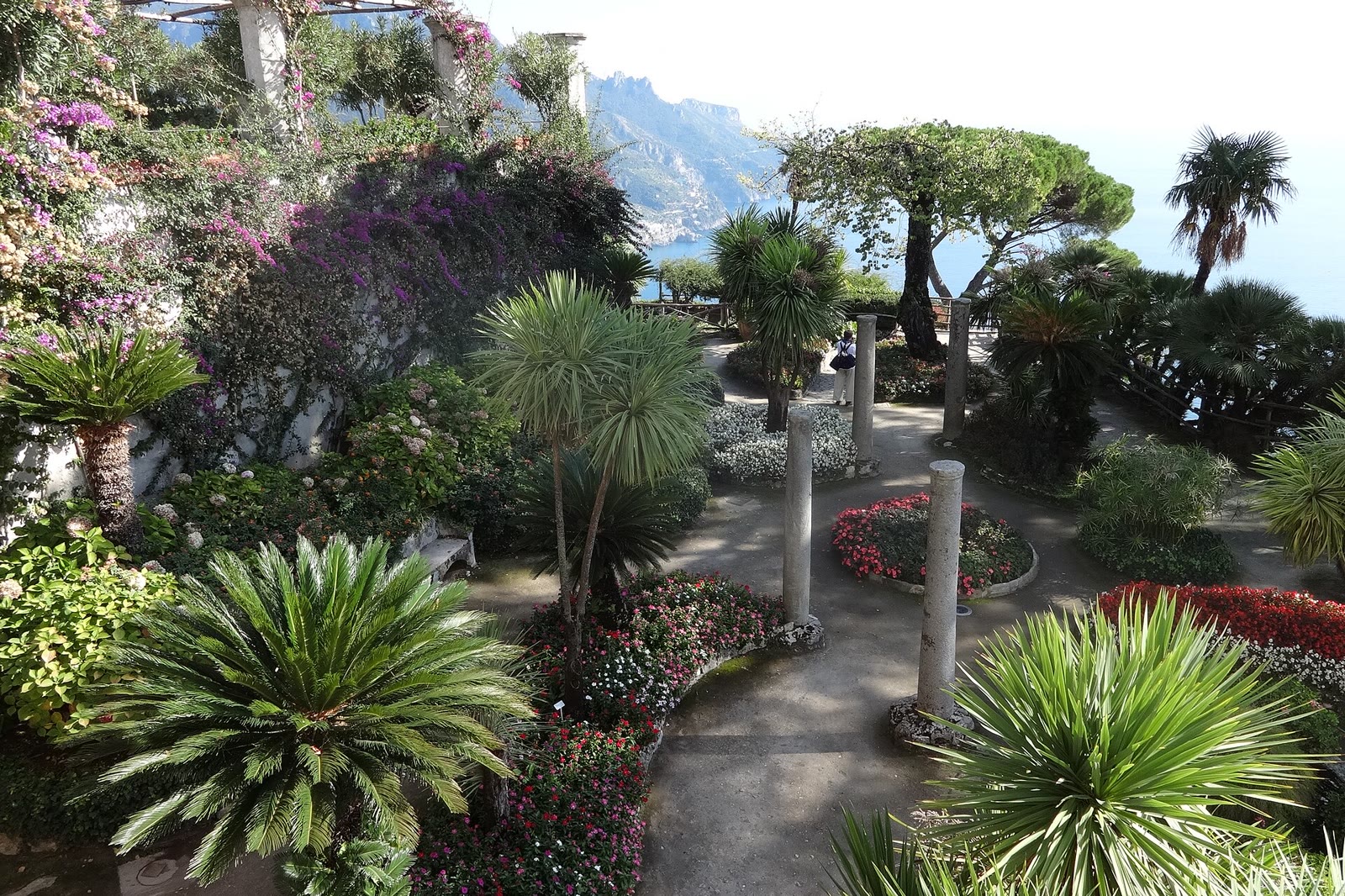
Ask anyone who has been in love in Ravello where the air changed, and they will often name a garden. Villa Cimbrone occupies a rocky spur at the far end of the town, a walk of ten or fifteen minutes from Piazza Duomo along lanes that grow quieter as they rise. The villa itself is a hotel. The gardens are open to visitors, which is the fact that matters for fiction and for anyone who is not checking into a suite.
The estate is old. Reliable mentions go back to Ravello’s medieval wealth; the name comes from the outcrop, once called Cimbronium. What most people walk through now is an early-twentieth-century reimagining: English romantic gardening, Italian light, classical statuary, and a long central avenue that ends in a drop. The villa’s own history notes the English gardener Vita Sackville-West among those who shaped the grounds, which helps explain the hybrid: not a formal Italian parterre alone, and not an English lawn pretending to be Mediterranean.
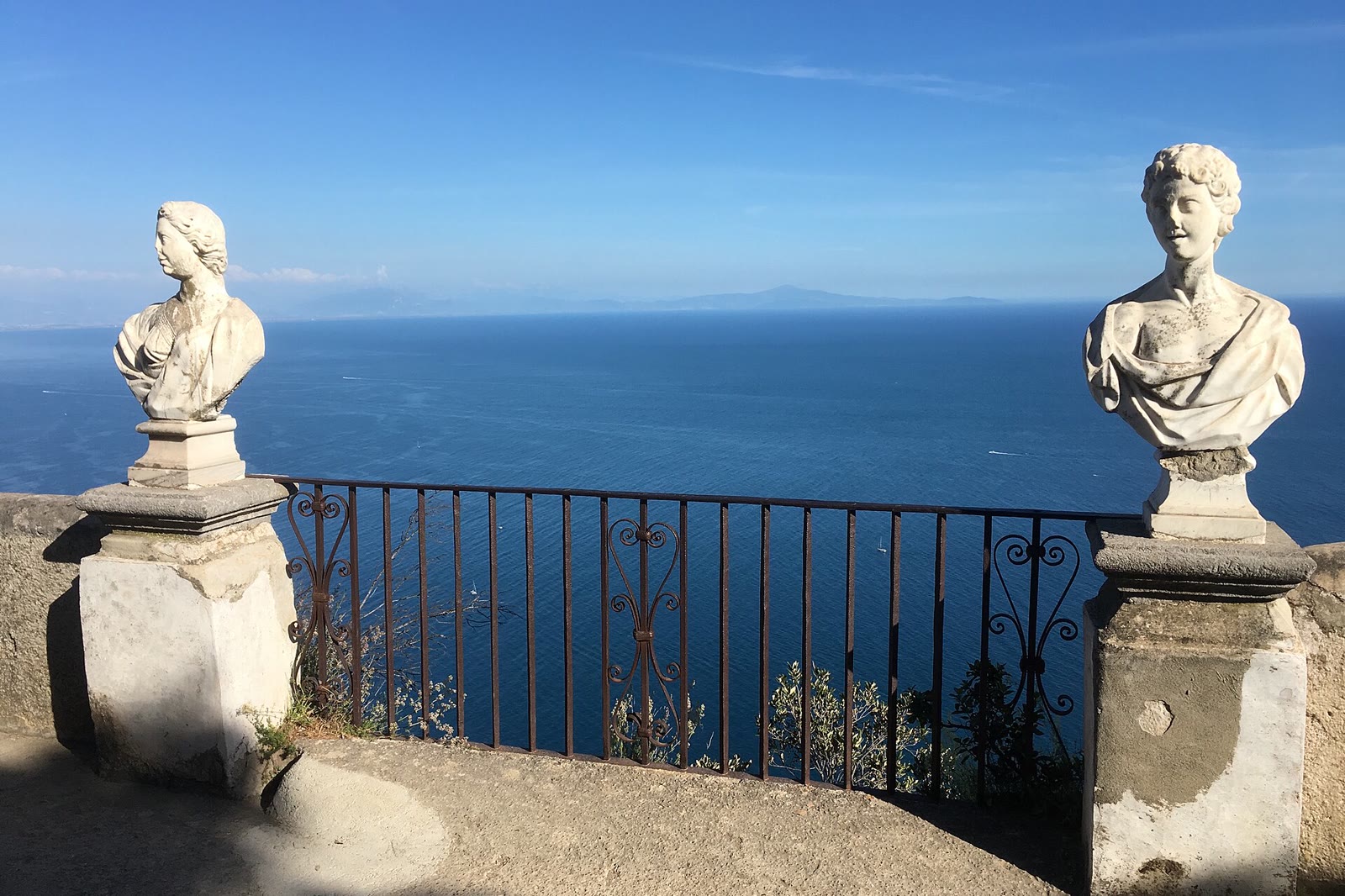
At the end of that walk is the Terrazza dell’Infinito, the Terrace of Infinity. It is a belvedere lined with marble busts, the parapet so close to the void that sea and sky can refuse to separate. On a clear day the Gulf of Salerno is not a backdrop. It is the next sentence. You stand, and the town you climbed from becomes a rumor of roofs.
What the terrace does to two people
Ravello romance uses this terrace because it is almost too much. Beauty that large can embarrass a small feeling, or it can give that feeling permission. Two characters who have been careful with each other suddenly have a horizon to look at instead of each other’s faces. Silence becomes possible without becoming a test.
There are other rooms in those gardens: a rose terrace, a tea-room pavilion, temples and copies, wisteria on the Viale dell’Immenso when the season is kind. The point for a novelist is not the inventory. It is the sequence. You walk. You are shaded. You are exposed. You arrive at a railing where there is nothing left to hide behind except air.
A love story set only in restaurants can skip that sequence. Ravello Italy romance, at its most honest, cannot. The garden is a plot device the landscape invented first.
Villa Rufolo, Music, and the Piazza That Still Works as a Town
Closer to the Duomo, Villa Rufolo offers a different lesson. The thirteenth-century complex looks over the square and, from its terraces, over the same gulf: cloister, towers, gardens, and, in summer, the Ravello Festival, born from Wagner’s 1880 visit, when those terraces suggested the magic garden of Parsifal.
Music matters to Ravello romance more than it first appears. A town that has practiced listening, with the coast as the other instrument, is a good place for people learning to hear one another again. The piazza is a room with a cathedral on one side and shade on the other. Ordinary life continues at altitude.
That ordinariness is the secret the gardens cannot supply alone. A viewpoint is a climax. A piazza is a life. The best Ravello love stories use both: the infinite terrace, then the walk back into town for lunch, as if the infinite had to be digested with bread.
Gardens as the Real Architecture of Ravello Romance
Readers who come to Amalfi Coast fiction for cliffside kisses are not wrong. They are incomplete. The coast’s love stories keep climbing to Ravello because gardens do a kind of work hotels and beaches cannot.
A garden is tended time. Someone pruned, watered, repaired a wall. Two people walking through that care are walking through evidence that attention lasts. For characters who have lost a partner, or lost the version of themselves that belonged to a first marriage, that evidence is not decorative. It is argument.
We wrote separately about how grief and healing romance finds its footing in Italy. Ravello is one of the places where that footing is literal: gravel, steps, a bench under a pine, a view that makes your private weather look correctly sized.
The lemon terraces begin even here, higher than the famous groves above Amalfi and Minori, because the whole ridge is agricultural before it is photogenic. Dry-stone walls hold soil that would otherwise leave. A Ravello morning smells like citrus and wet stone, not like sunscreen. That is a sensory fact, and it is also a moral one. The town is still doing work.
What the crowds cannot easily reach
None of this is a claim that Ravello is empty. Coaches arrive. Weddings book the villas. In high summer you will wait for a photograph at the belvedere. The difference is structural. The last stretch to Cimbrone is pedestrian. The gardens cost a ticket and ask for an hour. The piazza does not have a beach club. You cannot consume the town in twenty minutes between ferries.
A writer who wants two people to talk — actually talk — will send them somewhere the itinerary cannot hurry. Ravello romance is that somewhere. The hill is a filter.
How This Place Enters a Novel Without Becoming a Brochure
The temptation, in travel romance, is to tour. Ravello resists touring if you let it. Sofia Moretti would understand the kitchens first: a trattoria that feeds the piazza, a lemon on a board, a hill town that eats a little later because the climb has already been the appetite. Tom Bennett, arriving with a northerner’s calendar, would notice that the light on the terrace does not care what time his meeting would have been.
We will not retell their story. What belongs here is only this: they move through real Italian days, and Ravello is one of the days that asks them to slow down enough to be seen. Friendship, for people who have already loved once, needs a place that does not demand a performance. A garden path is very good at that. So is a table with a sliver of gulf and no one waiting for the check to become a plot point.
If you want the longer account of how years of living in Italy became fiction rather than research, it is on our author page. The gardens were not a mood board. They were walks we took because that is what you do with a Ravello evening.
A Soft Path Toward the Book
If this is the climate you come to fiction for, you may already know the novel. We will only point, then step aside.
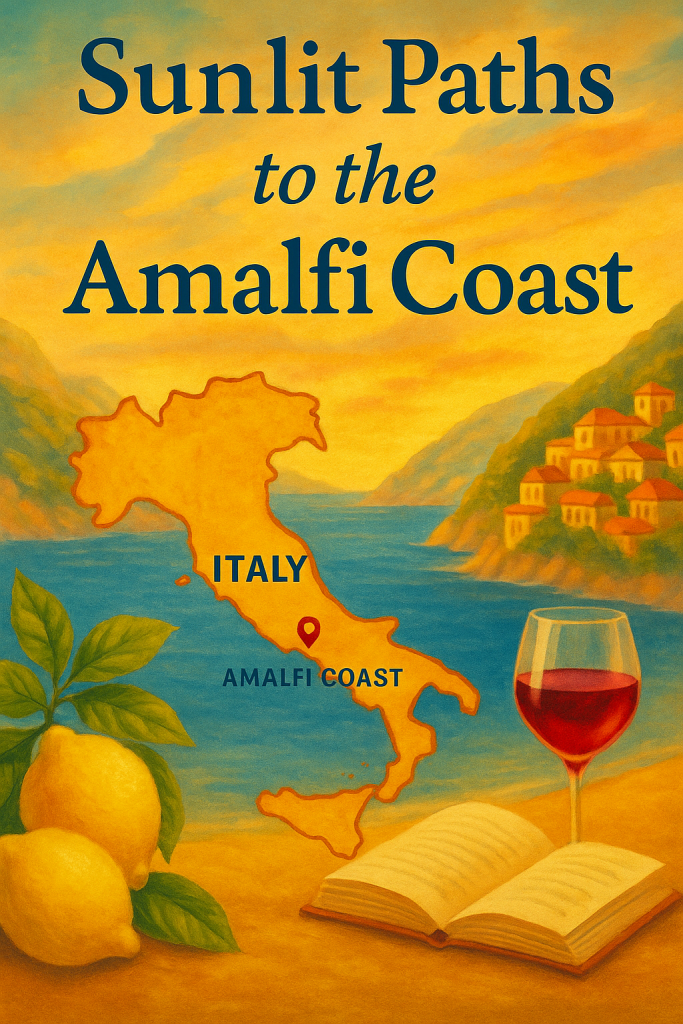
Sunlit Paths to the Amalfi Coast follows Sofia and Tom through southern Italian weathers, including the coast that looks different from a hill than from a beach. Ravello romance, in the book, is not a chapter title. It is a way of standing still long enough for wanting to become honest.
The Kindle edition is waiting quietly on Amazon. Open it when you want the gardens rather than a summary.
Stay for the Light
Ravello romance is the name for a simple preference: a love story that needs height, gardens, and a town that still has a piazza. Villa Cimbrone’s Terrace of Infinity is famous because it tells the truth about scale. Villa Rufolo tells the truth about music and civic memory. The lanes between them tell the truth about walking.
Positano will always have the stacked houses and the gasp. Ravello has the hour after the gasp, when two people have to decide whether to go back down or sit a little longer in the shade.
That hour is why the hill town keeps showing up in Amalfi Coast love stories. We hope you find your way there, on the page or in person, and that you walk the last lane slowly enough to notice who is walking with you.