Sicily isn’t just an island. It’s a living storybook, written in layers of sunlight, sea breeze, and ancient whispers. Every corner seems to tell a tale. Greek temples rise over lemon groves, Roman mosaics gleam under museum lights, and vineyards cling to volcanic slopes where lava once flowed. Greek and Roman Ruins in Sicily are where history meets modern. For those planning a trip, our Sicily Travel Guide 2026 offers the latest insights and tips.
For travelers, Sicily is both wild and refined. It’s where Europe and Africa nearly touch, where empires have left their fingerprints, and where modern life moves to the rhythm of espresso spoons clinking on saucers. To visit Sicily is to step into a world that feels untouched and timeless, yet alive with the colors and flavors of the Mediterranean.
The Land Where Civilizations Met
Sicily has always been at the center of history. Greeks, Romans, Arabs, Normans, and Spaniards all made it their home, and each left something beautiful behind. You can walk through Taormina’s Greek Theater and still feel the echoes of ancient applause, or wander the Valley of the Temples in Agrigento where Doric columns reach toward a sky as blue as the Aegean.
The city of Syracuse once rivaled Athens in culture and power. Its archaeological park is a time machine of stone and shadow, filled with amphitheaters and ancient quarries that whisper stories of poets and philosophers. Then there’s Piazza Armerina, a small town inland where a Roman villa holds some of the world’s best mosaics. The floor depicts hunting scenes and dancers, their details so vivid you almost expect them to move.
History here isn’t locked behind glass. It surrounds you in daily life. Children play soccer beside ancient walls, fishermen cast their lines near ruins that have stood for two thousand years, and at sunset the temples of Agrigento glow gold as if the gods still live there.
Mount Etna: The Heartbeat of Fire
At the island’s core stands Mount Etna, the highest and most active volcano in Europe. Locals call her “Mamma Etna,” and with good reason. She’s unpredictable, nurturing, and awe-inspiring all at once.
From afar, Etna looks peaceful, her slopes covered in vineyards and olive trees. But climb closer, and you’ll feel the pulse of her living earth. The ground is warm beneath your feet. Smoke drifts from craters that shimmer in the light. Hikers and photographers come for the thrill, but what they find is something more spiritual. Standing on Etna feels like standing on the border between creation and destruction, beauty and danger.
And yet, Etna gives life as much as she takes. Her ash makes the soil incredibly fertile, producing some of the finest wines in Italy. The vineyards of Etna, especially around the towns of Linguaglossa and Castiglione di Sicilia, have become a symbol of resilience. Their Nerello Mascalese grapes create volcanic wines unlike any other—smoky, elegant, and full of character, just like the island itself. Greek and Roman Ruins in Sicily can be found all over the island and are fun to find with your loved ones. You should plan a trip to Sicily and use a Sicily Travel Guide 2026.
Wineries that Tell Stories
Wine in Sicily isn’t just a drink. It’s a conversation between land and time. Each vineyard tells a story written in sunlight and soil. On Etna, red wines carry a trace of mineral smoke, while on the western coast near Marsala, sweet amber wines taste like the sea breeze and sunbaked stone.
In the countryside near Noto and Vittoria, you’ll find family-run estates that open their doors to visitors. You might be welcomed by the owner’s grandmother carrying a basket of fresh figs, or led through ancient cellars carved into rock. Tastings are long, unhurried affairs, always accompanied by bread, olives, and laughter.
Pair those wines with Sicily’s food, and you’ll understand why people fall hopelessly in love here.
A Feast for the Senses
Sicilian cuisine is a masterpiece born from centuries of cultural blending. Every meal feels like a celebration. Imagine sitting at a seaside trattoria as the sun sets, waves crashing softly below, and a plate of grilled swordfish drizzled with olive oil and lemon in front of you.
Or picture a morning market in Palermo, bursting with color and sound. Stalls overflow with tomatoes, pistachios, and fragrant oranges. The air smells of roasted peppers and freshly fried arancini, golden rice balls stuffed with cheese and ragù. Vendors shout prices in dialects older than Italy itself. Sicily Travel Guide 2026 should be utilized to find all of the things you are missing.
Then there’s the sweetness. Cannoli, filled with creamy ricotta and sprinkled with chocolate chips, are reason enough to visit Sicily. Cassata, a sponge cake layered with marzipan and candied fruit, looks almost too pretty to eat. Almost.
Each region has its own specialties, shaped by its history. In the Arab-influenced west, you’ll find couscous with fish and saffron. In the Greek south, pasta is tossed with mint and eggplant. And in Catania, near Etna’s slopes, you’ll discover “pasta alla Norma,” a dish so perfect that it’s named after a Sicilian opera.
Food here isn’t about following recipes. It’s about following your senses. Grab a bite to eat and visit the Greek and Roman Ruins in Sicily.
The Charm of the Towns and Coasts
Sicily is best explored slowly, one village at a time. Taormina is perhaps the island’s most famous gem—a clifftop town overlooking the Ionian Sea. Its Greek theater frames Mount Etna perfectly, a view so breathtaking it has inspired poets for centuries. The streets are filled with boutiques and cafes shaded by bougainvillea.
Further south, in Ortigia, the old heart of Syracuse, you’ll find baroque churches that shine like marble seashells. Narrow streets open suddenly to the waterfront, where couples stroll at sunset and fishing boats sway gently in the harbor.
In Cefalù, pastel houses rise directly from the sea, and the scent of salt and lemons lingers in the air. The medieval cathedral here glows in late afternoon light, and the beaches stretch into soft gold.
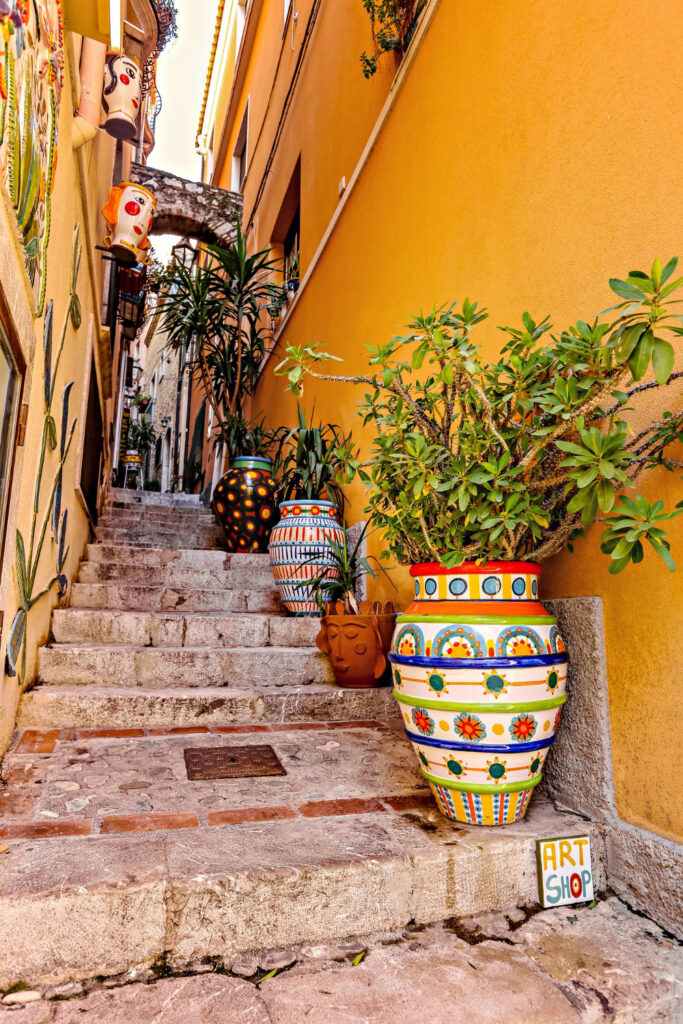
Even inland towns like Enna or Caltagirone feel cinematic. Ceramics, frescoes, and balconies heavy with flowers decorate the hillsides. Every place seems designed to be discovered at a slower pace, ideally with a glass of wine in hand.
Falling in Love with the Exotic Soul of Sicily
Sicily feels like a world apart, an island both ancient and alive. It doesn’t ask you to observe it like a museum—it asks you to participate. To eat, to dance, to swim, to laugh. A Sicily Travel Guide 2026 can help you get the most out of your trip!
You can watch lava flow on Etna one day and stand in a 2,000-year-old theater the next. You can sip wine in a vineyard grown from volcanic ash or lose track of time wandering Palermo’s markets. Everything feels vivid here, the colors, the flavors, even the silences.
Travelers often come expecting to find history and beauty. What surprises them most is how deeply Sicily gets under the skin. It’s not just a destination; it’s an emotion that lingers long after the flight home.
Greek and Roman Ruins in Sicily are a must visit and you will naturally fall in love with the island. The island teaches something simple yet profound: that life, like a good Sicilian meal, is best enjoyed slowly and shared with joy. Visit the
Chart Suggestion
“Top Cultural Highlights of Sicily”
| Region | Experience | Must-See Landmark |
|---|---|---|
| Eastern Sicily | Nature & Wine | Mount Etna vineyards |
| Western Sicily | Ancient History | Valley of the Temples |
| Southern Sicily | Roman Art | Villa Romana del Casale |
| Northern Sicily | Seaside & Architecture | Cefalù Cathedral |
| Central Sicily | Local Life | Enna hilltop town |
Author’s Note
Written by Marina Miles, inspired by the Mediterranean’s timeless beauty and the settings that shaped Sunlit Paths to the Amalfi Coast. Sicily remains one of Italy’s most poetic landscapes, where fire meets flavor, and every ruin tells a story.