1. A City Frozen in Emotion
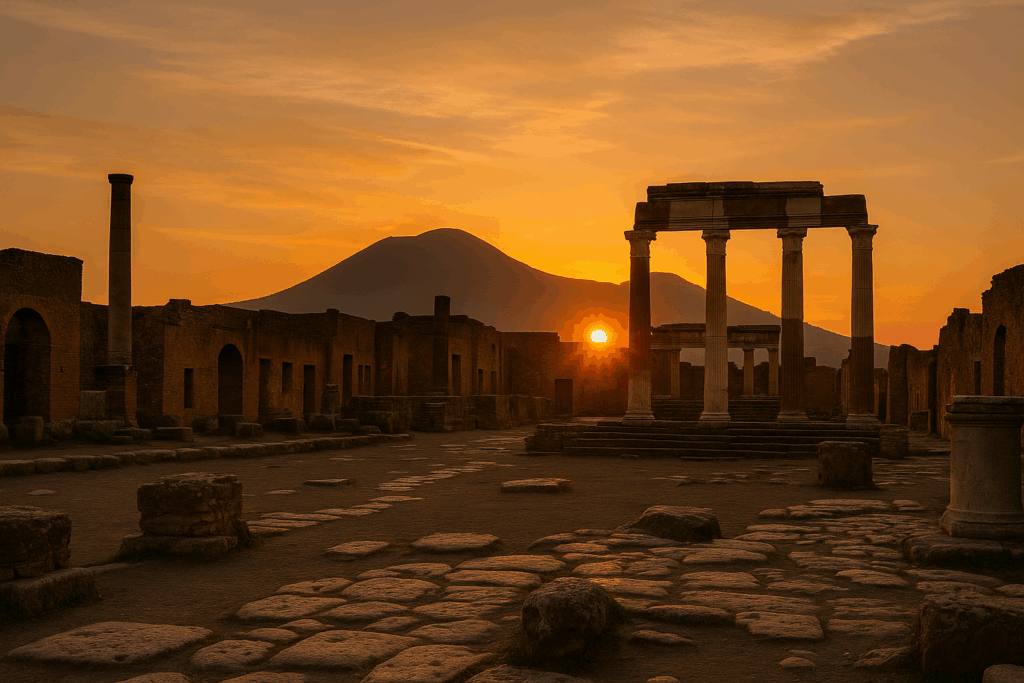
Visiting Pompeii in Italy is like exploring one of the most extraordinary windows into the human story ever uncovered. What makes it so powerful is not only the tragedy that ended it but the life it preserves. Walking through its stone streets today feels like stepping back into a day that never finished.
The eruption of Mount Vesuvius in 79 AD did not just destroy a city; it captured it. In a single moment, time stopped. Everyday life, love, laughter, and art were sealed in volcanic ash. What remains is not a ruin but a memory, held in perfect stillness.
For modern visitors, Pompeii is more than an archaeological site. It is a mirror of humanity. The walls still carry the words of affection, humor, and longing written two thousand years ago. The frescoes glow with color. The streets hum with echoes.
To writers like Marina Miles, whose work explores the balance between beauty and loss, Pompeii represents the heart of Italy’s dual identity: passion and impermanence intertwined.
2. The Pulse of a Lost City
At its height, Pompeii was vibrant and alive. Over 10,000 residents filled its markets, theaters, and temples. They lived in a world of comfort and creativity, surrounded by gardens, art, and music.
The city was known for its open courtyards, lavish wall paintings, and love of celebration. Archaeologists have uncovered bakeries with bread still in ovens, loaves perfectly preserved by ash. Wine jars remain in taverns. Even dogs and cats left their marks on the streets. Visiting Pompeii in Italy is a once in a lifetime opportunity!
This attention to ordinary life is what makes Pompeii extraordinary. It reminds us that history is not just about empires or wars but about people, about love written on walls, laughter shared at tables, and dreams left unfinished.
3. Art, Beauty, and the Language of Desire
Pompeii’s art is as vivid as the day it was created. The city was filled with frescoes depicting gods, lovers, and everyday life. The Romans believed that beauty was divine, and in Pompeii, art was part of daily existence.
The House of the Vettii, one of the city’s finest homes, contains frescoes so detailed that each scene feels alive. The figures dance, flirt, and celebrate. The walls reveal a society that understood both pleasure and transience.
Love in Pompeii was not hidden. Inscriptions, graffiti, and murals openly celebrated affection and attraction. In a tavern, a message still reads, “Lovers, like bees, lead a sweet life.” In another, a poet declares his devotion to a woman named Iris.
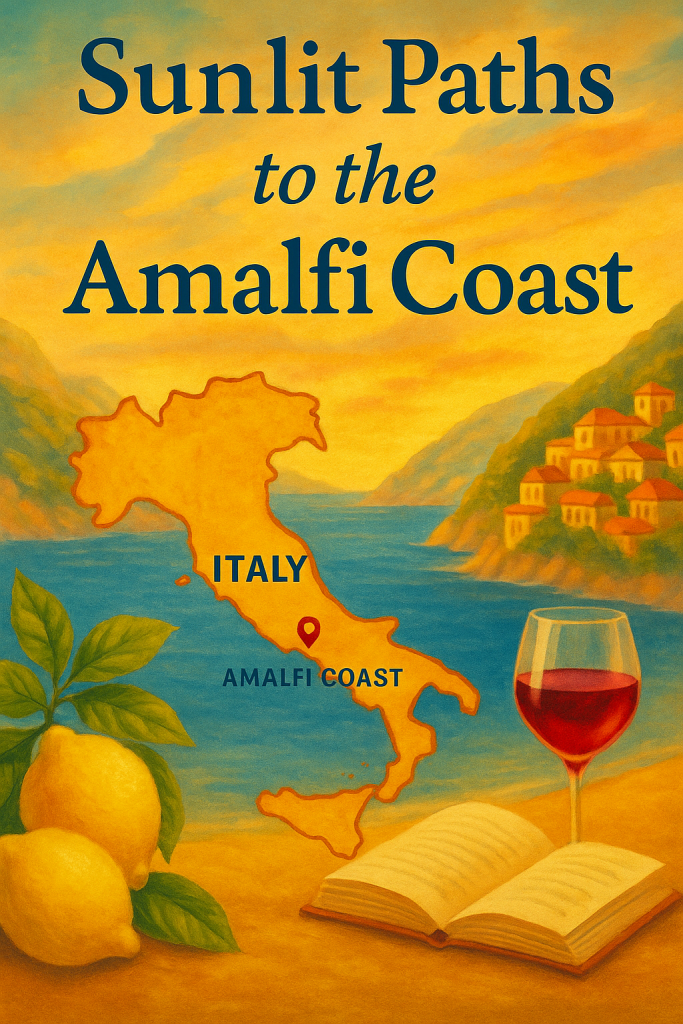
These expressions show that passion was universal long before modern literature named it. The art and writing of Pompeii reflect the same themes Marina Miles explores in Sunlit Paths to the Amalfi Coast: the beauty of love and the courage to feel deeply, even knowing that nothing lasts forever.
4. What Archaeology Reveals About the Heart of Pompeii
Pompeii offers a unique archaeological record of how people lived, worked, and loved. Every excavation deepens our understanding of human nature.
Chart: What Archaeologists Found Most in Pompeii (by Category)
| Category | Number of Finds | Symbolic Significance |
|---|---|---|
| Frescoes and Mosaics | 13,000+ | Art as daily language of life |
| Graffiti and Inscriptions | 11,000+ | Personal expression and humor |
| Domestic Items | 9,000+ | Everyday life and comfort |
| Jewelry and Personal Artifacts | 2,500+ | Love, status, and identity |
| Statues and Sculptures | 1,800+ | Faith and mythology |
This chart tells a simple truth: Pompeii was not only destroyed, it was preserved. The diversity of objects found shows how deeply culture, beauty, and affection were woven into daily life.
5. The Role of Women and Romance in Pompeii
The women of Pompeii lived in a society where power and love often intersected. Inscriptions show that women owned property, commissioned art, and ran businesses. In many frescoes, they appear as intellectual equals to men, reading, playing music, and writing poetry. Visiting Pompeii in Italy allows your imagination to flow.
Romance was not idealized but lived. Pompeii’s graffiti records heartbreak, flirtation, and devotion in equal measure. These writings remind us that the people of ancient Italy felt love as intensely as we do today.
For Marina Miles, who brings women’s inner worlds to life through stories of travel and transformation, Pompeii’s preserved voices feel deeply modern. The same emotional truths that shaped Roman life still echo across Italian shores: the longing for connection, the strength of memory, and the fragile beauty of desire.
6. The Music of Daily Life
Before the eruption, Pompeii thrived with rhythm. Street vendors called out their goods, fountains murmured through courtyards, and musicians filled open-air theaters with lyre and flute.
Excavations show that Pompeii had a complex soundscape. The design of villas amplified laughter and music, creating spaces meant for conversation and joy.
Visitors who walk those streets today often say they can feel that energy. The silence is haunting because it hides what once was so alive. This sense of suspended time is part of Pompeii’s lasting allure.
In Sunlit Paths to the Amalfi Coast, that same duality—joy and silence—runs through every scene. It is the emotional rhythm of Italy itself.
7. Love and Loss in the Shadow of Vesuvius
The eruption of Mount Vesuvius on August 24, 79 AD changed everything. Clouds of ash fell for hours, covering the city in darkness. When it ended, Pompeii had vanished beneath over 20 feet of pumice and volcanic debris.
Yet in that destruction came preservation. The people of Pompeii were caught mid-motion, their gestures frozen like sculpture. Couples died embracing. A child held their mother’s hand.
These human forms, later cast in plaster by archaeologists, reveal love as much as tragedy. They remind us that even in disaster, emotion endures. The volcano silenced the city, but it could not erase the humanity within it.
Pompeii teaches that love is always both delicate and enduring, a flame that survives even the ashes of time. Visiting Pompeii in Italy has to be on your bucket list.
8. The Rediscovery of Pompeii
Pompeii was rediscovered by accident in the 18th century during the construction of an aqueduct. Early excavations were clumsy, driven more by curiosity than science. Over time, however, archaeologists realized that this was not a site to be plundered but a civilization to be understood.
The rediscovery changed how the world saw ancient history. Suddenly, the past was no longer distant or abstract. It was real, tactile, and emotional.
Writers and artists from across Europe came to see the ruins. The Romantic poets of the 19th century—Byron, Shelley, and Goethe—found in Pompeii a metaphor for the soul. It became a place where passion and mortality coexisted.
For modern creatives like Marina Miles, it remains an endless source of inspiration, proof that beauty and heartbreak can occupy the same space.
9. Lessons from the Past
Pompeii’s greatest gift is empathy. It collapses time. When we see a bakery, a wine shop, or a bedroom, we realize that life has always been about the same things: love, family, art, and hope.
The city’s endurance across millennia reminds us that the human spirit is as persistent as the Mediterranean light. Even after catastrophe, beauty finds a way to return.
This theme connects seamlessly to Sunlit Paths to the Amalfi Coast, where light, landscape, and memory serve as bridges between past and present. Just as Pompeii emerged from darkness, so too do Marina Miles’ characters find renewal after loss.
10. The Timeless Italian Spirit
What links Pompeii to the Amalfi Coast, Rome, and modern Italy is a cultural devotion to life. Italians understand that art and love are not luxuries; they are necessities.
In every era, Italy has transformed hardship into expression. From the ruins of Pompeii to the cathedrals of Florence, the country reminds us that beauty is not the absence of suffering but the response to it. Visiting Pompeii in Italy is a must do for everyone in their lifetime.
This philosophy runs through Marina Miles’ writing: that love and resilience are inseparable, that the past is not dead but alive within every stone and story.
11. Pompeii and the Future
Today, Pompeii is alive again. New excavations continue to reveal rooms, streets, and gardens untouched for centuries. Archaeologists are using 3D mapping, AI scanning, and restoration to bring color back to faded walls.
Visitors in 2026 will experience a Pompeii more vivid than ever before. Advances in preservation are allowing historians to restore frescoes in true color and even read inscriptions hidden beneath layers of ash.
This renewal is a fitting metaphor for Italy itself. The country never truly forgets. It restores, reimagines, and celebrates.
12. A Final Reflection: Love Beneath the Ashes
Pompeii’s story is not about destruction but about rediscovery. It tells us that life, even when interrupted, continues to speak through art, architecture, and memory.
The people who lived there are gone, but their hearts remain visible in the traces they left behind. Their laughter, love, and light live on in every restored mosaic.
In the end, Pompeii is a love story, between humanity and time. And like all great romances, it endures because it reminds us what it means to feel deeply and to leave beauty behind.
Pompeii Reawakened is more than history. It is the reflection of our own longing to be remembered, to love without fear, and to find meaning in the fleeting glow of life beneath the Italian sun.