We do not run a warehouse of trinkets. We sell a few print-on-demand objects that keep a stretch of coast on a kitchen table or a market bag, and we sell them from a small catalog, not from a souvenir kiosk that has to shout. If you are looking for Amalfi Coast gifts that are not junk, start with the two we actually make: a lemon seaside mug, and a vintage Vespa tote. That is the honest inventory for this essay. Not twenty interchangeable keychains.
The trip is one thing. The object is another. A week on the peninsula cannot be boxed. A mug can sit beside the kettle in February and still smell, a little, like the terrace. A tote can carry peaches in a town that is not Positano and still have the mint-green scooter on its side. We will not pretend these things are the coast. We will tell you what they are, where they live on the site, and why we bothered to print them.
Everything here is listed in the travel shop. That page is the catalog. Product pages may send you onward to Etsy to complete a purchase; we will not invent those outbound addresses. Come to our pages first. Read the object. Then decide.
The Lemon Mug on a Kitchen Table
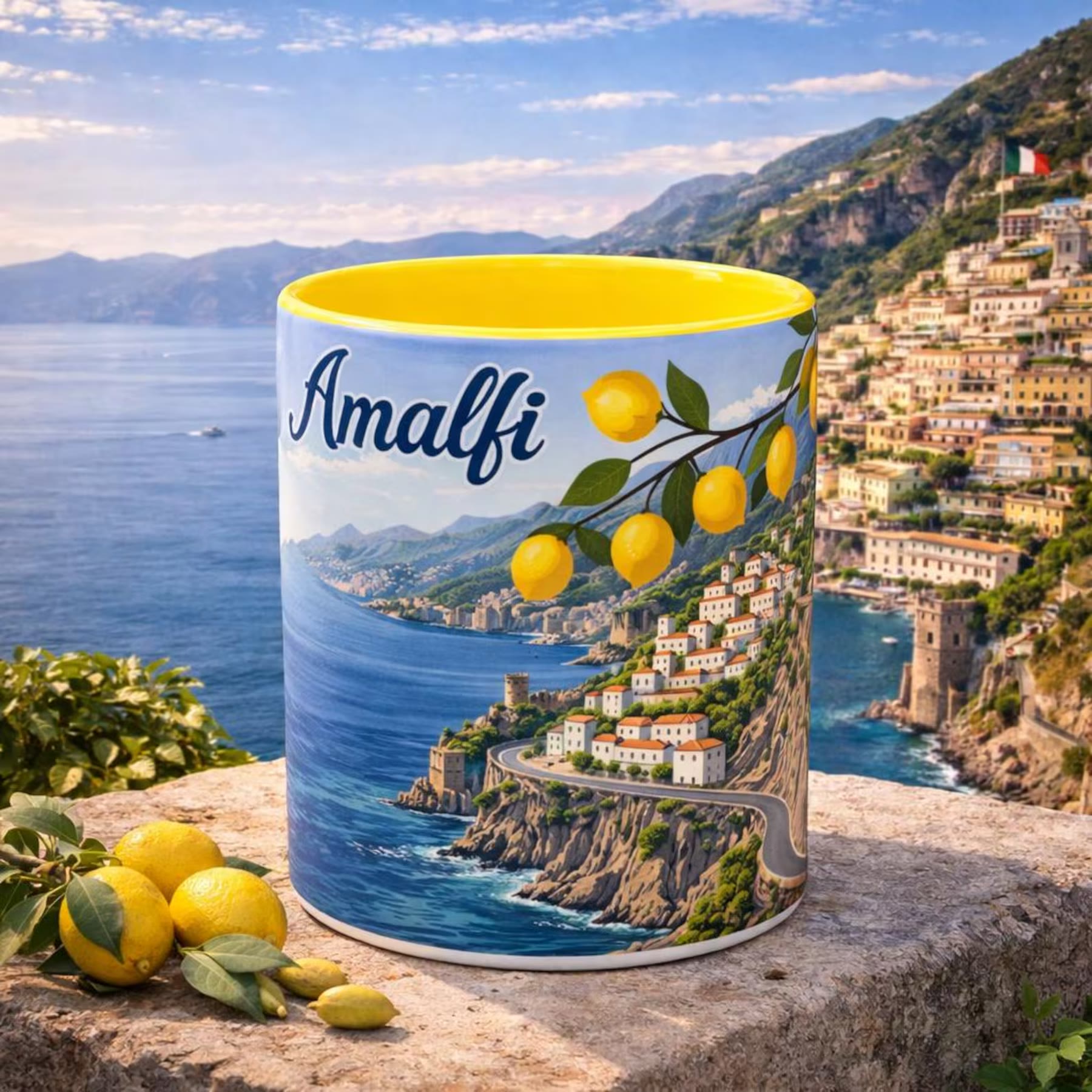
The Amalfi Coast lemon mug is an eleven-ounce ceramic cup with a wraparound illustration: terraced houses, cobalt water, a branch of fruit heavy enough to matter. The listing currently sits at $19.95. The body is white and glossy. Interior and handle come in a contrasting color — black on some listings, a citrus yellow on the photograph we use — so the scene sits in a frame. It is dishwasher-safe and microwave-safe, lead- and BPA-free, printed to be used, not stored in tissue paper.
We like it because it is a morning object. Not a shelf object. You wrap the C-handle, and the lemons are in your peripheral vision while the kettle finishes. That is the cheap daily version of the peninsula: not a flight, a pause. If you have stood in a grove above Amalfi town, you will recognize the logic. If you have only stood in a supermarket, you will still get the fruit as a shape, long and yellow, which is closer to sfusato than the round grocery lemon even if it is only ink.
Print-on-demand means we do not keep a stack in a closet. The mug is made when you order it, in the United States, with the limits that implies: a production window, a ship date that is not overnight, a print that should hold through ordinary washing. We will not call it heirloom porcelain. We will call it a sturdy cup with a scene that has not been designed to look expensive in a glass cabinet. Use it. Let the interior color take the tea stains as interiors do. Buy a second one if the first becomes the house mug, which is the usual fate of a cup that lives beside the kettle.
What it is not: a handmade piece from a Vietri workshop, a numbered reproduction, a “collector” object with a certificate. Those exist in the world. We do not sell them. This is an accent coffee mug with a coastal lemon scene, sold as a small gift for people who already have the coast in their heads. If that sounds modest, good. Modest is the point of a kitchen object.
Why Lemons, and Why Not a Snow Globe
Amalfi Coast gifts fail when they treat the fruit as a cartoon. A lemon-shaped candle that smells like cleaner. A bottle of limoncello that has never seen a terrace. We grew tired of that version while we still lived there. The mug keeps the fruit on a branch, over a town that has to cling to a cliff, which is closer to husbandry than to a mascot. You can read our lemon essay if you want the sfusato named properly. You do not need the essay to use the cup. You only need to prefer a scene over a slogan.
A snow globe of Positano is a joke the town is tired of. A mug you drink from is closer to how the place actually enters a life after the suitcase is unpacked. Morning. Heat in the hands. A small picture that does not require a shelf. Italian travel gifts, when they work, are this ordinary. They survive the week you got home. They do not require a special occasion to be taken out.
If you are buying for someone who has never been, say so in the note, not on the object. The illustration does not need the word “wish you were here.” It needs the houses, the water, the fruit. The person who has been will fill in the rest. The person who has not will still have a better object than a magnet that names the town in five fonts.
The Vespa Tote as a Market Bag
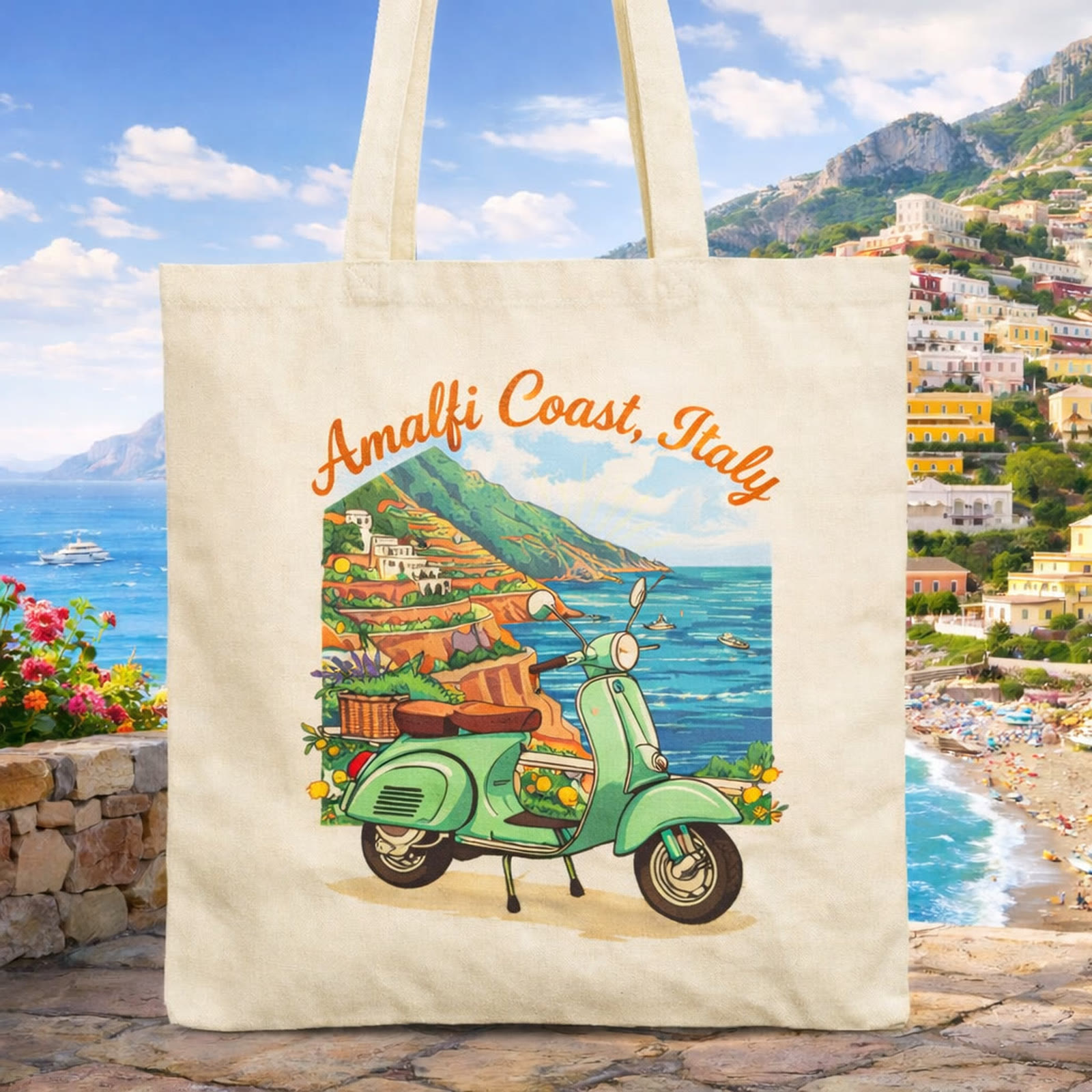
The Amalfi Coast tote is a natural cotton canvas bag with a vintage travel illustration: a mint-green scooter, a wicker basket, lemons, a coastal road, and the lettering “Amalfi Coast, Italy” arched over the scene. The listing currently sits at $27.95. It is square, sturdy, cream-colored, made to be seen and used — market runs, a paperback, a bottle stood upright in the base, the ordinary freight of a day that is not trying to be a photograph.
We wanted a Vespa tote that looked like a mid-century travel plate, not like a novelty print slapped on polyester. Canvas takes the ink. Canvas also takes the tomato stain, which is correct. This is a bag for a farmers’ market in a town that may not be Italian. The scooter on the side is the memory. The handles are the work. If you only carry it to the coast, you have misunderstood the assignment. Carry it to the grocery store in February. Let the mint-green scooter look slightly overdressed among the cereal boxes. That mismatch is the charm.
Print-on-demand again: no warehouse stack, a production window, a bag that is a textile object rather than leather goods. We will not claim it will last a decade of daily construction-site use. We will claim it is a better market bag than the giveaway tote that sheds ink in the rain. Spot-clean as canvas asks. Do not put it through a punishment cycle and then write to us as if it were a hiking pack. It is a travel-and-market bag with a picture on it. Treat it like one.
What it is not: a leather satchel, a limited artist’s edition, a replica of a 1950s poster with a museum license. It is our illustration on cotton. If you want museum paper, go to a museum. If you want something that will hold peaches and a novel on the same afternoon, this is the one we sell.
Trip Versus Object
If you are going, go. The object will not replace the stairs, the heat, the small boat, the grove. We keep the lived-Italy planning on a separate page because gifts and days should not be confused. Walk the Sunlit Paths is the coast. This essay is the kitchen. Buy the mug because you want the morning to have a picture in it. Book the trip because you want the ground. Doing both is allowed. Pretending they are the same purchase is how you end up with a cupboard of things that never got used and a week you never took.
If you are not going this year, the objects are a decent second. Not a consolation prize. A pause. Plenty of readers finish the novel and are not in a position to fly. We would rather they have a cup that tells the truth about the fruit than a countdown calendar that makes them feel late. The tote, especially, is for the life you are already in. Put the book in it. Put the lemons in it if your market has any. Walk home.
We wrote Sunlit Paths to the Amalfi Coast from the years, not from a merchandising plan. Sofia and Tom do not exist to sell you a bag. The bag exists because, after the years, we still wanted the scooter and the fruit on something we could carry. That is the whole brand logic, such as it is. Small catalog. Lived pictures. No junk.
What We Do Not Sell
We do not sell a twelve-piece matching set. We do not sell “Positano” on a shot glass. We do not sell a fake antique map with a heart over a village we have not stood in. The travel shop currently holds a handful of destination mugs and this tote, plus the lemon seaside cup. Rome, Lake Como, a Santorini companion — those are a separate morning, a separate essay. If you came here for a giant gift guide, older listicles exist on the site. This post is product-led because the honest version of Amalfi Coast gifts, from us, is two objects described carefully.
POD and print items have a look. You can see the illustration. You can see the mug is ceramic and the tote is canvas. You cannot see a craftsman’s stamp because there isn’t one. We would rather say that than borrow the language of a boutique that throws pots on a wheel in Minori. If you want that wheel, go to Minori. Bring the tote. Put the pot in it if they will let you, and be careful on the stairs.
Prices above are as currently listed on the product pages. They can move. Availability is the ordinary print-on-demand kind: in production when you order, not a warehouse count we can quote. If a listing is gone, it is gone. We will not pretend we have a back room.
How to Give Them Without Making a Speech
Wrap the mug so it can be used the next morning. Do not add a card that retells the plot of the novel. A single sentence is enough: the coast, the fruit, drink something hot. For the tote, skip the tissue paper that will be thrown away on the sidewalk. Fold it. Let the scooter show. If you are giving both, you are giving a kitchen and a street, which is a better pair than a mug and a matching coaster we do not make.
If the person in question is a reader, the book can sit in the tote. That is a bundle we do not sell as a SKU, and we will not invent one. You can assemble it yourself. Softly. No ribbon that says “Amalfi starter kit.” The point of these Amalfi Coast gifts is that they look like objects, not like a campaign.
Italian travel gifts go wrong when they require the recipient to perform delight. These two do not. They require coffee and a market list. That is a lower, better bar.
The Catalog, Not a Mall
Start at the travel shop if you want to see the handful of pieces together. Then open the lemon mug page, then the Vespa tote page. Those are the on-site addresses that matter. From there, the product page may offer an Etsy checkout; follow it if that is how the listing is set up. Do not hunt for a storefront we have not linked. Do not trust a search result that is only the same illustration on a different object we do not stand behind.
We will keep the catalog small on purpose. When we add something, it will be another object we would use, not another slot in a gift list. Until then, this is the Amalfi pair: fruit on a cup, scooter on a bag. Kitchen table. Market street. The coast as a picture you can live next to, which is not the same as the coast, and is still worth having on a Wednesday in a town with no cliff at all.
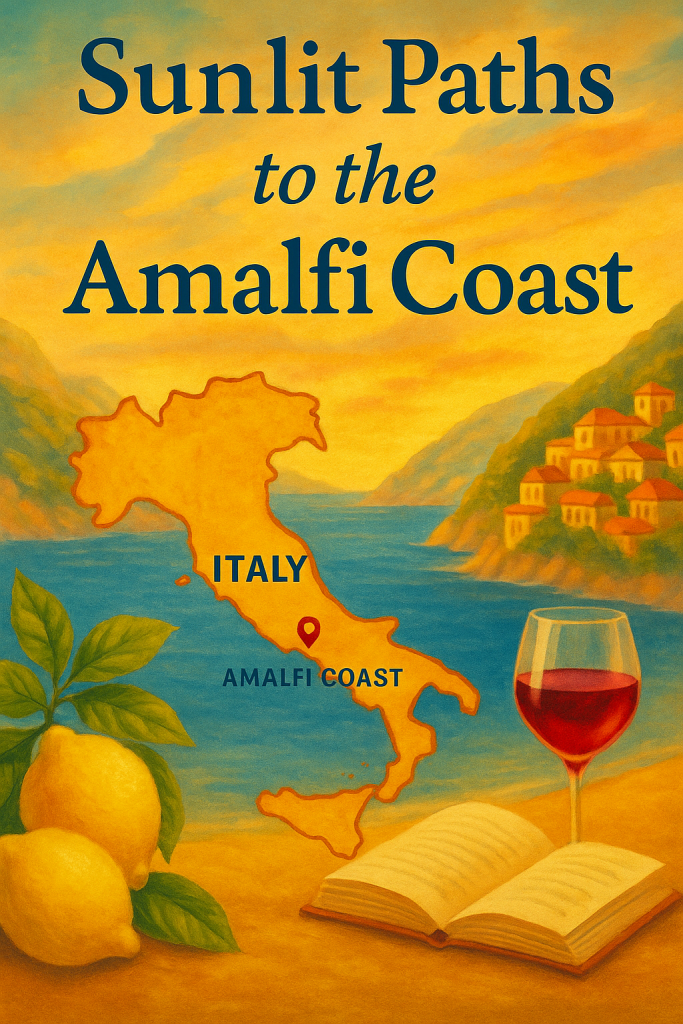
If you want the Amalfi Coast story itself, start with Sunlit Paths to the Amalfi Coast. The Kindle edition is on Amazon.