Second chance romance is often described as a reunion. Two people find each other again, and the past becomes a doorway. On the Amalfi Coast, the feeling is quieter than that. It is less a dramatic return than a slow permission to hope, offered by light, stairs, and the ordinary Italian hours that refuse to be rushed.
Italy does not ask a grieving person to become new overnight. It asks them to sit down, to taste something bright, and to notice that the day is still beautiful. That is the emotional weather of a second chance set among lemon terraces and cliffside towns.
What Second Chance Romance Feels Like in Italy
The phrase can sound neat, as if love simply resumes. Anyone who has lost a partner, or lost the version of themselves that belonged to a marriage, knows it is not neat.
A second chance, in this sense, is not amnesia. It is the moment a person realizes that tenderness might still be possible, even while memory remains. The old love is not replaced. It is carried, more gently, into a life that has room for another person.
Italy is unusually good at holding that contradiction. A village can be centuries old and still serve lunch as if the afternoon were invented this morning. Grief and appetite sit at the same table.
You can miss someone and still want another glass of wine. You can be loyal to the past and still laugh when a waiter insists you try the sfusato lemon, the long fruit of these terraces. That is what the trope feels like when it is honest: not a reset, but a widening.
It begins with attention, not a grand speech
In cities built for speed, reunion often arrives as a speech or a crisis. On this coast, it is more likely to arrive as attention. Who notices that you take your coffee standing at the bar, or remembers the table with a sliver of sea. Who walks a little slower on the stairs so you can talk without losing your breath.
Those details are small. They are also how people who have already loved once recognize that they might be able to love again. They have seen grand gestures. They are looking for something that lasts after the ferry leaves.
Why the Amalfi Coast Changes a Second Chance
Place is not decoration here. It changes the tempo of a character’s inner life.
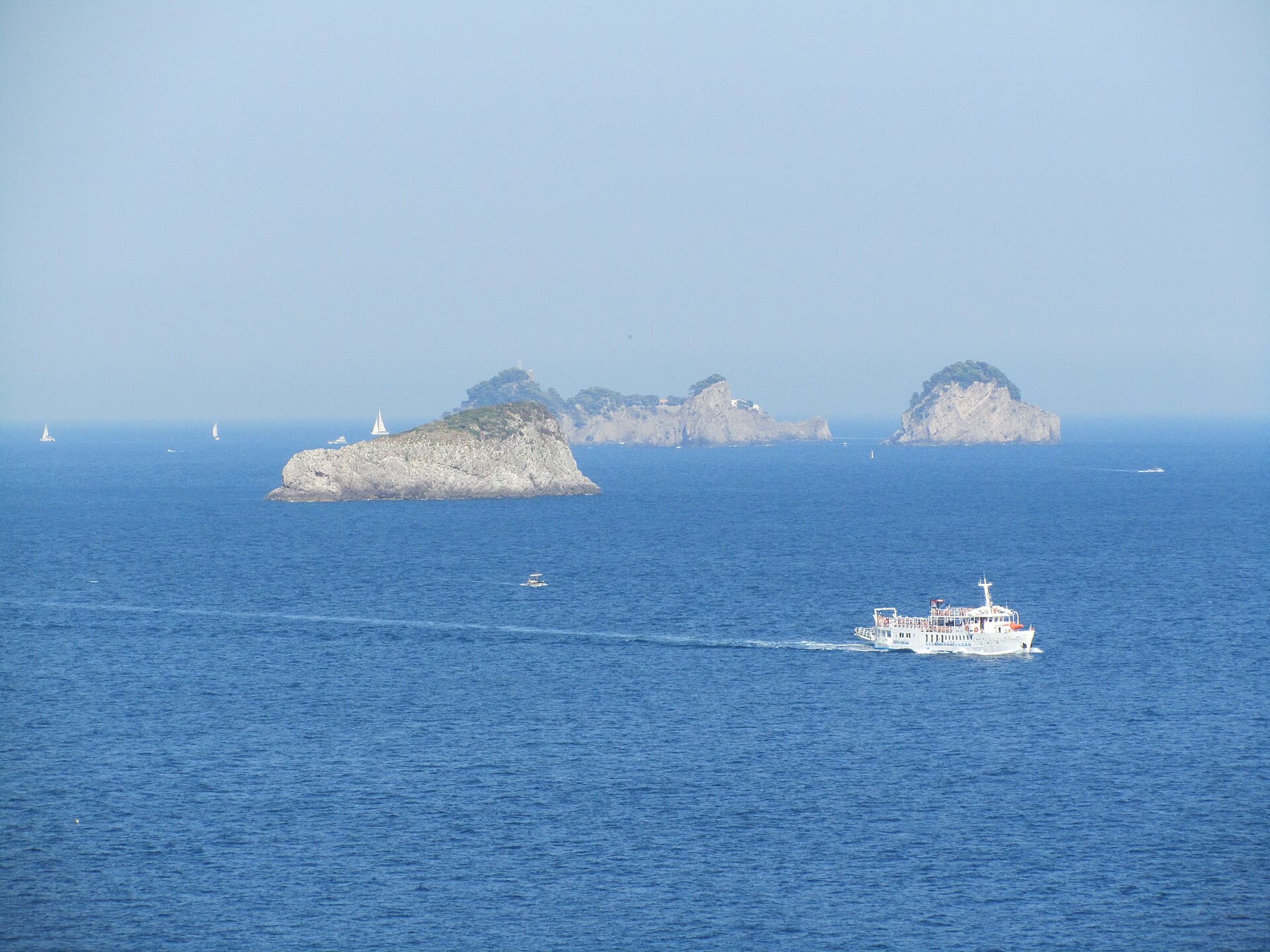
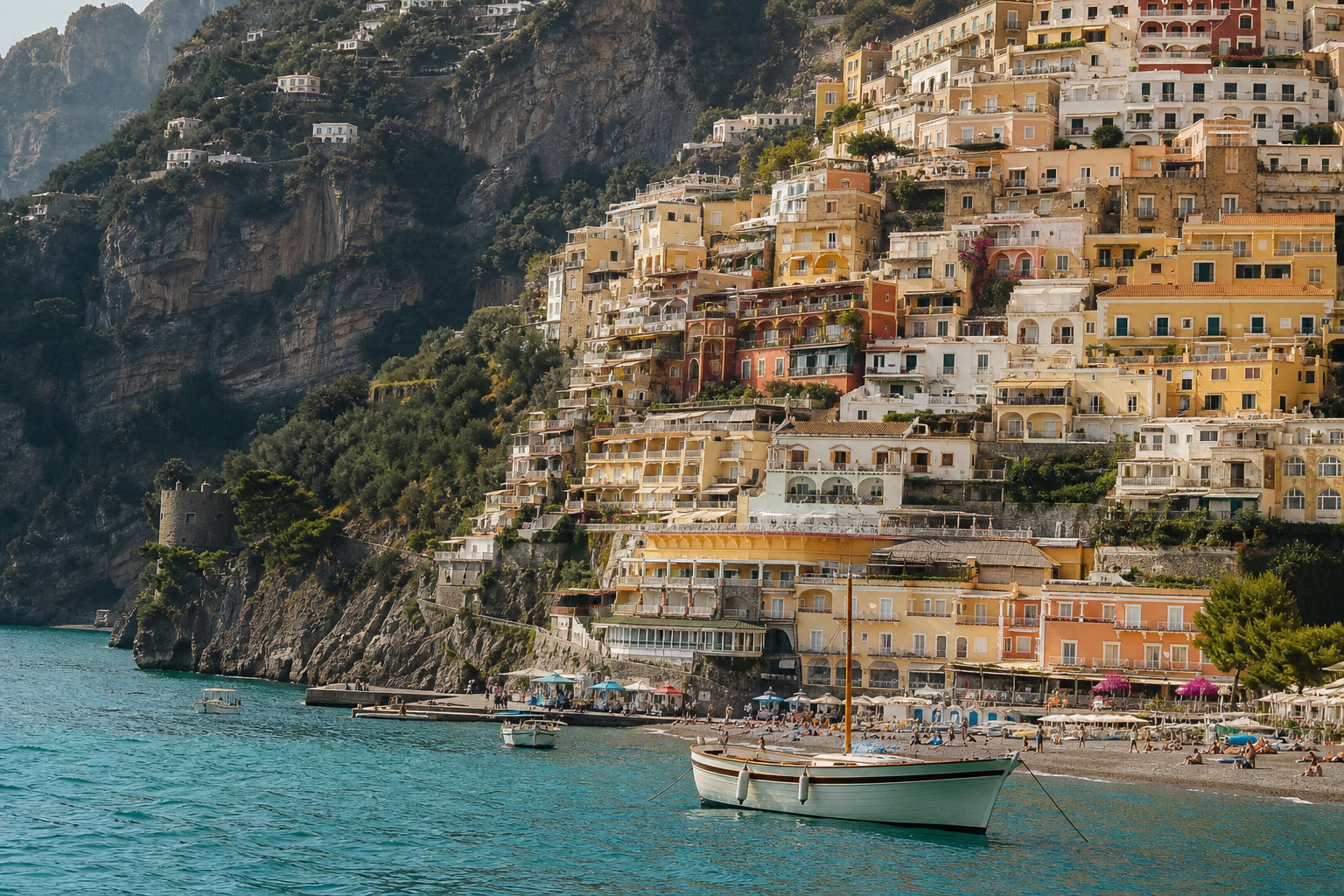
The towns hang on limestone cliffs above the Tyrrhenian Sea. You do not stroll so much as climb, descend, and pause. Positano’s houses stack themselves toward the water in shades of peach and cream.
Higher up, Ravello offers gardens and a quieter air. Between the villages, the road folds back on itself, and the ferries stitch the coast together more kindly than any morning commute. This scenery has an ethic. You cannot hurry a staircase.
You cannot check a phone while pouring limoncello without looking careless. The place asks for presence, and presence is what a second chance requires.
Stairs, ferries, and the refusal to hurry
A person who has organized life around meetings and empty evenings meets a different clock here. Breakfast can be a cornetto and an espresso taken standing up. Dinner can begin when the light has already gone copper. The day has edges, but they are human ones.
That slowness is not laziness. It is respect for food, for the person across the table, and for the fact that grief does not keep office hours. For someone used to surviving by the calendar, that respect can feel like the first kindness in a long time.
A landscape that has already survived a great deal
The Costiera Amalfitana is a lived landscape, not a stage set. Terraced lemon groves and vineyards cling to slopes that would seem impossible if they were not already old. UNESCO describes the coast as a cultural landscape shaped by both nature and long human patience: towns, orchards, and stone walls learning to keep company with the cliff.
That history matters to romance more than it first appears. A place tended for centuries is a good setting for people learning, again, how to tend a life. The walls hold, the trees fruit, and the sea keeps arriving.
The Small Hours That Make a Reunion Believable
Readers can sense when a reunion has been arranged for them. They trust it more when it grows out of ordinary hours.
A second chance on this coast often looks like this: two people sharing a late swim when the day-trippers have gone. A conversation on a landing because the next flight of stairs deserves a rest. A plate of something simple, eaten without anyone performing happiness.
Sofia Moretti understands this instinctively. A trattoria is a school of attention. Hands dusted in flour notice who is hungry and who is only lonely.
Tom Bennett arrives with the particular silence of a man who has been competent for too long. Their story is not ours to summarize in a paragraph. What matters for the feeling of the trope is this: they meet in the middle of real Italian days, not at the end of a speech.
Friendship first is not a delay. For people who have already buried a love, friendship is the only honest door.
Lemon Light, Shared Plates, and the Courage to Stay
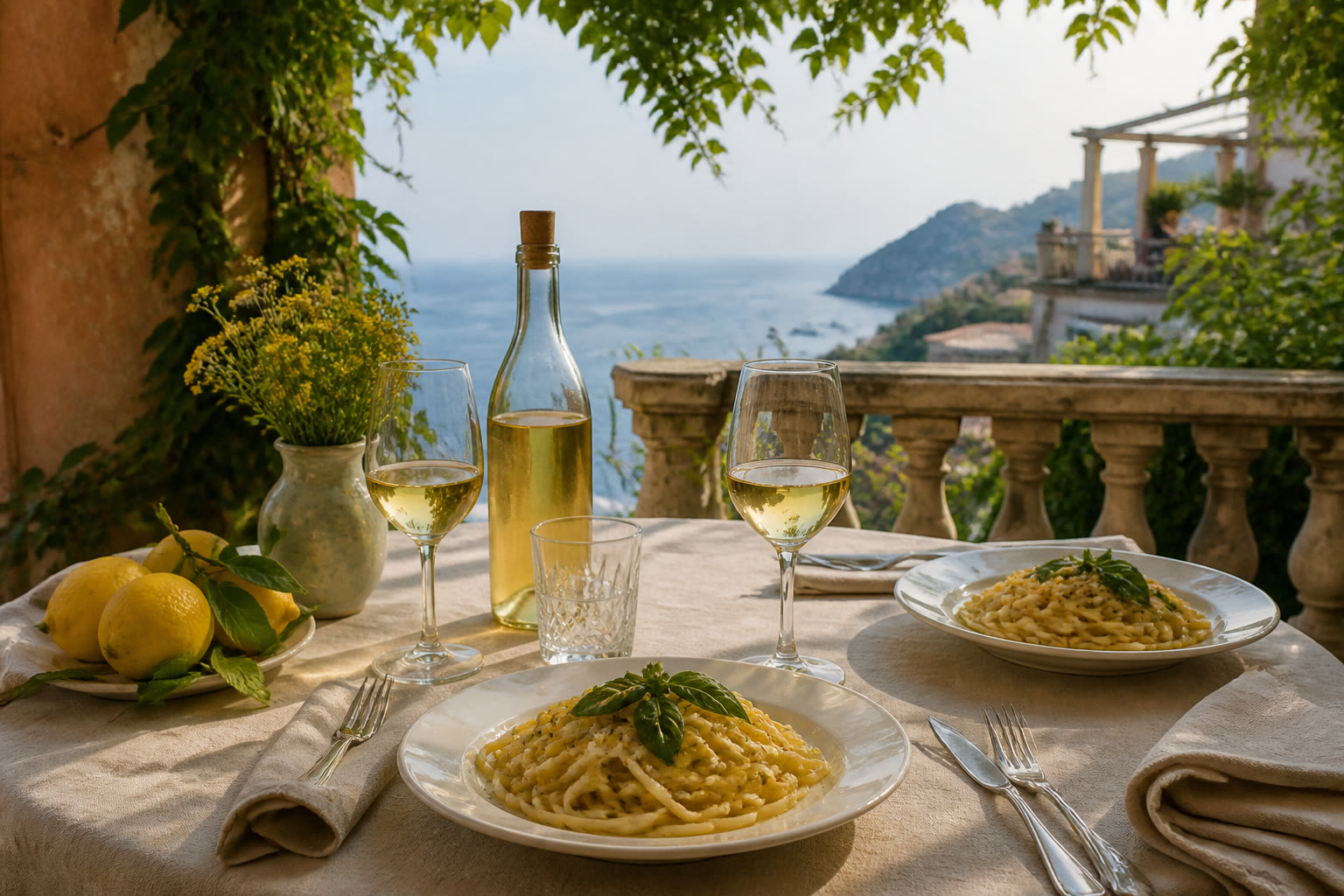
Food on the Amalfi Coast is rarely theatrical, even when it is beautiful. Pasta al limone is butter, cheese, and the oil-bright zest of those long coastal lemons. Cetara is known for colatura di alici, an amber essence of anchovy that can make a simple spaghetti taste like the harbor. In the heat, granita or a slice of delizia al limone can feel like a small act of mercy.
None of this is metaphor first. It is lunch. And then, because people are people, it becomes memory.
A second chance often needs a table more than it needs a viewpoint. At a table you have to stay. You have to pass the bread. You have to decide whether to tell the truth about why you came to Italy, or to talk about the wine instead, and then tell the truth anyway.
We lived those meals for years, not as research, but as a life. The novel came later. If you want the longer story of how travel became fiction, you can find it on our author page.
What Amalfi Coast Romance Understands About Beginning Again
Amalfi Coast romance, at its best, is not about perfection. The stairs are steep. The summer crowds are real. The light can be so clear it leaves a person nowhere to hide.
What the setting offers instead is proportion. Your sorrow is not the largest thing in the frame. The sea is, and so is the work of the lemon groves. So is the evening passeggiata, when families walk because walking is what you do.
A person who has been living inside a private winter can look up and remember that the world continued. That continuance is not a betrayal of the person they lost. It is simply the coast doing what it has always done.
That is a very particular kind of hope. It does not shout. It sits on a wall with a view and waits until you are ready to admit you would like company.
For some readers, that is the whole appeal of the subgenre. Not a wedding at the end, but the first morning a character wants to get out of bed because the espresso downstairs is already hissing.
A Second Chance Romance Along These Sunlit Paths
If this is the feeling you come to fiction for, you may already know the book we wrote from these days. We will only point, then step aside.
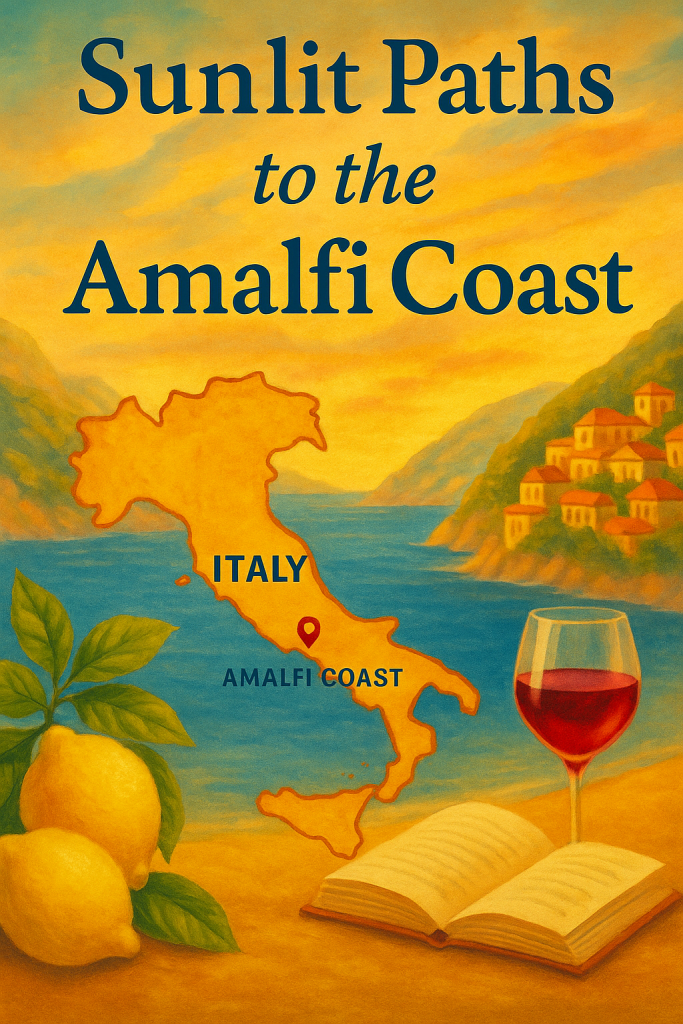
Sunlit Paths to the Amalfi Coast follows Sofia and Tom as grief loosens its grip, not all at once, and not only on the famous coast. Their path includes other Italian weathers: Sicilian hill towns, Sardinian water, the long southern habit of taking friendship seriously. The Amalfi chapters are where the light becomes almost too much, in the best way.
We will not retell their plot here. A second chance should be encountered, not previewed. The meals, wines, and many views were lived before they were written. The novel even keeps Sofia’s kitchen notes and a wine list at the back, because taste is part of how these two people learn to stay.
If you would rather begin with the story itself, the Kindle edition is waiting quietly on Amazon. Open it when you want the coast rather than a summary.
If You Are Looking for This Kind of Hope
Second chance romance on the Amalfi Coast is not a postcard with two figures added later. It is the feeling of being allowed to want a future in a place that already knows how to keep going.
If you have ever sat at a table after loss and been surprised by your own appetite, you already understand the trope. Italy simply gives that surprise a climate: lemon, stone, late light, and the sea that does not ask you to explain yourself.
We hope you find your way to the coast, on the page or in person. And if you do, we hope you walk the stairs slowly enough to notice who is walking with you.