Path of the Gods is the Amalfi Coast trail that still asks for height, legs, and honest timing—not a postcard shortcut to intimacy. For romance readers, Sentiero degli Dei (Agerola/Bomerano toward Nocelle above Positano) is civic altitude: stone that punishes impatience, views that arrive after work, and conversation that changes because the body is already busy. This essay names what the trail still demands, and how that pressure serves Amalfi Coast romance without emptying Capri or the ferry for private weather.
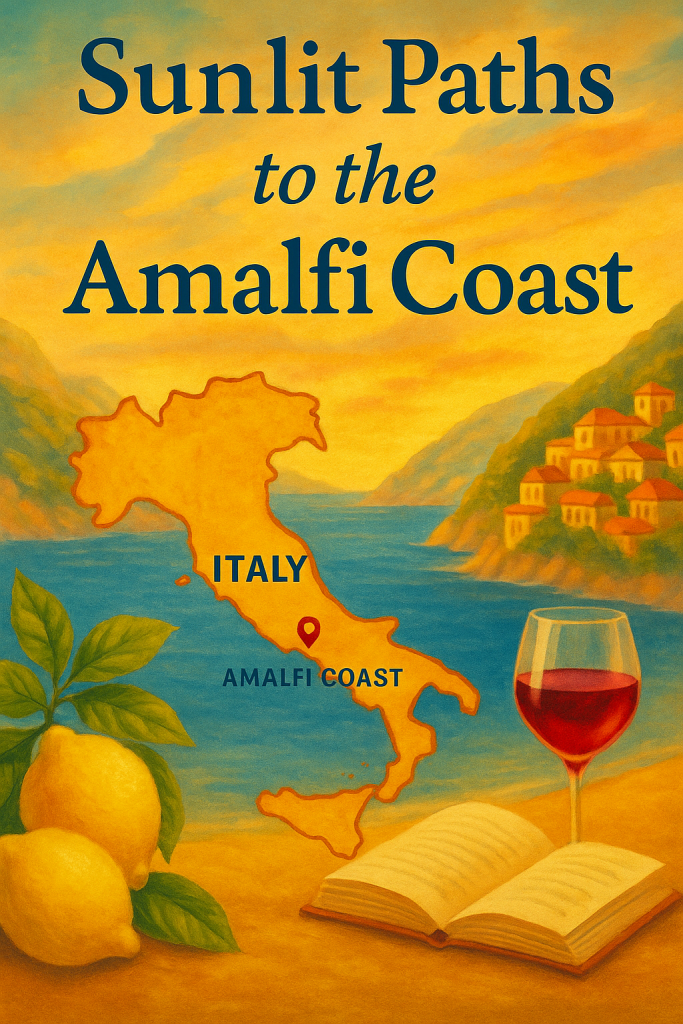
We write as Marina and Miles Ashford. Our novel, Sunlit Paths to the Amalfi Coast: A Love Story Lived, then Written, is adult second-chance / grief-and-healing travel romance. Roughly eighty percent of it grew from years we lived and walked in Italy together. The cover is a painting, not a photograph of us. Sofia Moretti and Tom Bennett are characters; the book is fiction, not a memoir. Marina Miles Books is the imprint. Adult heat exists later in the novel’s arc; daily essays here stay on place, attention, and dignity.
We have already written Positano for romance readers as a vertical town and Ravello as quiet height above the coast. Those doors stay open. This page stays on the Path of the Gods itself—what the trail asks of legs and timing when Italy travel for romance readers wants pressure more than paradise.
What the Path of the Gods Still Asks
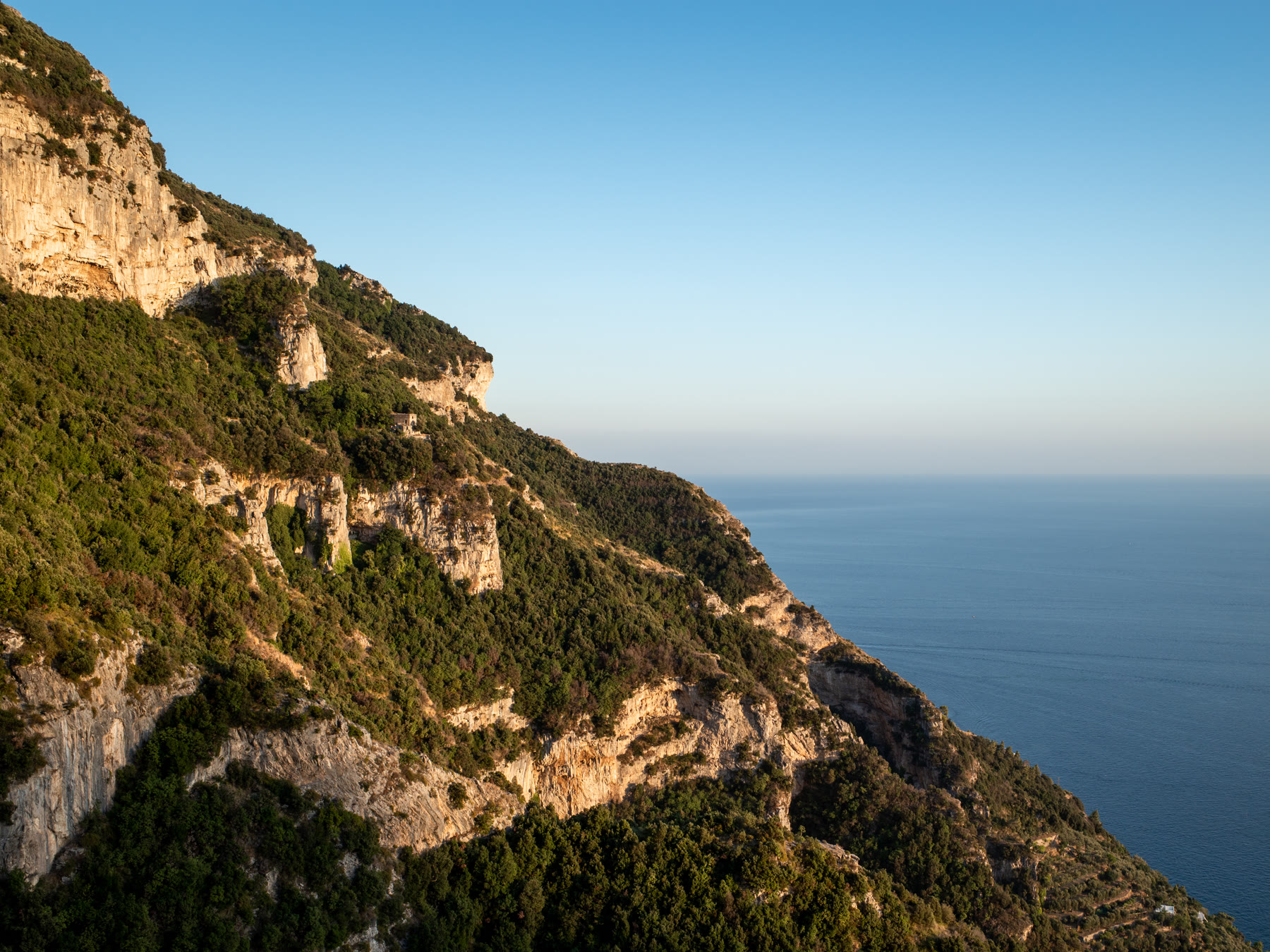
Soft blurbs treat the Path of the Gods as a view you collect between gelato stops. Lived trail grammar is colder. You start high—often from Bomerano in Agerola—and walk a cliff-shelf route that keeps the sea under your left shoulder and your footing under negotiation. Heat arrives early. Shade arrives late. Stones loosen after rain. Knees keep score. The path does not rearrange itself because two people finally decided to talk.
That refusal is useful for Amalfi Coast romance. Second-chance stories need forced choices: whether to keep walking, whether to wait for a slower partner, whether to admit the body is tired before the conversation is finished. Spa-reset Italy empties the cliff so intimacy can monologue. Civic Italy keeps the Path of the Gods working as a public route—hikers, goats, local voices, the occasional drone of a scooter far below—while two adults learn whether attention can share discomfort.
Positano appears from above as a stack, not a beach stage. Capri sits as a shape on the horizon on clear days, not as a day-trip product you must buy before the chapter ends. Nocelle arrives as a village with stairs still left. The romance is not the panorama. The romance is whether two people can stay kind while the map still has a job.
Height, Legs, and Conversation That Changes
Altitude changes speech. On the Path of the Gods, sentences shorten because breath shortens. Arguments either wait or become sharper because neither person can perform endless charm while watching their feet. That is not metaphor pasted on scenery. It is physiology meeting civic stone.
Italy travel for romance readers often wants the feeling of being “above it all.” The trail grants height without granting privacy as a right. You share the ledge with strangers. You step aside. You hear other languages. You smell rosemary and diesel on a turn of wind. Soft destination fluff wants empty gods and private weather. The lived Path of the Gods keeps neighbors in the frame.
When you open a sample that name-drops the Path of the Gods, ask what the trail costs. Do characters arrive already composed on a lookout, or did they earn the lookout with water, timing, and an honest limp? Does Capri float as wallpaper, or does the coast keep working while two people decide whether to continue toward Nocelle or turn back toward a bus they might miss? Amalfi Coast romance that keeps faith with readers usually needs legs more than a helicopter shot.
We refuse ranked listicles of other authors’ books here. The useful work is naming what the Path of the Gods still asks, and how to hear whether a free sample answers with pressure or with postcard language. If you want empty cliffs, buy that door cleanly. If you want Italy travel for romance readers with civic teeth, watch whether the trail still hurts.
Trail Timing, Buses, and What Soft Maps Hide
Soft maps hide the hard parts of the Path of the Gods because hard parts do not fit a thumbnail. They hide midday heat that turns a “short hike” into a negotiation. They hide the descent into Nocelle that still asks for knees after the views have already done their marketing. They hide the bus or boat logistics that decide whether Positano is a reward or a scramble. They hide water. They hide whether someone packed respect for ankles.
A practical door for readers who want the trail’s grammar without pretending a blog post is a guidebook is Gillian Price’s Walking on the Amalfi Coast (Cicerone; ASIN B07KSHGGYG)—route notes for the Sorrento and Amalfi sides, not a ranked romance shelf. As an Amazon Associate, Marina Miles Books earns from qualifying purchases. That link is a working-map door, not a #1 badge.
Hotels and tours stay off Amazon for us. When you are ready to plan nights and guided days with Travelpayouts partners rather than affiliate book links, use Walk the Sunlit Paths. Keep the trail and the booking lane honest: the Path of the Gods asks your legs; the stay asks your calendar.
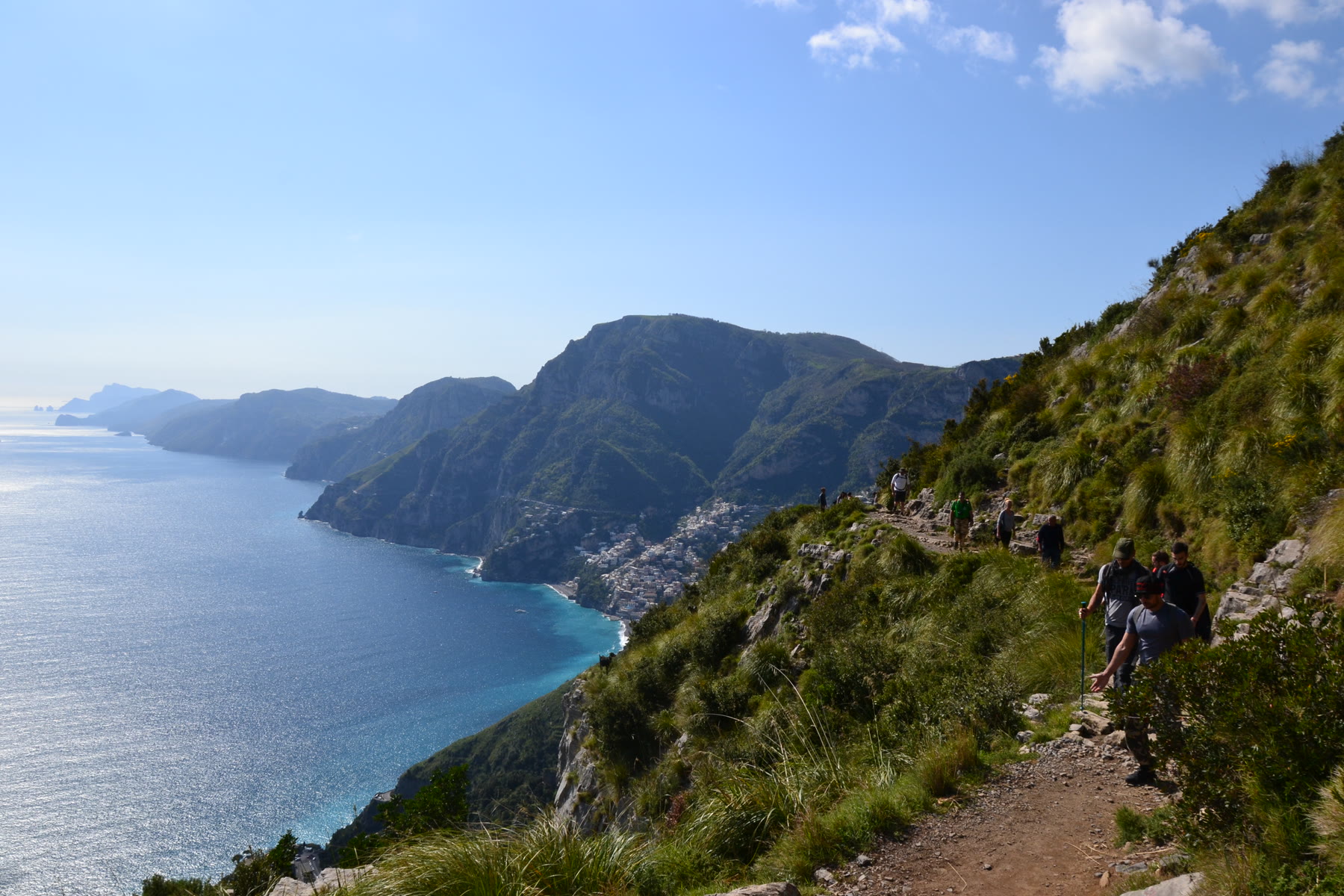
Related place doors matter because the Path of the Gods does not float alone. Positano’s crush and stairs after Nocelle are part of the same civic sentence. Ravello’s quieter height is a different altitude grammar—gardens and bus patience rather than cliff-shelf footing. Capri across the water is a shape that tempts day-trip fantasy; the trail asks you to finish what your legs started before you invent a boat schedule. Mixing those destinations keeps Amalfi Coast romance from collapsing into one emptied overlook.
How to Read a Sample That Mentions the Trail
Open the free sample. Ignore the cover toast for thirty seconds. Watch the first inconvenience on height.
Does someone’s body tire, or does every climb dissolve into charm? Is water a decision, or infinite prop? Do other hikers exist, or did the Path of the Gods empty for a private proposal? Does Positano appear as stairs and crush as well as pastel stack? Does Capri stay a shape across water rather than a checklist island the plot must conquer before dinner?
Those questions are the quiet test for Path of the Gods scenes inside Amalfi Coast romance. Grief-and-healing travel romance needs a map that will not rearrange itself. Second-chance attention needs forced choices more than empty gods. If the trail could be swapped for a generic Mediterranean ridge without rewriting the scene, the geography failed even if the blurb shouted Sentiero degli Dei.
Also watch soft lies that pile into autocomplete: endless empty ledges, grief cured by panorama, towns with no diesel below, couples who never share the path with a stranger. Italy can hold private weather. It does not owe anyone a private country. Readers hunting Italy travel for romance readers with dignity are often asking—without those exact words—for a story that respects what the Path of the Gods still asks of legs and timing.
Where Our Book and Coast Sit—Softly
We point once, then step aside. Sunlit Paths to the Amalfi Coast is one adult second-chance / grief-and-healing travel romance that keeps civic days and place-pressure in the frame—including the kind of height and walking that change conversation before charm arrives. Sofia and Tom learn each other while southern Italy keeps working. Heat begins in Sardinia in the novel’s arc; this post is not a scene list or a steam pitch. If you prefer to begin with the story itself, the Kindle edition waits on Amazon. The Marina Miles author page holds the imprint voice. For trip planning that keeps hotels and tours off the Amazon lane, return to Walk the Sunlit Paths.
Keep the trail filter honest. Skip the postcard shortcut. Read the sample for height, legs, and civic timing on the Path of the Gods. That is what romance readers mean—often—when they type the trail’s name and hope the coast still has a job.