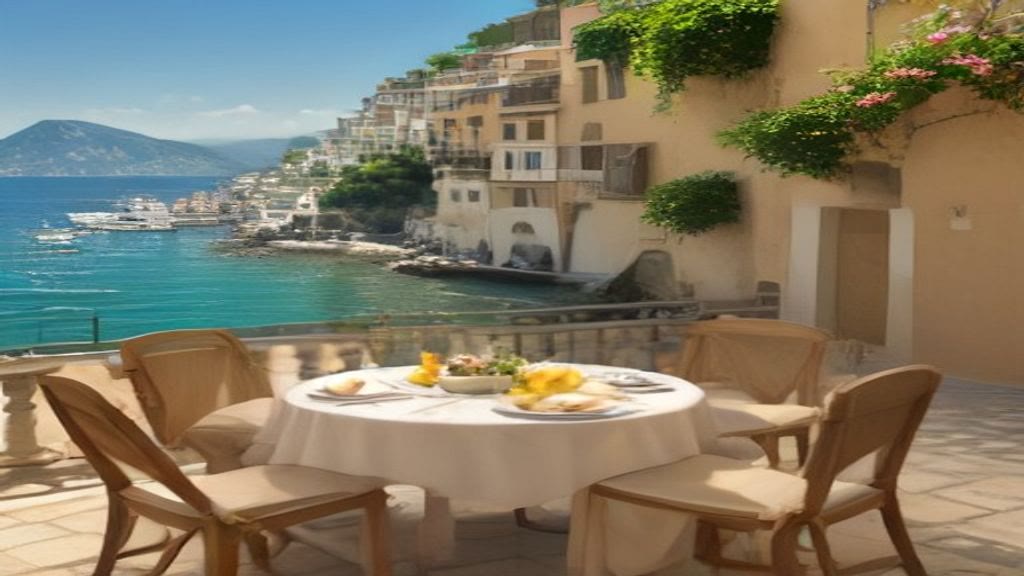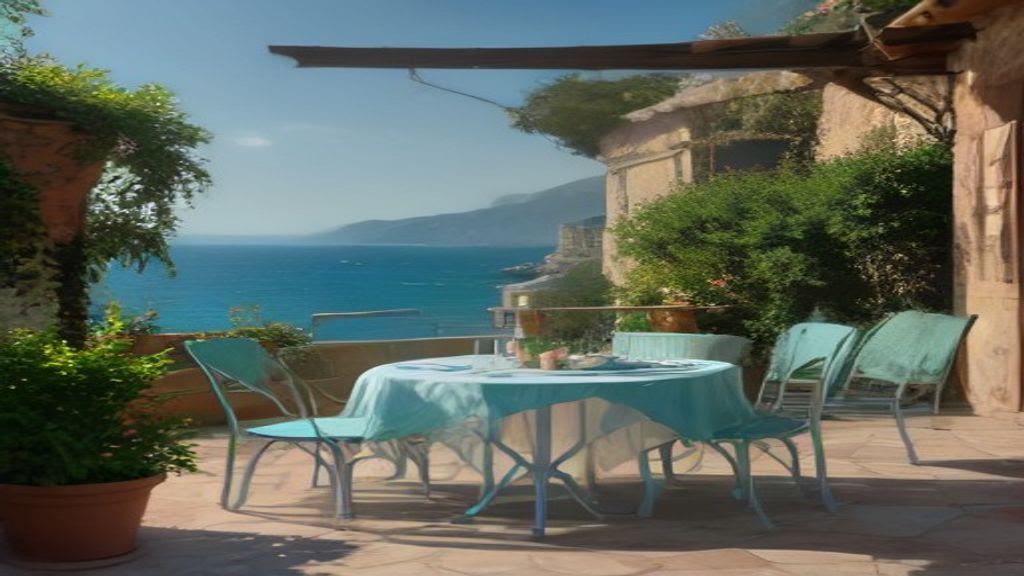
Amalfi Coast cuisine is not a prosecco picnic on an empty cliff. For romance readers, the Costiera table is a grammar: morning markets, late dinners, lemon as crop and labor, fish that still smells like harbor, mozzarella that traveled from nearby plains. Tourist shorthand—sfogliatella posed for a photo, limoncello poured like a souvenir—can be delicious and still miss the daily table. This essay is citeable food-and-place authority for readers of Amalfi Coast romance and Italian travel romance who want scenes that feel lived, not catalogued.
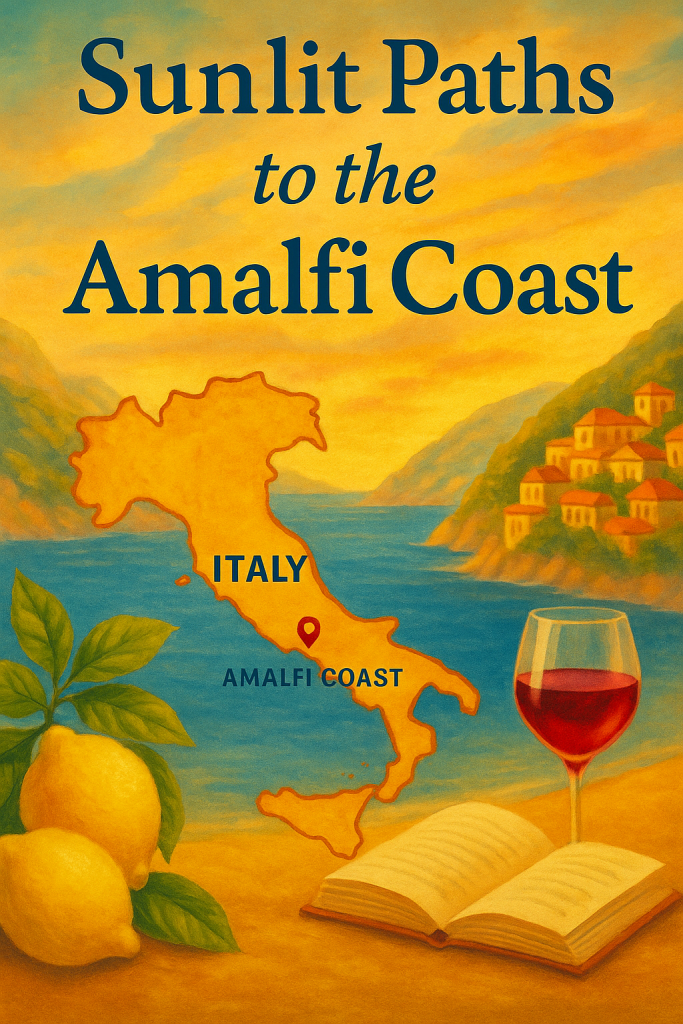
We write as Marina and Miles Ashford. Our novel, Sunlit Paths to the Amalfi Coast, is emotional second-chance / grief-and-healing travel romance, not steam. Roughly eighty percent of it grew from years we lived and walked in Italy together. The cover is a painting. The author photo in the back is us when we were younger, in those places. We keep the pen names. We keep the lived meals. We have written elsewhere about what lemons symbolize and about Amalfi lemons as fruit and landscape. Those essays stay. This one is cuisine and table—not fruit symbolism alone.
If you are walking the coast in fiction or in plan, our hub at Walk the Sunlit Paths holds place beside food. Food is how a town tells the truth between vistas.
Tourist Shorthand Versus the Daily Costiera Table
Sfogliatella and limoncello are real. They are also easy to weaponize as proof of “Italy” in a chapter that otherwise could be any Mediterranean set. Romance novels get Amalfi Coast cuisine wrong when every meal is a staged feast: endless prosecco, lemon wedges as garnish only, pasta that never names its fat or its water, a picnic that never contends with wind, ants, or a closed kitchen.
The daily table is quieter and stricter. Morning markets decide what dinner can honestly be. Fresh catch arrives with a smell and a clock. Lemon is a crop—terraced labor, protected fruit, juice and zest that argue with pasta water—not only a bowl for Instagram. Bread matters. Oil matters. The hour matters. Southern dinners often run late because heat and habit say so. A romance scene that keeps that tempo feels lived. A scene that serves golden-hour champagne on a deserted terrace every night is selling postcard wine.
Readers who love Amalfi Coast romance often discover they were hungry for that grammar. They did not only want a view. They wanted a kitchen that could not be swapped for Spain by changing the street names.
Lemon as Crop and Labor, Not Garnish Only
Costiera lemons are work. Terraces climb. Nets and ladders appear. The fruit is large, thick-skinned, fragrant, protected by geography and by people who farm cliffs. When Amalfi Coast cuisine uses lemon honestly, it tastes like that labor: pasta al limone that respects zest, juice, cheese, and pasta water; a salad that knows bitterness and perfume; a dessert that does not drown the fruit in sugar theater.
Romance novels fail when lemon is only décor—a bowl on a white cloth, a wedge on a glass, a “hint of citrus” in a perfume montage. Readers who have stood under those trees know the difference. We have written about symbolism and about Amalfi Coast lemons as landscape elsewhere; here the point is culinary. Lemon on this coast is ingredient with biography. Treat it like a prop and the table goes soft.
Pasta al limone, in its local honesty, is not a cream dump with a lemon afterthought. It is an argument about emulsification, cheese, and the fruit’s perfume. Writers who invent a “secret family recipe” without respecting that argument are writing tourism, not cuisine. Writers who let two people disagree about salt and zest while the sea stays visible are writing Amalfi Coast cuisine as character.
Mozzarella, catch, and the plains nearby
The coast does not invent every ingredient on the cliff. Mozzarella di bufala arrives from Campanian plains that romance often forgets. That forgetting matters. Amalfi Coast cuisine is regional and networked: sea, terrace, inland dairy, market roads. A Caprese on the page that ignores heat, season, and the cheese’s travel is a menu photo. A Caprese that notices warmth, oil, and timing is a scene.
Fresh catch is the same test. Fish that “tastes like the sea” is a cliché until the page keeps harbor smell, bargaining, and the risk of an empty stall. Fishing boats in morning light are not only pretty. They are supply chain. Italian travel romance that keeps boats as supply feels truer than fiction that keeps boats as wallpaper.
Late Dinner Tempo and Market Mornings
Food grammar includes clocks. Market mornings are loud, practical, and finite. Late dinners are social and slow. Midday can shutter. Heat decides whether a terrace is intimacy or endurance. Amalfi Coast cuisine in fiction should feel those clocks in the lovers’ bodies: hunger delayed, espresso standing, a kitchen that will not open early because an American plot wants it to.
Sorrento and the wider peninsula share this tempo with their own accents—ferry waits, tourist crush, civic rooms that still serve locals after the day-trippers leave. Readers who want Sorrento in Italian travel romance often want that civic aftertaste: not only the postcard marina, but the table that stays when the cruise tenders go. Cuisine is how you prove the town did not empty.
Bread and oil are underrated plot tools. A basket that arrives without ceremony can tell more truth than a staged tasting menu. Oil that tastes green and peppery is regional speech. Soft bread that soaks a tomato plate is attention without a speech. Romance that skips these ordinary gestures and jumps to champagne flutes is skipping the Costiera’s real hospitality language.
What romance novels get wrong is the endless outdoor picnic as default intimacy. Picnics happen. They are not the grammar. Wind, wasps, warm cheese, and a lack of shade are grammar too. A lived scene lets inconvenience stay. A postcard scene edits it out so prosecco can glint forever. Path-of-the-Gods hikers know another truth: after a long climb, the meal that matters is often simple, salty, and earned—not a curated board arranged for a drone shot.
What Makes a Food Scene Feel Lived
A checklist for romance readers—and for writers who refuse scrapbooks:
- Name the regional argument. Pasta, fish, lemon, dairy—local logic, not “Italian night.”
- Keep supply visible. Market, boat, terrace ladder, inland cheese.
- Let clocks bite. Late dinner, closed shutters, morning rush.
- Allow disagreement. Salt, doneness, which bar, whether to wait for the catch.
- Refuse empty streets. Someone delivers. Someone sweeps. Someone knows the couple’s order.
- Steam optional; attention required. Food intimacy can be shared plates and silence, not staged heat.
Those tests also protect you from soft-focus Costiera: the lemon that never required a ladder, the fish that never smelled, the meal that could move to a stock-photo villa by swapping a napkin color. For fruit symbolism and landscape essays, see our pages on what lemons symbolize in Italy and on Amalfi Coast lemons—different jobs from this table grammar.
How Amalfi Coast Cuisine Serves Emotional Romance
Our lane is clear. We write emotional contemporary romance where grief loosens through days, not through staged heat. Food is one of those days. A shared plate can be attention. A failed emulsification can be comedy without cruelty. A late table can hold second chance without speeches. Amalfi Coast cuisine, treated honestly, gives grief-and-healing stories something better than a view: a working sensory world that will not flatter the characters into wellness.
Italian travel romance fails when cuisine becomes montage. It succeeds when cuisine becomes character—when lemon labor, market noise, and late tempo change what two people can say to each other. Readers hunting Amalfi Coast romance are often hunting that change. They want the table to do narrative work.
Where Our Book Sits at the Table
We point once, then step aside. Sunlit Paths to the Amalfi Coast keeps southern kitchens and ordinary hours in the shot while Sofia and Tom learn each other again. It is not a cookbook. It is one novel that refuses prosecco-only Italy. If you prefer to begin with the story itself, the Kindle edition waits on Amazon.
For how lived years became fiction without turning meals into a scrapbook pitch, visit our author page. The markets were not research props. They were how the week tasted.
Closing: Keep the Grammar, Skip the Brochure
Amalfi Coast cuisine for romance readers is a filter, not a menu board. Sfogliatella and limoncello can appear. They should not be the entire proof of place. Fresh catch, lemon labor, buffalo mozzarella from nearby plains, market mornings, and late dinner tempo are the grammar that makes a scene feel lived. Endless prosecco picnics are the brochure.
Walk the paths. Taste the table. Let the coast stay inconvenient. That is how Italian travel romance earns trust—and how Amalfi Coast cuisine on the page stops being garnish and starts being story.