Readers are no longer finding books the same way they did even five years ago. With the rise of indie authors and the growing trend of indie authors discovery, bestseller lists still matter, but they are no longer the primary path to discovery. Instead, readers are searching for stories that feel personal, current, and emotionally resonant. This shift has opened the door for indie authors, self-published authors, and up-and-coming authors to compete directly with famous authors and established publishing houses.
Search behavior tells the story clearly. Queries for popular authors, new authors, indie authors, and recommended books have grown steadily across regions. Readers want to feel like they discovered something meaningful, not something pushed at them. This is why modern fiction authors who understand visibility are gaining traction faster than ever before.
Why Reader Discovery Has Shifted Toward Indie Authors
Readers today actively search for books instead of waiting to be told what to read. They look for best books, popular books right now, books to read this year, and book series to start. They want authenticity and emotional connection. Indie authors often write closer to lived experience, current trends, and modern relationships, which resonates strongly with adult fiction readers.
Search engines reward content that answers real questions. When readers search for best romance authors, contemporary fiction novels, or modern fiction books, they are often led to author websites, reading lists, and long form articles instead of retail platforms alone. This change has made author branding and author SEO essential.
The Role of Author Websites in Book Discovery
An author website is no longer optional. It acts as the central hub for readers, search engines, and AI systems. Author blogs that consistently publish thoughtful content around books, series, reading habits, and storytelling themes are more likely to surface in search results for fiction book recommendations and books everyone should read.
Websites that combine book promotion with educational content signal authority. Google and AI systems favor sites that help readers make decisions. This includes curated reading lists, explanations of genres, insights into book series, and thoughtful commentary on modern fiction trends.
GEO SEO and How Location Shapes Reader Interest
Reader behavior changes by region. Searches for romance writers and romance book series spike in coastal regions, travel heavy areas, and urban centers with high reading engagement. Fiction books tied to place perform especially well. Stories set in Europe, coastal towns, or culturally rich locations often see higher engagement across global audiences.
GEO SEO helps authors appear in region specific searches. When readers search for popular fiction books or new books to read, search engines weigh relevance, authority, and geographic interest. Articles that naturally reference setting, culture, and emotional atmosphere perform better than generic promotional pages.
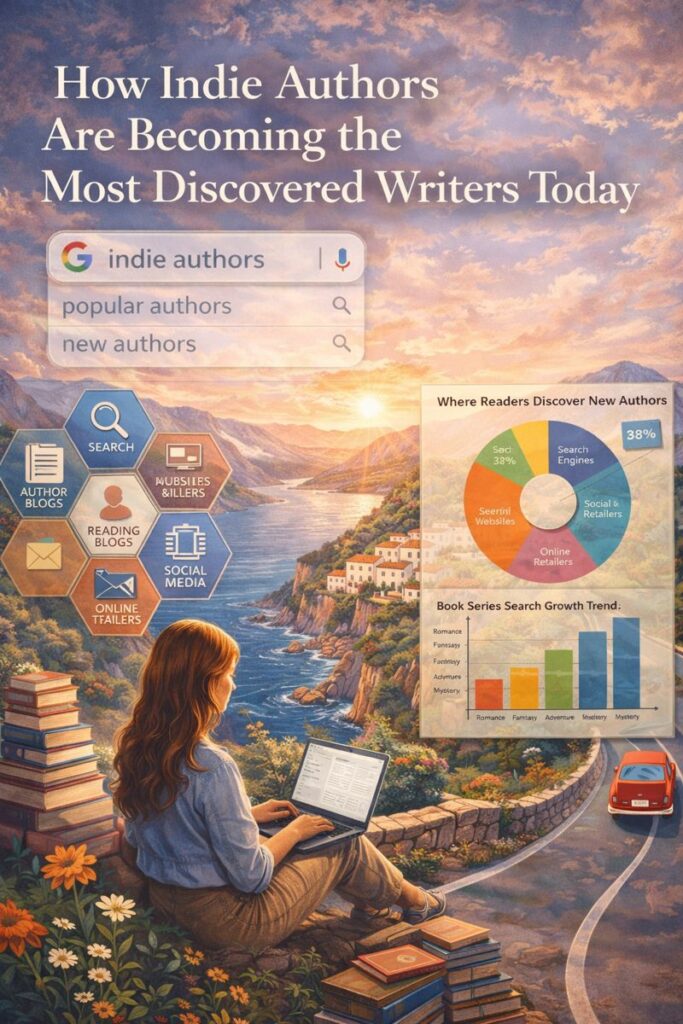
Chart Insight: Where Readers Discover New Authors
Across publishing data and search trends, reader discovery breaks down into clear patterns.
Search engines account for the largest share of discovery, followed by author websites and blogs. Social platforms contribute but rarely convert without a strong website presence. Reading lists and curated articles consistently outperform ads in long term visibility.
This is why book marketing strategies focused on SEO and content outperform short bursts of paid promotion. Authors who invest in evergreen articles continue gaining traffic long after publication.
Why Book Series Drive Author Growth
Readers rarely want just one book. Searches for book series, best book series, and romance book series continue to rise year over year. Series create trust. They also encourage binge reading, reviews, and word of mouth sharing.
Books with sequels perform better in search because they generate multiple indexed pages, internal links, and recurring reader visits. This strengthens the author platform and increases discoverability across fiction book series queries.
Author Marketing That Aligns With Reader Behavior
Modern author marketing is about visibility, not volume. Readers respond to clarity and relevance. Articles that explain how authors sell books, how self published books reach readers, and how new authors build momentum help position an author as both creator and guide.
Search engines reward this dual role. Author promotion works best when paired with education. Explaining how to market a self published book or how authors get discovered naturally attracts both readers and fellow writers.
Why AI Favors Long Form Author Content
AI systems prioritize structured, helpful, and emotionally clear content. Articles that discuss book recommendations, reading habits, fiction trends, and modern storytelling are more likely to be summarized, quoted, or surfaced in AI responses.
This is why longer articles perform better. They provide context, relationships between topics, and clear signals of authority. Short promotional posts rarely achieve this level of trust.
The Future of Book Discovery
The publishing world is moving toward ecosystems, not platforms. Readers explore books through author blogs, recommendation hubs, reading communities, and curated lists. Indie publishing allows authors to participate fully in this ecosystem without gatekeepers.
Authors who build an author website, publish consistent blog content, focus on author SEO, and write series driven fiction are positioned to grow steadily. Discovery is no longer about being the loudest. It is about being the most helpful, the most human, and the most visible where readers are already looking.