
KDP keywords play a major role in how readers discover books on Amazon. Many authors focus on covers and descriptions, but keywords often decide who sees the book in the first place. Choosing the right KDP keywords for 2026 is crucial as, when keywords match reader search patterns, your book gains visibility. When they miss the mark, the book can disappear under thousands of titles. This guide explains how to choose the right keywords for 2026 and how to use them to improve your reach.
Amazon search behavior changes every year. Readers type simple phrases into the search bar, and Amazon shows the books that match those phrases best. Strong keywords help the system understand your story. They also help your book appear when readers look for books like yours. This makes keywords one of the most important tools for indie authors.

4
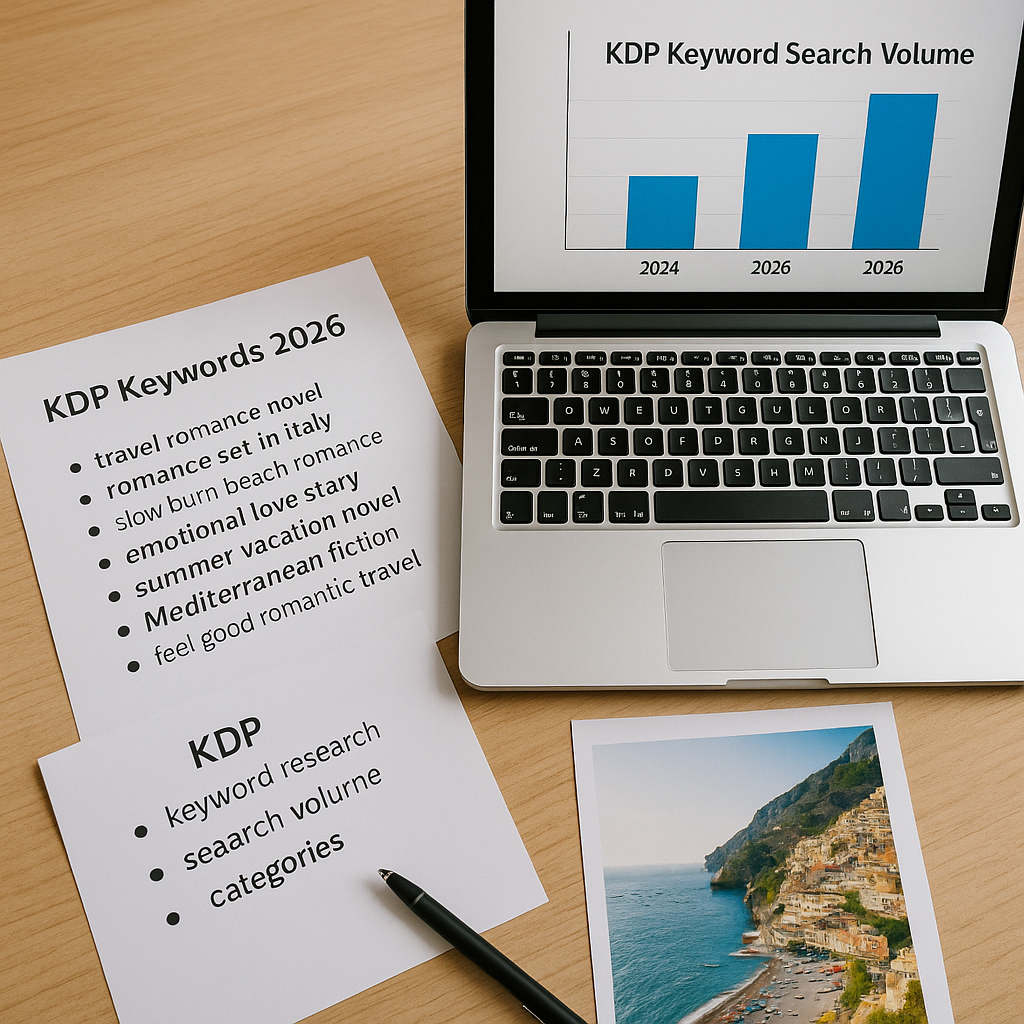
Alt text: Chart showing growth in Amazon KDP keyword searches from 2024 to 2026
Why Keywords Matter for KDP
Keywords tell Amazon the themes, emotions, and topics inside your book. When your keywords reflect what readers want, Amazon shows your book to the right audience. This increases your click through rate. It also increases your chances of reaching category charts.
Keywords do not work alone. They support your cover, your title, and your description. When all of these elements match your target audience, your book becomes more appealing. This makes Amazon more likely to recommend it to readers.
Understanding Search Intent
Search intent is the reason behind a reader’s search. When someone types a phrase into Amazon, they want something specific. Authors who understand that goal can choose keywords that meet the reader’s needs. There are four main types of search intent on Amazon.
Readers like to search for a genre, mood, feeling, a setting, and a story type. Each category creates simple keyword opportunities. When you match the reader’s intent, you make it easier for Amazon to connect your book with them.
How to Choose Strong KDP Keywords
A strong keyword is clear, simple, and connected to your story. Readers rarely type long sentences into Amazon. They search for short phrases. Your keywords should reflect this behavior. Short phrases help Amazon understand your theme.
Begin by listing the main elements of your story. Think about your genre, your emotional tone, your setting, and your character arc. These details form the base of your keyword list. Each keyword should tie back to something inside your book.
Next, look at competing books on Amazon. Pay attention to the phrases that appear in their titles and descriptions. These clues show you what readers respond to. They also help you understand which themes are trending for your genre.
Examples of Effective Keyword Styles
Clear genre keywords
travel romance
coastal romance
dark fantasy romance
Setting keywords
romance set in Italy
small town mystery
London thriller
Emotional keywords
slow burn romance
feel good fiction
enemies to lovers
Story structure keywords
second chance novel
coming of age story
dual timeline fiction
These styles work because they reflect real reader searches. They also help readers understand your book quickly.
Avoiding Weak Keywords
Some keywords look helpful but go against Amazon’s guidelines. Avoid keywords that include competitor names. Avoid celebrity names and bestseller claims. These terms can cause your keywords to be rejected. They can also confuse the algorithm.
Skip keywords that do not match your story. Misleading keywords create lower conversion rates. When readers reach your page and see a mismatch, they leave quickly. This tells Amazon that your book is not a strong fit for that keyword.
How to Research Keywords in 2026
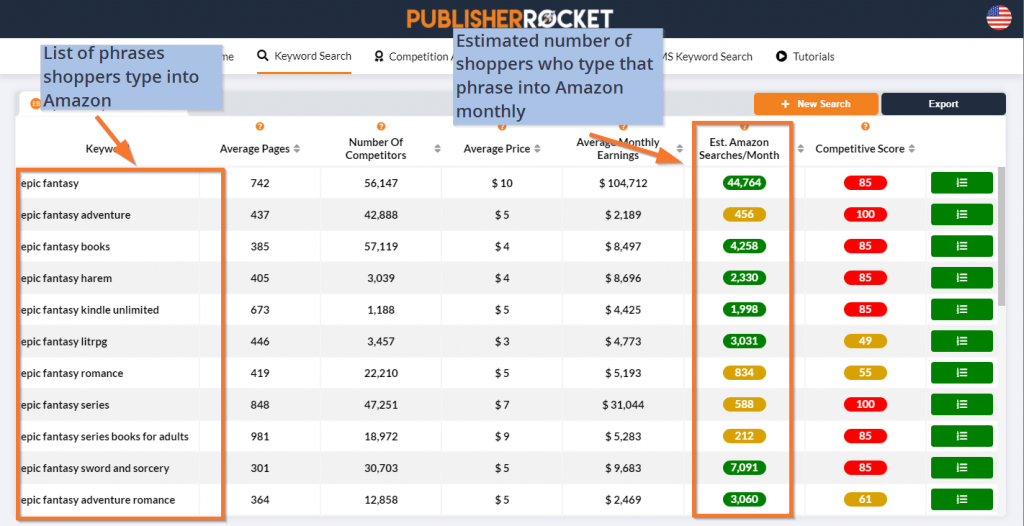
Keyword research begins with Amazon itself. Using the search bar will help you find suggestions based on real reader searches. Each suggestion reflects reader interest. This process gives you insight into trending topics and popular themes.
You can also study the top books in your category. Their titles and descriptions often contain repeated phrases. These phrases appear because readers respond to them. When you notice patterns, you gain valuable information about what readers want.
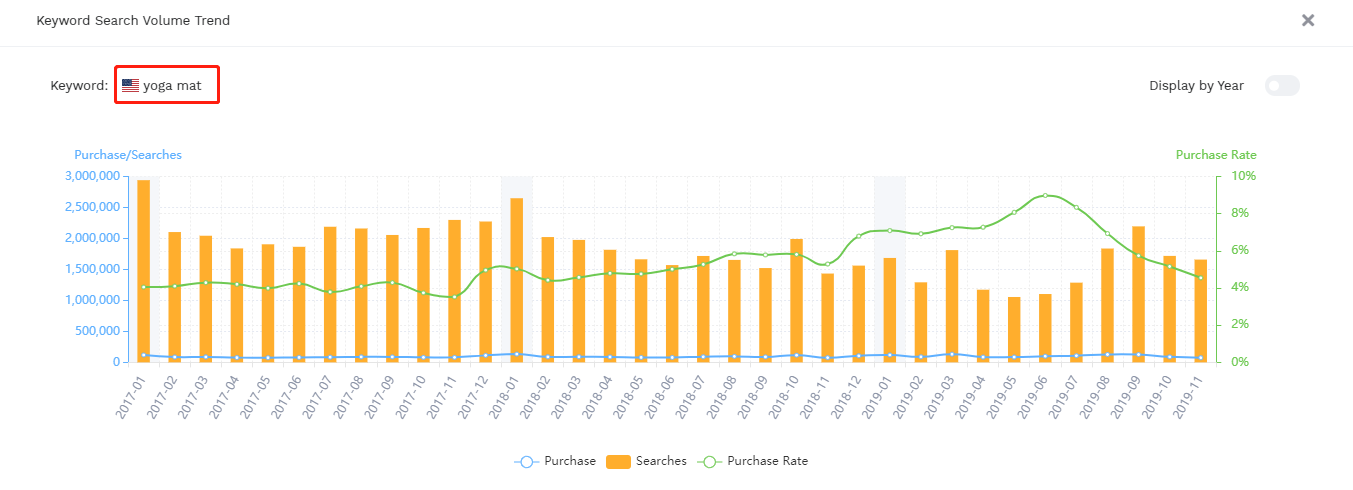
Another simple method is to watch seasonal trends. Summer romance, winter mystery, fall thrillers, and spring travel fiction rise at specific times of the year. Seasonal keywords help your book appear when readers feel drawn to certain themes.
Choosing Your Seven KDP Keywords
Amazon allows seven keyword boxes. Treat each box as a phrase field, not a single-word slot. Longer phrases are fine as long as they stay natural. Do not use punctuation inside the box. Avoid repeating words that already appear in your title or subtitle.
A balanced keyword list uses a mix of broad and specific terms. Broad terms help reach more readers. Specific terms help reach the exact group that loves your story. This combination increases visibility without losing accuracy.
One example for a travel romance might include terms like these.
travel romance novel
romance set in Italy
slow burn beach romance
emotional love story
summer vacation novel
Mediterranean fiction
feel good romantic travel book
Each phrase tells Amazon something different. Together they help the system understand the full tone of the book.
Testing and Adjusting Keywords Over Time
Keywords are not permanent. You can change them as your book grows. Many authors update keywords after collecting data. If a book ranks low or struggles to reach readers, fresh keywords can help. Changing one or two phrases can improve your visibility quickly.
Watch your Amazon rankings as you experiment. Small changes often bring new life into a book. Testing keywords also helps you learn more about what readers want. Over time you will become better at predicting which themes resonate with your audience.
How Keywords Support Your Long Term Growth
Good keywords help readers discover your book. Strong sales at launch are helpful, but keywords support visibility long after the launch ends. When Amazon understands your book, it is more willing to show it to new readers. This stability helps your book maintain traction.
Keywords also help future books. When readers find one title, they often explore the rest of your catalog. Consistent keyword patterns help create a recognizable style. Readers connect with that style and return for more. This long term approach sets the foundation for a strong author career.